How to Cook Tri Tip: Juicy Roast
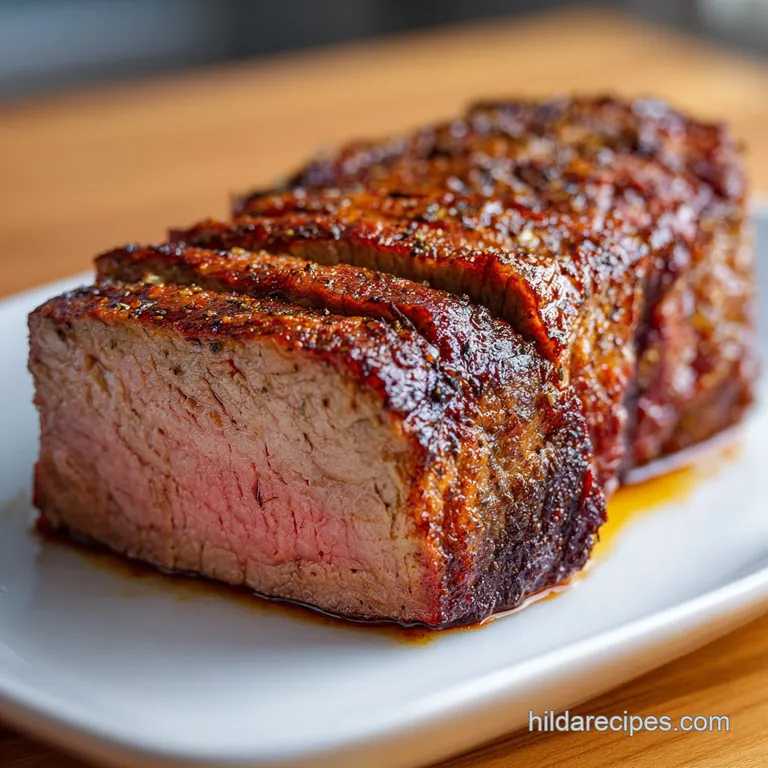
- Time: Active 15 minutes, Passive 1 hours, Total 1 hours 15 mins
- Flavor/Texture Hook: Peppery, smoky crust with a buttery, melt in-the mouth center
- Perfect for: Sunday family dinners, backyard gatherings, or meal prep for the week
- How to cook tri tip like a pro
- Why this specific method works
- Essential elements for the flavor
- Essential tools for success
- Step by step cooking guide
- Handling common cooking hurdles
- Adjusting for different crowds
- Flavor twists and variations
- Debunking kitchen tales
- Storage and zero waste
- Perfect side dish pairings
- Recipe FAQs
- 📝 Recipe Card
How to cook tri tip like a pro
The kitchen fills with that heavy, peppery aroma, the kind that makes your mouth water before you even see the food. The sound of meat hitting a hot skillet, that sharp, immediate sizzle, is the soundtrack to some of my favorite memories.
It’s a scent that brings everyone to the kitchen island, hovering with forks in hand, waiting for the first slice.
Tri tip used to intimidate me because of its weird, boomerang shape. I remember one summer I completely ruined a gorgeous Prime cut because I didn't understand how to slice it. It ended up like chewing on a leather belt, which was a real shame.
After years of practice and many "oops" moments, I’ve perfected the balance between a crusty exterior and a center that stays pink and buttery.
We aren't just making a meal here. We're carrying on a tradition that’s found its way into our family’s rotation because it feels special without being fussy. You'll find that this method is surprisingly simple once you respect the shape of the meat.
Trust me on this, once you nail the crust and the grain shift slice, you'll never look back.
Why this specific method works
Protein Relaxation: Resting the meat allows the muscle fibers to widen, which helps the juices redistribute instead of running out.
Osmotic Brining: Salt draws out moisture, dissolves into a brine, and then gets reabsorbed, seasoning the roast deep inside the fibers.
The Maillard Reaction: over High heat searing after a slow roast creates complex flavor compounds on the surface through a chemical reaction between amino acids and sugars.
Thermal Momentum: Carryover cooking uses the heat trapped in the outer layers to finish the center gently during the rest.
| Thickness | Internal Temp | Rest Time | Visual Cue |
|---|---|---|---|
| 1.5 inches | 130°F (Med Rare) | 10 mins | Deep pink, warm center |
| 2.0 inches | 135°F (Medium) | 12 mins | Light pink, firm touch |
| 2.5 inches | 145°F (Med Well) | 15 mins | Hint of pink, very firm |
Since this cut behaves a lot like a thick steak, you might find my Top Sirloin Steak recipe helpful if you prefer individual portions over a large roast. Both require that over high heat finish to get the texture just right.
Essential elements for the flavor
| Ingredient | Science Role | Pro Secret |
|---|---|---|
| Tri Tip Roast | Primary Protein | Look for "Choice" or "Prime" for better fat marbling and tenderness. |
| Kosher Salt | Moisture Management | The larger grains dissolve slowly, creating a more even brine than table salt. |
| Smoked Paprika | Color and Depth | Adds a wood fired aroma without needing a smoker or outdoor grill. |
| Avocado Oil | Heat Stability | Has a very high smoke point, meaning it won't burn or turn bitter during the sear. |
1. The Star Protein
The 1 (2.75 lb) Tri Tip Roast is the heart of the dish. Why this? It offers a beefy flavor similar to brisket but cooks much faster. You can swap this for a sirloin tip roast, but it will be slightly leaner and less tender.
2. The Signature Santa Maria Rub
This blend uses 1 tbsp Kosher Salt, 1 tbsp Coarse Black Pepper, and 1 tbsp Garlic Powder. Why this? This trio creates the classic savory base that defines California style barbecue. If you're out of garlic powder, onion powder works, but the flavor will be sweeter and less pungent.
3. The Heat and Color
We add 1 tsp Smoked Paprika, 1/2 tsp Cayenne Pepper, and 1 tsp Dried Parsley. Why this? Paprika adds a gorgeous red hue while cayenne provides a back of-the throat warmth. You can use chipotle powder instead of cayenne for a more intense smoky heat.
4. The Searing Medium
Finally, 1 tbsp Avocado oil is used for the pan. Why this? It handles the high heat of a cast iron skillet without smoking you out of the house. Ghee is a great alternative if you want a slightly nutty, buttery finish.
Essential tools for success
A heavy cast iron skillet is your best friend here because it holds heat like nothing else. You’ll also need a reliable digital meat thermometer. Honestly, don't even bother trying to guess the doneness by poking it with your finger this cut is too thick for that.
A wire rack set over a rimmed baking sheet is also helpful. This allows the air to circulate around the entire roast while it's in the oven, ensuring the bottom doesn't get soggy. If you don't have a rack, you can use chopped onions and carrots as a natural "trivet" to keep the meat elevated.
step-by-step cooking guide
- Season the meat. Rub the 1 (2.75 lb) Tri Tip Roast thoroughly with salt, pepper, garlic powder, smoked paprika, cayenne, and parsley. Note: Press the spices firmly into the meat so they stick during the sear.
- Dry brine. Let the meat sit at room temperature for 45 minutes. Note: This allows the salt to penetrate the fibers and the surface to dry out.
- Preheat the oven. Set your oven to 325°F (165°C). until it reaches a steady temperature.
- Initial roast. Place the meat on a rack in a pan and roast until the internal temperature hits 115°F. This usually takes about 35-45 minutes.
- Heat the skillet. Add 1 tbsp Avocado oil to a cast iron pan over high heat until the oil ripples and just begins to smoke.
- Sear the first side. Place the roast in the hot pan. Sear for 3 minutes until a dark, mahogany crust forms.
- Flip and baste. Turn the roast over. Sear for another 3 minutes until the other side is equally charred.
- Check the temp. Pull the meat when the internal temperature is 130°F for medium rare. Wait for the beep on your digital probe.
- The critical rest. Move the roast to a cutting board and let it sit for 15 minutes. Note: This is the most important step for a juicy result.
- Slice the meat. Locate where the grain directions change and slice against the grain. Savor the aroma of the resting juices.
Handling common cooking hurdles
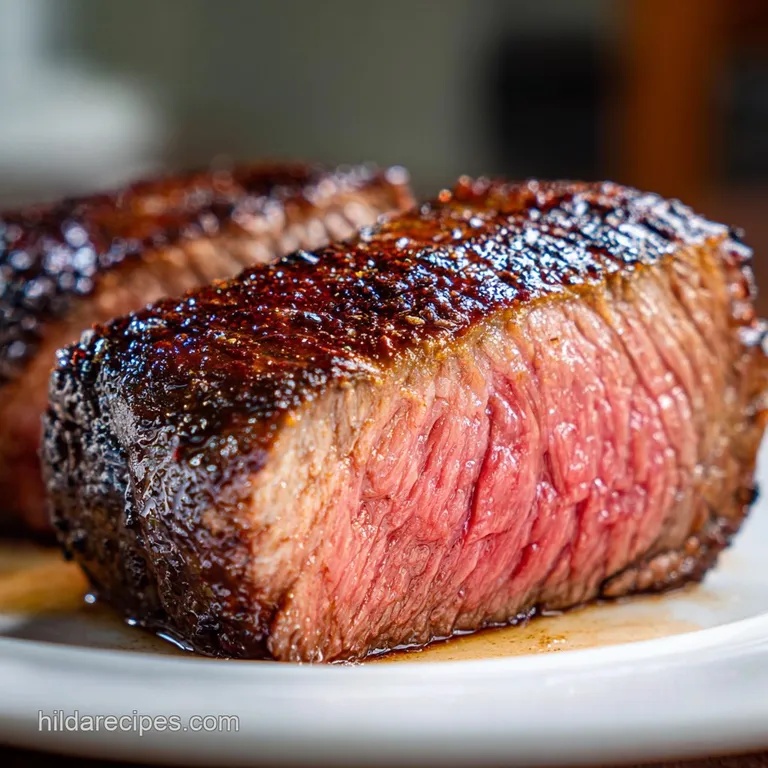
Why Your Roast Is Tough
The most common reason for a chewy tri tip isn't actually the cooking time, but the slicing. This cut has two different grain directions. If you slice with the grain instead of against it, the long muscle fibers stay intact, making it feel like you're eating rubber.
Always find the "V" where the grain shifts and adjust your knife accordingly.
| Problem | Root Cause | Solution |
|---|---|---|
| Gray, boiled exterior | Surface moisture | Pat the meat completely dry with paper towels before searing. |
| Dry, overcooked edges | Too much high heat | Roast at a lower temp first (reverse sear) to cook evenly. |
| Rub falling off | Lack of adhesion | Press spices in firmly and let sit so they form a paste. |
Another issue is the "lean tail." The tri tip is tapered, so the thin end will always cook faster than the thick center. To fix this, you can tuck the thin tail under the roast and tie it with kitchen twine so the whole thing is a uniform thickness.
- ✓ Always use a digital thermometer for accuracy.
- ✓ Pat the meat dry before the spices go on.
- ✓ Let the roast come to room temperature before cooking.
- ✓ Slice against the grain to ensure a tender bite.
- ✓ Don't skip the resting period or the juices will escape.
Adjusting for different crowds
If you are cooking for a larger group, say 12 people, you'll want to buy two roasts rather than one giant one. Two 2.5 lb roasts will cook more evenly than one 5 lb piece of meat. You can fit both in a large cast iron or a roasting pan, but make sure they aren't touching so the air can circulate.
When doubling the recipe, you don't need to double the salt and spices exactly. Use about 1.5 times the rub ingredients to avoid it becoming overly salty. For a smaller meal, you can easily cut a tri tip in half before cooking, but keep a close eye on the temperature as it will cook significantly faster check it at the 20 minute mark.
Flavor twists and variations
I love the classic Santa Maria style, but sometimes I want something a bit richer. You can finish the sear by tossing a knob of butter and some smashed garlic cloves into the pan. Spoon that foaming, garlic scented butter over the meat in the final minute of searing. It’s a total game changer for the crust.
Another favorite is a coffee rub. Swap the paprika for finely ground espresso beans. The acidity in the coffee helps tenderize the meat while providing a deep, earthy bitterness that balances the fat. If you enjoy hearty, comforting meals like this, you should try my Tater Tot Casserole recipe as a side it's pure nostalgia on a plate.
Debunking kitchen tales
"Searing the meat seals in the juices." This is a total myth that’s been around for generations. Searing is actually a drying process, but we do it for the flavor and texture of the crust (the Maillard reaction).
The juices stay inside because of the resting period and the internal temperature, not because the outside is "sealed."
"You should only flip the meat once." Actually, flipping the meat more frequently can help it cook more evenly and prevents the surface from overheating. For a roast this size, a couple of flips during the sear won't hurt a thing and often results in a better crust.
Storage and zero waste
You can keep leftover tri tip in the fridge for up to 4 days in an airtight container. To reheat without drying it out, I recommend slicing it cold and then quickly warming the slices in a pan with a splash of beef broth or butter over low heat.
It’s also fantastic served cold in a salad or on a sandwich with some horseradish cream.
Don't toss those juices left on the cutting board! That’s liquid gold. Pour them over the sliced meat or whisk them into a quick pan sauce with a bit of red wine and cold butter. If you have the fat cap trimmed off, you can render it down in a small pan to use for frying potatoes the next day. It adds an incredible depth of flavor to standard home fries. For a quick breakfast, these leftovers are the perfect companion to my Crispy Hash Browns recipe.
Perfect side dish pairings
Traditionally, tri tip is served with pinquinto beans and garlic bread, but it’s versatile enough to go with almost anything. A crisp wedge salad with blue cheese dressing provides a cool, creamy contrast to the smoky, peppery rub.
I also find that roasted root vegetables, like carrots or parsnips, pick up the sweetness of the garlic powder in the rub beautifully.
If you want a more "steakhouse" feel, a loaded baked potato or a creamy stovetop mac and cheese works wonders. The key is to have something that can soak up those extra juices. A simple chimichurri sauce drizzled over the top adds a bright, herbaceous note that cuts through the richness of the beef perfectly.
Recipe FAQs
How is tri-tip supposed to be cooked?
Reverse sear is the ideal method for consistent doneness. Roast slowly to about 115°F internal temperature, then finish with a very high heat sear in a cast iron skillet to build the crust.
Is it better to cook tri-tip in the oven or grill?
Both methods work well, but the oven provides better temperature control. Use the oven for the initial cook (roast) and finish the meat on a very hot grill or skillet (sear) for the crust.
How to cook tri-tip to fall apart?
Braise or slow roast it well past traditional steak temperatures. While tri-tip is best enjoyed medium rare, cooking it past 195°F in a moist environment will break down the connective tissue for a shreddable texture, similar to our guide for mastering the Slow Cooker Pulled Pork.
How long should you cook a tri-tip per pound?
Expect roughly 15 20 minutes per pound during the low-temperature roasting phase. This is only an estimate; always rely on a meat thermometer, pulling the roast around 130°F for medium rare before the final sear.
What internal temperature should tri-tip reach?
130°F to 135°F yields a perfect medium rare to medium steak like texture. Let the roast rest for at least 10 minutes after pulling it off the heat so carryover cooking can bring it up to serving temperature.
Why does my tri-tip always come out chewy?
You are almost certainly slicing with the grain instead of against it. Since tri-tip has two distinct grain directions, you must find where they meet and cut perpendicular to the fibers on both sections to ensure tenderness.
Can I cook a tri-tip entirely on the grill?
Yes, use the two-zone grilling method to simulate an oven and a sear. Set up one side of your grill for indirect, lower heat (around 325°F) and the other side for direct, high heat. Cook on the cool side, then finish over the hot coals.
How To Cook Tri Tip
Ingredients:
Instructions:
Nutrition Facts:
| Calories | 418 kcal |
|---|---|
| Protein | 43.1g |
| Fat | 27.2g |
| Carbs | 1.2g |
| Fiber | 0.3g |
| Sugar | 0.1g |
| Sodium | 585mg |
