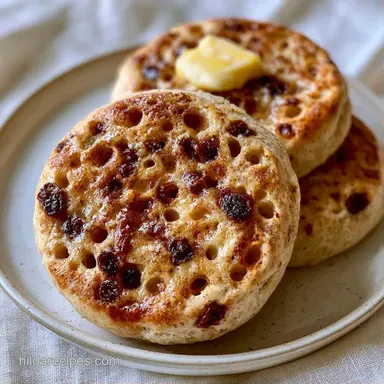
Griddle-Seared Cinnamon Raisin English Muffins

- Time: 20 min active + 22 min cooking + 2 h resting
- Flavor & Texture: Toasted cornmeal crust with a chewy, spiced center
- Perfect for: Weekend brunch or meal prep for the week
Cinnamon Raisin English Muffins
English muffins started as a lean, hearty bread in the UK, designed to be toasted and buttered. They differ from standard rolls because they aren't just baked, they are griddled. This cultural staple relies on a specific density that allows them to be "fork split" rather than sliced, creating those famous nooks and crannies.
You can expect a bread that feels substantial, not airy. The addition of cinnamon and raisins transforms the traditional savory muffin into something that tastes like a cross between a bagel and a cinnamon roll.
The key here is the dual-heat method. Searing the dough first sets a browned bottom crust quickly, and the oven bake then finishes cooking the interior.
The Technique Behind It
- Hybrid Heat: Searing on the griddle before baking sets the bottom crust quickly. This creates the internal tension needed for the muffins to rise with gaps instead of a uniform crumb.
- Cornmeal Buffer: The cornmeal keeps the dough from sticking to the pan. It also adds a toasted, nutty flavor that balances the sweetness of the raisins.
- Controlled Kneading: Five minutes of kneading develops just enough gluten for a chewy bite. Over-kneading would make them too tough and rubbery.
The hybrid method creates a distinct contrast between the scorched exterior and the soft interior.
| Method | Total Time | Texture | Best For |
|---|---|---|---|
| Hybrid (Sear + Bake) | 25 mins | Chewy, crusty | Traditional results |
| Oven Only | 15 mins | Softer, cakey | Quick batches |
Ingredient Deep Dive
- 3 cups (375g) all-purpose flour
- 1 cup (240ml) warm milk
- 2 1/4 tsp (7g) active dry yeast
- 2 tbsp (42g) honey
- 1 tsp (6g) salt
- 2 tbsp (28g) unsalted butter, softened
- 2 tbsp (20g) cornmeal
- 1/2 cup (75g) raisins
- 1 tbsp (8g) ground cinnamon
- 1 tbsp (12g) brown sugar
| Ingredient | What It Does | Best Swap |
|---|---|---|
| All-Purpose Flour | Provides the main structure | Bread flour (makes them chewier) |
| Active Dry Yeast | Creates the lift and air pockets | Instant yeast (skip the foaming step) |
| Honey | Feeds the yeast and adds moisture | Maple syrup (adds a woody note) |
| Cornmeal | Prevents sticking and adds crunch | Polenta (similar result) |
Recipe Specs
- Yield: 10 English muffins
- Prep time: 20 minutes
- Cook time: 15 minutes
- Total time: 2 hours 35 minutes
- Oven Temp: 375°F (190°C)
Essential Equipment

A cast iron skillet or griddle is the best tool for the initial sear because it holds heat evenly. You will also need a baking sheet and parchment paper for the final bake. For dividing the dough, a bench scraper helps keep the portions equal without over-handling the dough.
Key Steps
1. Preparing the Base
Whisk the warm milk (110°F/43°C), honey, and active dry yeast together in a bowl. Let it sit for 5-10 minutes until it becomes foamy. In a separate large bowl, combine the all-purpose flour and salt. Pour in the yeast mixture and softened unsalted butter, stirring until a shaggy dough forms.
2. Incorporating the Flavor
Knead the dough for 5 minutes until the surface looks smooth. Fold in the ground cinnamon, brown sugar, and raisins, ensuring they are evenly distributed. Place the dough in a greased bowl, cover with a damp cloth, and let rise in a warm spot until doubled in size, about 60-90 minutes.
3. Shaping the Muffins
Gently punch down the dough. Use a bench scraper to divide it into 10 equal portions. Roll each into a ball and flatten slightly into a disc. Place the discs on a parchment lined tray dusted with cornmeal, cover, and let rise for another 30-45 minutes.
4. The Griddle Sear and Bake
Preheat the oven to 375°F (190°C). Heat a cast iron skillet or griddle over medium-low heat. Carefully place the muffins in the pan in batches and cook for 7-10 minutes per side until they are golden brown.
Transfer the seared muffins to a baking sheet and bake for 8-10 minutes until they sound hollow when tapped.
Avoiding Common Pitfalls
Yeast Not Foaming
If the milk mixture stays flat after 10 minutes, your yeast is dead. This happens if the yeast is expired or the milk was too hot, which kills the organisms. Start over with fresh yeast and ensure the milk is lukewarm, not steaming.
Dough Too Sticky
If the dough clings to your hands, avoid adding too much extra flour. This can make the muffins dense and dry. Instead, lightly oil your hands or use a bench scraper to fold the dough over itself until it pulls away from the bowl.
Muffins Staying Flat
Flat muffins usually result from a cold rising environment or under-proofing. Ensure your dough rises in a spot that is at least 75°F. If your kitchen is cold, put the bowl inside an oven that is turned off but has the oven light on.
Storage Guidelines
Store these in an airtight container on your counter for up to 3 days. Be sure they have cooled completely before bagging them to prevent trapped steam from making the crust soggy.
These are ideal for meal prep freezing. Wrap each muffin individually in foil and store in a freezer-safe bag; they will keep for 3 months.
When reheating, skip the microwave. Simply slice them open and toast them in a toaster or a buttered skillet to restore the crisp exterior.
Pairing Ideas
I like these topped with salted butter and a drizzle of honey. For a more savory twist, try a slice of sharp cheddar and a piece of turkey bacon. Because of the cinnamon, they also pair well with apple butter or a thin layer of cream cheese.
Easy Swaps
If you prefer a tangier, more artisanal flavor, you can try Sourdough English Muffins using a starter instead of commercial yeast.
Dried Cranberry
Replace the raisins with dried cranberries. The tartness of the berries cuts through the cinnamon sugar, creating a brighter flavor profile.
Lower Sugar Option
Omit the brown sugar and reduce the honey to 1 tablespoon. The raisins provide enough natural sweetness for those who prefer a less sugary bread.
Apple Cinnamon
Swap the raisins for finely diced, dried apples. Make sure the pieces are small so they don't create large holes that cause the muffin to collapse during the sear.
Frequently Asked Questions
What can I put on a cinnamon raisin English muffin?
Honey and butter work well as toppings. These complement the cinnamon and raisin flavors perfectly.
Can the pan be swapped for a non-stick skillet?
A non-stick skillet works if you do not have cast iron. It will still sear the muffins effectively before they go into the oven.
Are these suitable for English muffin pizzas?
They work well, though the cinnamon and raisins create a sweet-and-savory profile. This combination offers a unique twist on the traditional flavor.
Is it possible to fry English muffins?
You can fry slices of the muffin in a skillet with butter. This creates a crispier, toasted texture compared to oven-baking alone.
How to store these muffins after baking?
Keep them in a sealed bin on the counter for up to 3 days. Avoid bagging them while warm to prevent the crust from becoming soggy.
Why do I use cornmeal on the tray?
Cornmeal prevents the dough from sticking to the parchment. It also adds a traditional crunchy texture to the bottom of each muffin.
Could these be frozen for meal prep?
Yes, wrap each muffin individually in foil and store them in a freezer bag for as long as 3 months. This preserves their freshness and prevents freezer burn.
Do these need to be microwaved for reheating?
Avoid using the microwave to reheat them. Instead, slice them open and toast them in a toaster or skillet with butter for a crisp exterior.
Chewy Cinnamon Raisin English Muffins