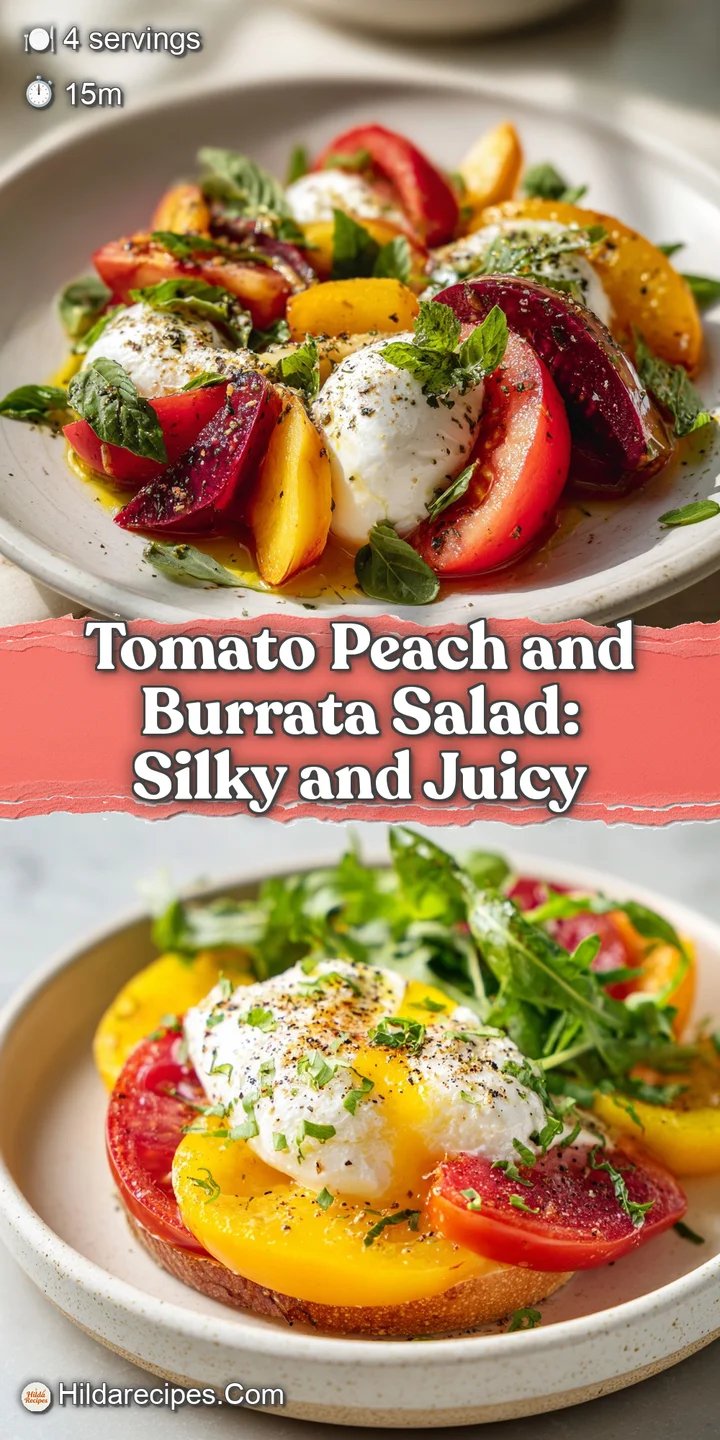
Tomato Peach and Burrata Salad
- Time: Active 15 minutes, Passive 0 minutes, Total 15 minutes
- Flavor/Texture Hook: Silky burrata and juicy fruit
- Perfect for: Backyard barbecues or an elegant starter
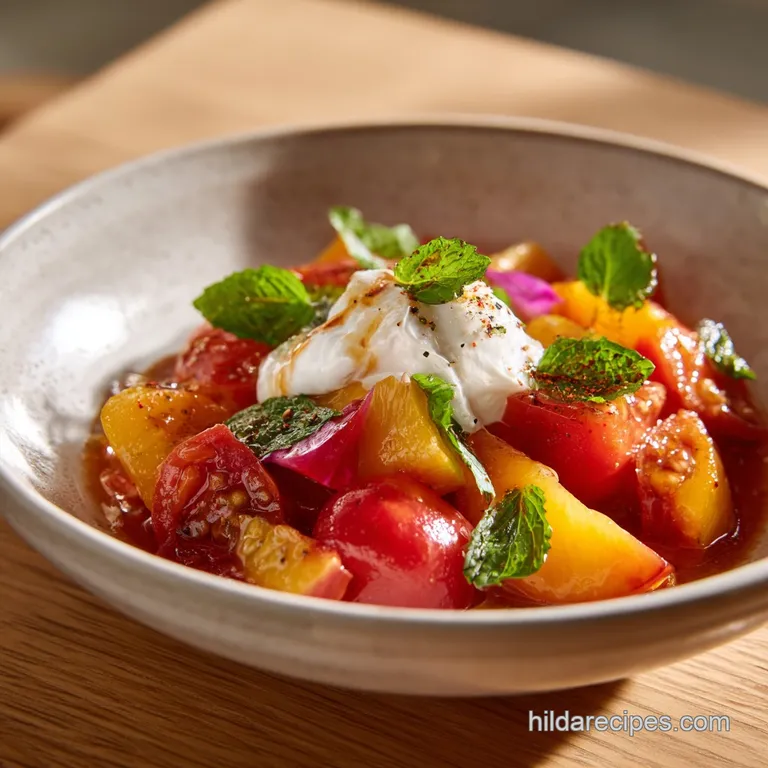
- Sunshine in a Bowl: Tomato Peach and Burrata Salad
- Science of Stone Fruit and Acid
- Essential Numbers for Salad Success
- Selecting the Finest Summer Produce
- Simple Tools for Fresh Results
- Step-by-Step Guide to Plating
- Fixing Common Salad Textures
- Varying Flavors and Textures
- Keeping It Fresh and Using Scraps
- Perfect Pairings for Summer Meals
- Recipe FAQs
- 📝 Recipe Card
Sunshine in a Bowl: Tomato Peach and Burrata Salad
Imagine walking through a farmers market in July. The air is heavy with the scent of sun warmed tomato vines - that earthy, green aroma that tells you the fruit is bursting with sugar. I remember the first time I tried putting peaches with tomatoes.
I was at my grandmother's house, and she had a basket of "seconds" from the orchard that were almost too ripe to hold. We sliced them up, added some backyard tomatoes, and honestly, we didn't even use a recipe.
We just tore some basil and drizzled whatever oil was on the counter. It was a mess, but it was the most vibrant thing I’d ever eaten. Over the years, I’ve perfected that chaotic snack into this tomato peach and burrata salad.
It’s become a tradition in our family, the kind of dish that signals the height of summer. We wait all year for those two weeks when the heirloom tomatoes are heavy and the peaches are fuzzy and floral.
You’re going to love how the cream from the cheese acts like a built in sauce for the fruit. It’s not just a salad; it’s an experience. We’ve all had those sad, refrigerated tomatoes that taste like cardboard, but this dish is the antidote to that.
It’s about celebrating produce when it’s at its peak. Let me show you how to pull this together so every bite feels like a celebration.
Science of Stone Fruit and Acid
The Physics of the Drip: Salt draws moisture out of the tomatoes and peaches through osmosis, creating a natural juice that blends with the dressing. This process ensures the fruit becomes seasoned all the way through rather than just on the surface.
Enzymatic Marriage: The white balsamic vinegar acts as a chemical "brightener," cutting through the heavy fat molecules in the burrata. It prevents the fruit from oxidizing while simultaneously breaking down the cell walls of the basil to release its aromatic oils.
If you enjoy this balance of sweet and savory, you might also find the flavor profile of my Mexican Street Corn recipe interesting, as it also relies on that creamy tangy contrast.
| Method | Time | Texture | Best For |
|---|---|---|---|
| Fresh (Classic) | 15 mins | Crisp and juicy | Peak summer heat |
| Pan Sear (Stovetop) | 18 mins | Charred and smoky | Early season peaches |
| Roasted (Oven) | 25 mins | Jammy and soft | Concentrated sweetness |
Using the stovetop to lightly char the peaches for 2 minutes per side at medium high heat adds a wonderful depth. The oven method, roasting at 400°F (200°C), works best if your tomatoes are slightly underripe and need a boost of caramelization.
Essential Numbers for Salad Success
When you are putting this together, precision matters less than the quality of the fruit, but these checkpoints will ensure your tomato peach and burrata salad comes out perfectly balanced every time.
- Temperature Check: Ensure your 8 oz burrata cheese is at room temperature for at least 30 minutes before serving so the center is truly fluid.
- Fruit Ratio: Aim for roughly 1.5 lb heirloom tomatoes to 2 large ripe peaches to maintain the right sweet to acid ratio.
- Dressing Emulsion: Whisk the 3 tbsp extra virgin olive oil and 1 tbsp white balsamic until the liquid is opaque and slightly thickened.
This recipe serves 4 people as a starter or 2 as a main lunch. If you need to scale it for a larger crowd, I suggest keeping the dressing on the side and only drizzling right before the plates hit the table to avoid sogginess.
Selecting the Finest Summer Produce
The success of this dish lives and dies by your ingredients. Don't even bother with those pale, hard grocery store tomatoes. You want the ones that feel heavy for their size and have a slight "give" when you press them.
| Ingredient | Science Role | Pro Secret |
|---|---|---|
| Heirloom Tomatoes | Provides acid base | Use a serrated knife to prevent bruising the delicate skins. |
| Ripe Peaches | Adds floral sweetness | Smell the stem end; if it doesn't smell like a peach, it won't taste like one. |
| Burrata Cheese | Rich fat source | Break the skin right before serving to let the "stracciatella" flow. |
| White Balsamic | Maintains color | It's less syrupy than dark balsamic, keeping the fruit colors vibrant. |
For the tomatoes, I love using a mix of colors - deep purples, bright yellows, and classic reds. Each color has a slightly different pH level, which adds complexity to the salad. For the peaches, look for "free stone" varieties if you can find them, as the pit pops out much easier without mangling the fruit.
For the Vibrant Base
You'll need 1.5 lb heirloom tomatoes and 2 large ripe peaches. I often mix in some smaller cherry tomatoes if I have them in the garden for a different texture.
For the "Healthier" Vinaigrette
Gather your 3 tbsp extra virgin olive oil, 1 tbsp white balsamic vinegar, and 1 tsp raw honey. The honey is the secret bridge between the stone fruit and the vinegar. It's similar to the balance in my Apple Pomegranate Salad recipe where sweet and tart play together.
Simple Tools for Fresh Results
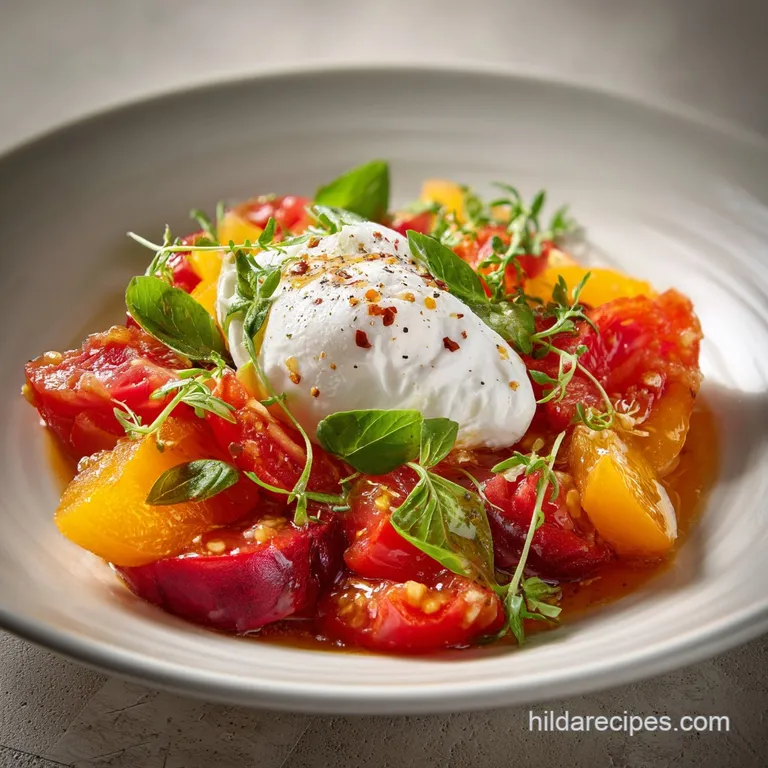
You don't need a pantry full of gadgets for this, but a few specific items make the job much cleaner. A high-quality chef's knife is non negotiable for getting those clean slices through the tomato skins without squishing the seeds out.
- Serrated Knife: This is actually my secret weapon for tomatoes; it grips the waxy skin perfectly.
- Large Platter: Avoid deep bowls. A wide, flat platter allows you to layer the ingredients so the burrata doesn't get buried and the fruit doesn't get crushed under its own weight.
- Small Glass Jar: I prefer shaking the dressing in a jar rather than whisking it in a bowl. It creates a much tighter emulsion.
Chef's Tip: If your peaches are being stubborn and the skin won't come off, don't peel them! The skin on a ripe peach holds a ton of flavor and adds a nice bit of texture to the dish. Just give them a good wash to remove the fuzz.
step-by-step Guide to Plating
Step 1: Prep the Produce
Slice your 1.5 lb heirloom tomatoes into 1/2 inch thick rounds or wedges. Cut the 2 large ripe peaches into similar sized wedges. Wait until you see the juices start to bead on the surface of the tomatoes before moving to the next step.
Step 2: Emulsify the Dressing
In a small jar, combine 3 tbsp extra virgin olive oil, 1 tbsp white balsamic vinegar, 1 tsp raw honey, 0.25 tsp flaky sea salt, and 0.125 tsp cracked black pepper. Shake vigorously until the liquid looks creamy and golden.
Step 3: Layer the Base
Arrange the tomatoes and peaches on a large platter, alternating colors and shapes. Don't be too neat about it; a little overlap is good for flavor mingling.
Step 4: The Finishing Touch
Place the two 4 oz balls of burrata in the center of the fruit. Using a sharp knife or your fingers, gently tear the tops of the cheese open until the creamy interior begins to spill out.
Step 5: Garnish and Serve
Tear 0.5 cup fresh basil leaves over the top. I prefer tearing by hand rather than chopping with a knife because it prevents the edges of the basil from turning black. Drizzle the dressing over everything, focusing on the open cheese.
Fixing Common Salad Textures
Sometimes things don't go as planned in the kitchen. Maybe your fruit wasn't as ripe as you thought, or you dressed the salad too early. Don't panic; most of these issues are easily fixed.
Watery and Bland Salad
If your salad looks like a soup at the bottom of the platter, it usually means you salted the tomatoes too far in advance. Salt draws out water. Next time, salt the tomatoes only 5 minutes before serving.
Peaches Are Too Hard
If you bought peaches that are still firm, don't use them raw. This is where the stovetop method saves the day. Toss the wedges in a hot pan with a tiny bit of butter for 60 seconds. This softens the fibers and mimics the sweetness of a ripe peach.
| Problem | Root Cause | Solution |
|---|---|---|
| Muted Basil Flavor | Chopping with dull knife | Tear leaves by hand to release aromatic oils without bruising. |
| Oily Dressing | Poor emulsion | Add a tiny drop of Dijon mustard to help the oil and vinegar bond. |
| Rubbery Cheese | Serving while too cold | Let the burrata sit in warm water (inside its container) for 10 mins. |
Common Mistakes Checklist
- ✓ Never store your heirloom tomatoes in the fridge; it destroys their texture and flavor.
- ✓ Don't skip the honey; it's the glue that connects the peaches to the savory elements.
- ✓ Use white balsamic, not dark; dark balsamic will turn the peaches an unappealing muddy brown.
- ✓ Always tear the basil last to ensure the aroma is fresh when the plate hits the table.
Varying Flavors and Textures
If you want to take this tomato peach and burrata salad in a different direction, it's incredibly easy to adapt. I've often made this with a few slices of salty prosciutto draped over the top to add a cured meat element.
Adding More Crunch
If you feel the dish is too "soft," try adding 1/4 cup of toasted pine nuts or slivered almonds. The nutty crunch provides a great contrast to the velvety cheese.
Making This Vegan
Swap the burrata for a high-quality almond based ricotta or a "mozzarella" made from cashews. Drizzle with a little extra olive oil to make up for the missing dairy fat.
Seeking a Spicy Kick
A pinch of red pepper flakes or a thin slice of serrano chili can work wonders here. The heat plays beautifully against the cold, creamy cheese and the sweet peaches.
Keeping It Fresh and Using Scraps
This salad is best enjoyed within an hour of assembly. However, life happens, and sometimes you have leftovers. Because of the high water content in the fruit, the salad will continue to release juices as it sits.
Storage: Store leftovers in an airtight container in the fridge for up to 24 hours. Note that the basil will wilt and turn dark, and the burrata skin may toughen slightly.
Zero Waste: If the salad becomes too watery the next day, don't throw it out! Toss the whole mess (fruit, cheese, and juices) into a blender. Add a splash of tomato juice or a bit of crusty bread, and you have a "Summer Peach Gazpacho" that is absolutely divine. You can also use the leftover dressing on a simple Cucumber Tomato Salad recipe.
Perfect Pairings for Summer Meals
This salad is quite rich because of the burrata, so I like to serve it with items that are light and crisp. It’s the ultimate partner for anything coming off the grill.
- Grilled Sourdough: Brush thick slices of sourdough with olive oil and grill until charred. Use them to scoop up the extra cream and tomato juice from the plate.
- Lemon Herb Chicken: A simple roasted or grilled chicken breast seasoned with rosemary and lemon zest complements the floral notes of the peaches.
- Crisp White Wine: Reach for a Sauvignon Blanc or a dry Rosé. The acidity in the wine cuts through the fat of the cheese perfectly.
If you’re hosting a larger gathering, this salad looks stunning alongside a Greek Salad Recipe. The two offer different vibes one creamy and sweet, the other salty and tangy making for a really well rounded spread. Trust me, once you put this on the table, it’s usually the first thing to vanish. Enjoy the sun on your plate!
Recipe FAQs
Does peach go with burrata?
Yes, absolutely. The floral sweetness of a ripe peach provides a beautiful, necessary contrast to the rich, milky fat of the burrata.
What dressing is best for burrata salad?
A light vinaigrette featuring white balsamic vinegar is best. Avoid heavy, opaque dressings; the acidity cuts the creaminess, and white balsamic maintains the vibrant colors of the fruit.
What fruit goes best with burrata?
Stone fruits like peaches and figs pair wonderfully, alongside figs and berries. The key is selecting fruit that offers a balance of sweetness and slight tartness against the cheese's texture.
What is a burrata and tomato salad called?
It is most commonly called a variation of Burrata Caprese or Summer Tomato Burrata Salad. Adding the peach makes it a specific seasonal variation, highlighting fresh summer produce.
How do I stop my burrata salad from becoming watery?
Salt the tomatoes gently and dress the salad immediately before serving. Salting too early draws excess liquid out of the tomatoes via osmosis; this same principle of rapid flavor infusion applies when making a quick Black Bean Corn recipe where you want crunch.
How do I make the dressing emulsify correctly?
Shake the oil and vinegar aggressively in a sealed jar until opaque. A tight emulsion prevents the dressing from separating immediately, which is crucial when drizzling over delicate cheese like burrata.
Can I substitute the peaches with another fruit?
Yes, roasted plums or nectarines work well as direct swaps. If you are interested in similar sweet/savory flavor balancing techniques in a different context, check out the principles used in our Simple Cottage Cheese recipe where we balance richness.
Tomato Peach Burrata Salad
Ingredients:
Instructions:
Nutrition Facts:
| Calories | 293 kcal |
|---|---|
| Protein | 11.2g |
| Fat | 21.0g |
| Carbs | 18.6g |
| Fiber | 3.4g |
| Sugar | 15.8g |
| Sodium | 285mg |
