Overnight Egg Casserole: Savory and Hearty
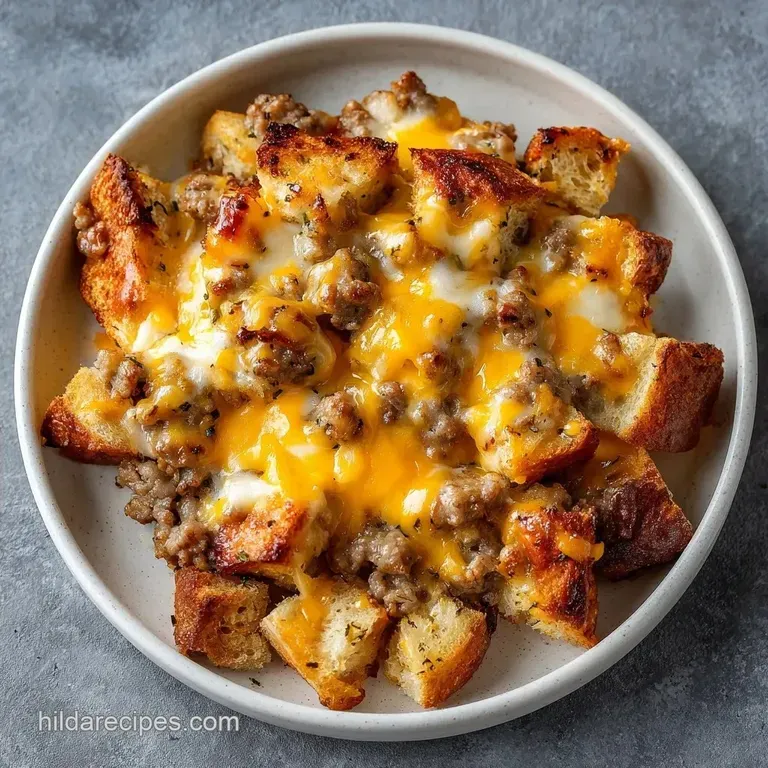
- Time:15 minutes active + 8 hours chilling
- Flavor/Texture Hook: Savory mahogany sausage and a velvety, set custard
- Perfect for: Holiday brunches, meal prep for busy weeks, or hosting a crowd
- The Best Overnight Egg Casserole Secrets
- Component Analysis
- Everything You Need in the Pantry
- The Right Tools for the Job
- Step by Step to Brunch Success
- Avoid These Common Kitchen Blunders
- Troubleshooting Common Issues
- Mixing Up Your Breakfast Flavors
- Adjusting the Batch Size
- Truths About Breakfast Bakes
- Saving and Warming Leftovers
- Making Your Casserole Look Great
- Recipe FAQs
- 📝 Recipe Card
That first sizzle of breakfast sausage hitting a hot skillet is the only alarm clock I actually like. There is something about the smell of browned meat, garlic, and smoked paprika filling the kitchen at 7 PM that makes the next morning feel effortless. I remember the first time I tried to rush a breakfast bake.
I didn't let the bread soak, and I ended up with a dish that was basically dry croutons floating in a pool of undercooked egg. It was a disaster, but it taught me that patience is the main ingredient here.
The secret to a proper Overnight Egg Casserole is the wait. When you let that custard sit in the fridge, the sourdough doesn't just get wet, it transforms. It stops being "bread" and starts being a structural element that holds onto the cheese and sausage.
By the time it hits the oven, the flavors have married, and you're just waiting for the heat to set the proteins.
You can expect a dish that is hearty and comforting, with edges that get slightly chewy and a center that feels like a savory pudding. It's the kind of comfort food that feels like a hug, perfect for when you want to spend your morning with your guests instead of scrubbing pots.
The Best Overnight Egg Casserole Secrets
Right then, let's talk about why this actually works. Most people think they're just making a baked omelet with bread, but it's actually a savory custard. If you don't get the ratio of fat to protein right, you'll end up with something rubbery or something that weeps water all over your plate.
Bread Hydration: The long soak allows the custard to penetrate the center of each sourdough cube. This prevents the "dry pocket" syndrome where the outside is mushy but the inside is still a raw cube of bread.
Fat Stabilization: Using a mix of whole milk and heavy cream creates a more stable emulsion. According to the guides at Serious Eats, the extra fat in cream prevents the eggs from over curdling, giving you that velvety texture.
Protein Setting: The slow bake at 175°C ensures the eggs coagulate evenly. If the oven is too hot, the edges overcook and toughen before the middle even wobbles.
Flavor Infusion: Smoked paprika and garlic powder aren't just for show. During the 8 hour chill, these spices permeate the fats in the sausage and cheese, deepening the overall savory profile.
| Feature | Freshly Assembled | Overnight Soak |
|---|---|---|
| Bread Texture | Distinct cubes, some dry | Fully integrated, custard like |
| Flavor Depth | Layered but separate | Unified and deepened |
| Bake Time | Shorter, but uneven | Consistent throughout |
| Best For | Quick weeknight meal | Crowd-pleasing brunch |
Component Analysis
Understanding your ingredients helps you make better choices when you're staring at a nearly empty fridge.
| Ingredient | Science Role | Pro Secret |
|---|---|---|
| Sourdough | Structural Base | Use slightly stale bread for better absorption |
| Heavy Cream | Emulsifier | Adds richness and prevents "weeping" |
| Sharp Cheddar | Flavor & Binding | Grate it yourself to avoid cornstarch clumps |
| Smoked Paprika | Aromatic | Adds a subtle "fire roasted" depth |
Everything You Need in the Pantry
I've found that using a sourdough or a sturdy French bread is non negotiable here. Soft white sandwich bread will just disintegrate into a mushy mess during the soak. You want something with a bit of a crust to hold its own.
- 6 cups (340g) sourdough or French bread, cubed Why this? Sturdy crumb prevents the dish from becoming soggy.
- 1 lb (450g) breakfast sausage, crumbled and browned Why this? Provides the essential savory fat and salt.
- 2 cups (225g) sharp cheddar cheese, shredded Why this? High flavor profile that cuts through the rich cream.
- 2 tbsp (28g) unsalted butter, melted Why this? Prevents sticking and adds a nutty crust.
- 8 large eggs Why this? The primary binder and protein source.
- 2 cups (480ml) whole milk Why this? Provides the necessary liquid volume for the soak.
- 1/2 cup (120ml) heavy cream Why this? Ensures a silky, non rubbery texture.
- 1 tsp (5g) salt Why this? Enhances all other flavors.
- 1/2 tsp (2g) black pepper Why this? Adds a mild, woody heat.
- 1/2 tsp (2g) garlic powder Why this? Distributes savory notes evenly throughout the custard.
- 1/4 tsp (1g) smoked paprika Why this? Adds a hint of woodsmoke aroma.
| Original Ingredient | Substitute | Why It Works |
|---|---|---|
| Sourdough Bread | Challah or Brioche | Richer, sweeter flavor. Note: Result will be softer and denser |
| Breakfast Sausage | Ground Turkey + Sage | Leaner protein. Note: Add 1 tbsp olive oil to mimic sausage fat |
| Sharp Cheddar | Gruyère or Swiss | Nutty, sophisticated taste. Note: Slightly less "sharp" than cheddar |
| Heavy Cream | Full fat Greek Yogurt | Similar thickness. Note: Adds a tangy zip; may slightly alter set |
The Right Tools for the Job
You don't need a fancy kitchen for this, but a few specific items make the process smoother. I always use a 9x13 inch ceramic or glass baking dish. Metal pans tend to brown the bottom too quickly, while ceramic distributes the heat more evenly for a consistent set.
A large mixing bowl is essential for the custard. You want plenty of room to whisk those eggs into a froth without splashing milk all over your counters. I also recommend a silicone spatula, which is great for pressing the bread down into the liquid.
Finally,, make sure you have a tight fitting foil cover. If the dish isn't sealed properly in the fridge, the top layer of bread can dry out and form a skin, which ruins that velvety finish we're aiming for.
Step by step to Brunch Success
Let's get into it. Trust the process, especially the resting part.
- Brown the breakfast sausage in a skillet over medium high heat until mahogany colored and crispy. Note: Don't rush this; the browned bits provide the most flavor. Drain excess grease.
- Grease a 9x13 inch baking dish with melted butter.
- Layer half of the bread cubes on the bottom, followed by half of the browned sausage and shredded cheese. Repeat the layers, ending with a generous topping of cheese.
- In a large mixing bowl, whisk together the eggs, whole milk, heavy cream, salt, black pepper, garlic powder, and smoked paprika until uniform and frothy.
- Pour the egg custard evenly over the assembled casserole, pressing down lightly with a spatula to ensure all bread is submerged.
- Cover the dish tightly with foil and refrigerate for at least 8 hours.
- Preheat oven to 350°F (175°C). Remove the foil and bake for 40–45 minutes until the center is set and the top is deep golden brown.
- Let the casserole rest for 5–10 minutes before slicing to allow the structure to firm up.
Chef's Note: If you're in a rush, you can bake this after 4 hours, but the texture won't be as cohesive. The full 8 hour soak is what makes this an actual Overnight Egg Casserole and not just a breakfast bake.
Avoid These Common Kitchen Blunders

One of the most common issues I see is a "weeping" casserole, where a layer of water forms at the bottom. This usually happens because the eggs were over beaten or the dish was cooked at too high a temperature, causing the proteins to squeeze out the moisture.
Troubleshooting Common Issues
| Issue | Solution |
|---|---|
| Why Your Casserole is Soggy | If the center feels like porridge even after 45 minutes, you've likely used bread that was too moist or added too much liquid. Sourdough should be slightly dry. |
| Why Your Eggs are Rubbery | This is almost always a temperature issue. If you bake it at 400°F instead of 175°C, the eggs cook too fast and toughen. Keep the heat steady and use a meat thermometer to check the center. |
| Why the Top is Burnt but Middle is Raw | This happens when the cheese on top browns too quickly. If you notice the top getting dark around the 20 minute mark, loosely tent the dish with foil for the remaining time. |
Common Mistakes Checklist:
- ✓ Did you drain the sausage grease? (Too much grease makes the custard split)
- ✓ Is the foil seal tight? (Prevents fridge odors and drying)
- ✓ Did you use a sturdy bread? (Avoids the "mush" factor)
- ✓ Did you let it rest for 10 minutes? (Crucial for clean slices)
- ✓ Is the oven preheated to exactly 175°C? (Ensures even protein set)
Mixing Up Your Breakfast Flavors
This recipe is a great base, but you don't have to stick to the classics. If you want to move away from the meat heavy version, you can make a Meatless Overnight Egg Casserole by swapping the sausage for sautéed mushrooms and spinach. The earthy mushrooms mimic the savory depth of the meat.
For those who prefer a different starch, try a Sausage and Egg Casserole without Bread. You can substitute the bread cubes with 30g of frozen, thawed hash browns. It changes the texture from a savory bread pudding to something more like a hearty potato bake.
If you're looking for something with a bit more structure, like a traditional quiche, you might consider using an Easy Pie Crust recipe as a base instead of cubed bread. Or, if you want to take this in a zesty direction, add diced green chiles and replace the cheddar with Pepper Jack cheese for a Southwest vibe.
Adjusting the Batch Size
Scaling a custard based dish is a bit different than scaling a soup. You have to be careful with the ratios so the bake time doesn't get skewed.
Scaling Down (Half Batch) Use a 8x8 inch square pan. Reduce the baking time by about 20% (check it at 30-35 minutes). When it comes to the eggs, beat one egg in a small bowl and use only half of it to keep the liquid ratio exact.
Scaling Up (Double Batch) Do not put twice the ingredients into one deep pan; it will never cook in the middle. Instead, use two 9x13 inch pans. Increase the salt and smoked paprika to only 1.5x the original amount, as spices can become overwhelming when doubled.
Bake both pans on the same rack, but rotate them halfway through to ensure even browning.
For those baking larger portions for a crowd, remember to lower the oven temp by about 10°C if you are using a convection oven, as the fan can dry out the top before the center sets.
Truths About Breakfast Bakes
There are a few things people tell you about these casseroles that just aren't true. Let's set the record straight.
The "Seal in Juices" Myth: Some say you need to sear the sausage to "lock in" the juices. That's not how it works. Searing creates a crust and adds flavor through browning, but it doesn't stop moisture loss. We sear the sausage for the taste, not for moisture.
The "More Eggs = Firmer" Myth: Adding extra eggs doesn't necessarily make the dish firmer; it often just makes it rubbery. The firmness comes from the ratio of liquid to protein and the bake time. Stick to the 8 egg count for the best balance.
The "Fresh Bread is Better" Myth: In most baking, fresh is best. In an Overnight Egg Casserole, fresh bread is actually a liability. Stale bread has more room in its starch structure to absorb the custard, leading to a better texture.
Saving and Warming Leftovers
If you have leftovers, don't just throw them in the microwave on high. That will turn your beautiful custard into a rubbery sponge.
Storage Guidelines Keep your sliced pieces in an airtight container in the fridge for up to 4 days. If you need to freeze it, I recommend freezing individual portions wrapped in parchment paper and then placed in a freezer bag. They will keep for about 2 months.
Reheating the Right Way For the best results, reheat slices in a 175°C oven for 10-15 minutes. If you must use a microwave, use 50% power in 30 second bursts. This prevents the eggs from overheating and releasing water.
Zero Waste Tips If you have leftover bread heels or crusts, don't toss them. Cube them up and freeze them in a bag for your next batch of this recipe. Also, if you have a bit of extra custard left in the bowl, pour it into a muffin tin and bake it alongside the casserole for "mini breakfast bites" for the kids.
Making Your Casserole Look Great
Since this is often a centerpiece for a brunch, presentation matters. Instead of just cutting squares, use a sharp serrated knife to get clean, straight edges. This prevents the cheese and sausage from pulling away from the bread.
I love serving this on a large wooden platter. To brighten up the plate, add a handful of fresh chopped parsley or chives on top right before serving. The green pop against the golden brown cheese looks professional and tastes fresh.
For a full spread brunch, this pairs beautifully with a Classic Macaroni Salad as a cold, creamy side dish. The tanginess of the salad cuts through the richness of the egg and sausage perfectly. Finish it off with some fresh berries and a pot of coffee, and you've got a morning that feels like a celebration.
Recipe FAQs
Can I make a breakfast casserole the night before?
Yes, it is designed for overnight prep. Refrigerating the dish for at least 8 hours allows the bread to fully absorb the custard, ensuring a consistent texture throughout.
How to cook a scrambled egg casserole recipe in an oven?
Preheat your oven to 350°F (175°C). Remove the foil and bake for 40–45 minutes until the center is set and the top is deep golden brown.
What's the best breakfast to cook for a crowd?
An overnight egg casserole is ideal because of its scale and ease. One 9x13 dish serves 8 people, and if you enjoy this make-ahead style, you will love our savory breakfast bake.
Is it true that a breakfast strata is just a fancy name for this casserole?
No, this is a common misconception. While they look similar, a true strata specifically requires the overnight soaking process to create its signature custard-like structure.
What makes this one of the best easy breakfast ideas for the whole family?
The minimal morning effort. Since the layering and whisking are done the night before, you only need to turn on the oven to have a complete meal ready.
Why is my casserole center soggy after baking?
You likely used bread that was too moist. Sourdough or French bread should be slightly dry to properly absorb the liquids without becoming porridge-like.
Why are the eggs rubbery?
The oven temperature was likely too high. Baking above 350°F (175°C) causes the eggs to cook too rapidly, which toughens the proteins.
Overnight Egg Casserole for 8 Servings