Easy Chocolate Cake Recipe with Ganache
- Time: Active 15 minutes, Passive 35 minutes, Total 50 minutes
- Flavor/Texture Hook: Velvety chocolate crumb with a satin smooth finish
- Perfect for: Family celebrations or a cozy weekend treat
- Master This Easy Chocolate Cake Recipe with Ganache
- Deeply Fudgy Traditional Chocolate Cake
- Why This Cake Stays Moist
- Precision Metrics for Better Baking
- Choosing Quality Ingredients for Success
- Essential Tools for Professional Results
- Simple Steps for Glossy Ganache
- Fixing Common Problems and Mistakes
- Creative Flavor Twists for Variety
- Keep Your Cake Fresh Longer
- Beautiful Ways to Serve Cake
- Recipe FAQs
- 📝 Recipe Card
Master This Easy Chocolate Cake Recipe with Ganache
The air in my kitchen changes the second that boiling water hits the cocoa powder. It isn't just a smell; it's a heavy, dark cloud of chocolate that reminds me of my aunt’s Sunday bakes.
I used to watch her stir that thin, splashing batter and think it was a disaster waiting to happen, but she just winked and told me to trust the process.
This Easy Chocolate Cake Recipe with Ganache is the result of years spent chasing that exact memory. We've all tried those box mixes that taste like sweet cardboard, but this version uses real buttermilk and a specific blooming technique to get a crumb so moist it practically melts.
It’s the kind of comfort food that bridges generations, turning a simple Tuesday into something worth remembering.
We are going for a high contrast experience here. You get that deep, almost bitter Dutch processed cocoa base playing against a sweet, heavy cream ganache that sets into a fudge like blanket.
It’s not about being fancy or using complicated tools; it's about knowing how simple ingredients like oil and acid work together to create something better than the sum of its parts.
Deeply Fudgy Traditional Chocolate Cake
Growing up, I thought all cakes were difficult, but this one changed my mind. It’s a one bowl wonder that relies on liquid fat rather than creaming butter, which means you don't even need a heavy stand mixer to get it right.
Trust me, the batter will look thinner than you expect, but that high moisture content is exactly what prevents the "dry cake" heartbreak.
I’ve made plenty of mistakes over the years, like using cold eggs or forgetting the salt, and I've learned that the little things matter most. For instance, using room temperature buttermilk ensures the fats don't seize up, keeping the emulsion smooth.
It’s these small, perfected secrets that make this the best Easy Chocolate Cake Recipe with Ganache I've ever shared.
Why This Cake Stays Moist
- Fat Emulsification: Using neutral oil instead of butter keeps the cake soft even when refrigerated, as oil remains liquid at lower temperatures.
- The Acid Lift: Buttermilk reacts instantly with the baking soda, creating tiny carbon dioxide bubbles that produce a light, airy structure despite the heavy cocoa.
- Cocoa Blooming: Boiling water dissolves the cocoa solids and releases trapped flavor compounds, resulting in a more intense chocolate profile.
- Sugar Hydration: The high sugar to flour ratio helps lock in water molecules, which keeps the crumb from drying out during the bake.
| Cake Thickness | Internal Temp | Rest Time | Visual Cue |
|---|---|---|---|
| 2 inches (Single Pan) | 98°C | 15 mins | Edges pull away slightly |
| 1 inch (Layer Tins) | 96°C | 10 mins | Center springs back firmly |
| Cupcakes | 95°C | 5 mins | Domed top with no wetness |
If you are looking for a different texture profile for your dessert table, you might also enjoy my Classic Buttery Shortbread recipe which offers a wonderful crisp contrast to this velvety cake.
Precision Metrics for Better Baking
| Component | Science Role | Pro Secret |
|---|---|---|
| Dutch Processed Cocoa | Flavor & Color | Sift it twice to remove stubborn lumps that cause bitter spots. |
| Boiling Water | Solvency | Add it last to "bloom" the chocolate and thin the gluten strands. |
| Full fat Buttermilk | Tenderizer | The lactic acid breaks down tough gluten for a more delicate bite. |
| Granulated Sugar | Humectant | It does more than sweeten; it keeps the crumb tender and moist. |
This recipe is built on the balance between the 210g of all purpose flour and the 400g of sugar. It might seem like a lot of sugar, but it is necessary to counteract the drying effect of the 75g of unsweetened cocoa powder. Always measure your flour by weight if possible to avoid a heavy, bread like texture.
Choosing Quality Ingredients for Success
- All purpose flour (210g): Provides the structure. Why this? Lower protein than bread flour ensures a tender, soft cake crumb.
- Granulated sugar (400g): For sweetness and moisture. Why this? Sugar is a liquid ingredient once melted, keeping the cake fudgy.
- Unsweetened Dutch processed cocoa powder (75g): The flavor base. Why this? It's treated with alkali to reduce acidity and darken the color.
- Baking powder & Soda (1.5 tsp each): The leaveners. Why this? The soda reacts with buttermilk; the powder provides a second lift.
- Fine sea salt (1 tsp): Flavor enhancer. Why this? It cuts through the sugar and intensifies the chocolate notes.
- Large eggs (2): Binding agents. Why this? Room temperature eggs incorporate better into the liquid fat.
- Full fat buttermilk (240ml): The tenderizer. Why this? The fat and acid combination creates a velvety mouthfeel.
- Neutral oil (120ml): The moisture source. Why this? Oil ensures the cake stays moist longer than a butter based recipe.
- Pure vanilla extract (2 tsp): Aromatic bridge. Why this? Vanilla actually makes chocolate taste more like "chocolate."
- Boiling water (240ml): The bloomer. Why this? It extracts the deepest flavor from the cocoa powder particles.
- Semi sweet chocolate (225g): For the ganache. Why this? 60% cacao provides a sophisticated balance of sweet and dark.
- Heavy whipping cream (240ml): For the ganache. Why this? 36% fat content is required for a stable, pourable glaze.
| Original Ingredient | Substitute | Why It Works |
|---|---|---|
| Full fat Buttermilk | Plain Yogurt + Milk | Similar acidity levels. Note: Use 120ml of each mixed together. |
| Dutch processed Cocoa | Natural Cocoa Powder | More acidic. Note: Add an extra pinch of baking soda to balance. |
| Neutral Oil | Melted Butter | Richer flavor. Note: Cake will be slightly firmer when cold. |
Essential Tools for Professional Results
You don't need a high end setup for this Easy Chocolate Cake Recipe with Ganache, but a few specific tools make the job much cleaner. I always use a large stainless steel whisk rather than an electric one for the initial mixing to avoid overworking the flour.
Over mixing is the fastest way to turn a silky cake into a rubbery one.
Make sure you have two 20cm round cake pans or one large 23x33cm rectangular pan. Lining the bottom with parchment paper is a non negotiable step for me. There is nothing worse than a cake that refuses to leave the pan, and even the best "non stick" surfaces can be temperamental with a batter this moist and sugary.
Simple Steps for Glossy Ganache
- Prep the oven. Heat to 180°C and grease your pans thoroughly with oil and a dusting of cocoa powder. Note: Using cocoa instead of flour prevents white streaks on the finished cake.
- Combine dry ingredients. Sift the flour, sugar, cocoa, baking powder, baking soda, and salt into a large bowl.
- Mix the liquids. Whisk the eggs, buttermilk, oil, and vanilla together in a separate jug until completely uniform and yellow.
- Merge the two. Pour the wet ingredients into the dry and whisk gently by hand until no large flour streaks remain.
- Bloom the cocoa. Carefully pour in the boiling water. Stir slowly until the batter is thin and glossy.Note: Don't panic; it will look like chocolate soup at this stage.
- Bake the cake. Divide the batter and bake for 35 minutes until a toothpick comes out with just a few moist crumbs.
- Cool completely. Leave the cakes in the pan for 15 minutes, then invert onto a wire rack.
- Heat the cream. Bring the heavy cream to a simmer (about 82°C) until small bubbles form around the edges.
- Melting the chocolate. Pour hot cream over the chopped chocolate and let it sit for 5 minutes until the chocolate is fully softened.
- Emulsify the ganache. Stir from the center outward until the mixture turns into a dark, shimmering glaze.
| Method | Time | Texture | Best For |
|---|---|---|---|
| Standard Oven | 35 mins | Even, soft crumb | Traditional layer cakes |
| Convection (Fan) | 28 mins | Slightly crisper edges | Quick afternoon bakes |
| Stovetop (Steam) | 50 mins | Dense, pudding like | No oven emergencies |
Fixing Common Problems and Mistakes
Why Your Cake Sinks in the Center
The most common reason for a sunken center is opening the oven door too early. The structure of the cake is held up by air bubbles and steam; if you let the heat out before the protein in the eggs has set, the whole thing collapses. Another culprit is expired baking soda.
If your soda is more than six months old, it might have lost its chemical "punch," leaving you with a flat, heavy brick instead of a light cake.
Why Your Ganache is Grainy
Grainy ganache usually happens because the cream was too hot or you stirred it too aggressively. If the cream reaches a rolling boil, it can cause the fat in the chocolate to separate. To fix this, you can try whisking in a tablespoon of room temperature cream very slowly.
This helps re emulsify the fats and liquids into a silky finish.
| Problem | Root Cause | Solution |
|---|---|---|
| Dry, crumbly texture | Over baking | Reduce oven time by 5 mins next time; check with a probe. |
| Bubbles on top | Over mixing batter | Tap the filled pans on the counter twice before baking. |
| Ganache won't set | Too much cream | Melt in another 30g of chocolate to thicken the ratio. |
Common Mistakes Checklist
- ✓ Always use room temperature eggs to ensure they emulsify with the oil properly.
- ✓ Do not skip sifting the cocoa powder; lumps will not dissolve in the batter.
- ✓ Ensure the water is truly boiling when added to maximize the blooming effect.
- ✓ Let the cake cool 100% before pouring the ganache or it will simply slide off.
- ✓ Use a serrated knife dipped in hot water for those clean, professional slices.
Creative Flavor Twists for Variety
If you want to change the profile of this Easy Chocolate Cake Recipe with Ganache, the easiest way is to play with the liquid. Replacing the boiling water with hot, strong coffee creates a "Mocha" version that is incredibly sophisticated.
The caffeine doesn't make it taste like coffee; it just makes the chocolate taste three times more intense.
For those who want a shortcut for smaller treats, you might like my No Bake Chocolate recipe which uses similar flavor profiles without needing the oven. If you're feeling adventurous with this cake, try adding a half teaspoon of cinnamon and a tiny pinch of cayenne to the dry ingredients for a Mexican Chocolate twist that warms the back of the throat.
- If you want a Salted Caramel vibe: Drizzle store-bought caramel over the set ganache and top with flaky sea salt.
- If you want more texture: Fold 100g of toasted walnuts or pecans into the batter just before adding the boiling water.
- If you want a fruit contrast: Place fresh raspberries between the cake layers before topping with the heavy ganache.
Keep Your Cake Fresh Longer
Storing a ganache topped cake requires a bit of care. Because of the dairy in the cream, I recommend keeping this in the fridge if your kitchen is warm. It will stay moist for up to 5 days if kept in an airtight container.
If you find the ganache has become too firm in the fridge, just let the slice sit at room temperature for 20 minutes before eating to restore that velvety texture.
For freezing, it's best to freeze the cake layers separately without the ganache. Wrap them tightly in plastic wrap and then foil; they’ll last for 3 months. When you're ready for a treat, thaw the layers overnight in the fridge and make a fresh batch of ganache to pour over the top.
It tastes exactly like the day it was baked!
Beautiful Ways to Serve Cake
Presentation is where you can really show off. While a plain pour of ganache is stunning, you can wait for the ganache to cool to a peanut butter consistency and then whip it with a hand mixer. This creates a fluffy, matte frosting that is much easier to pipe into decorative swirls.
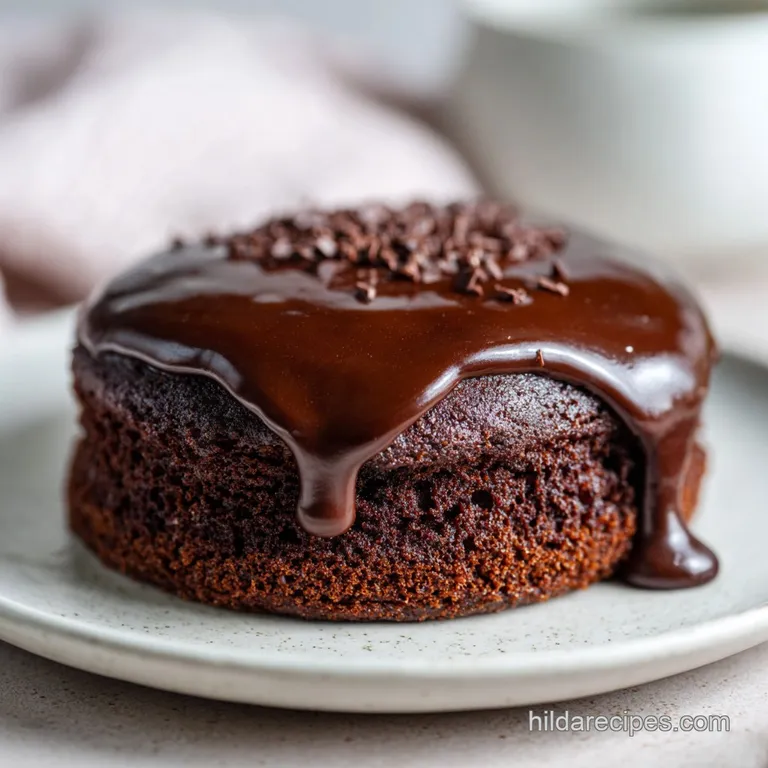
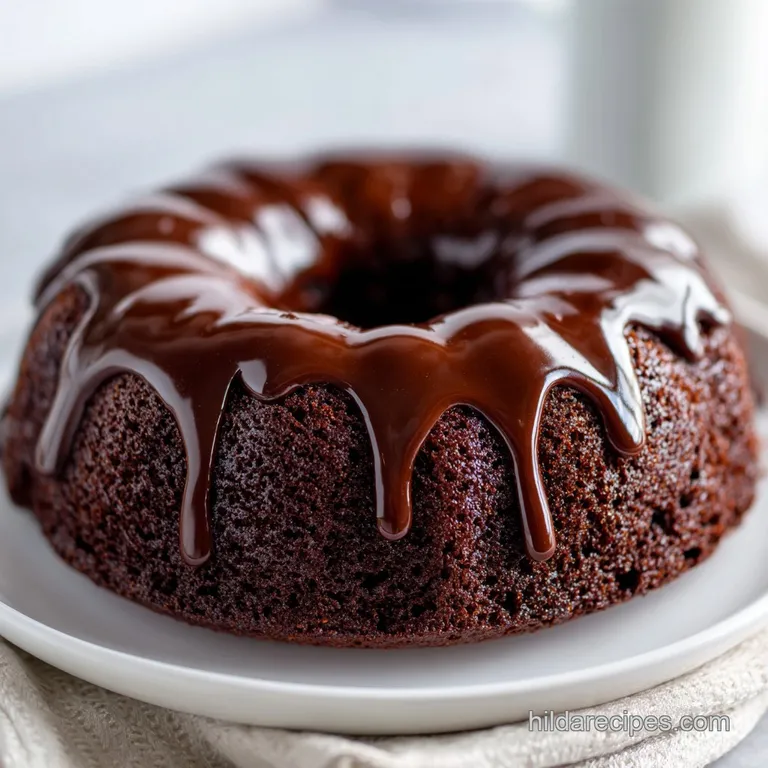
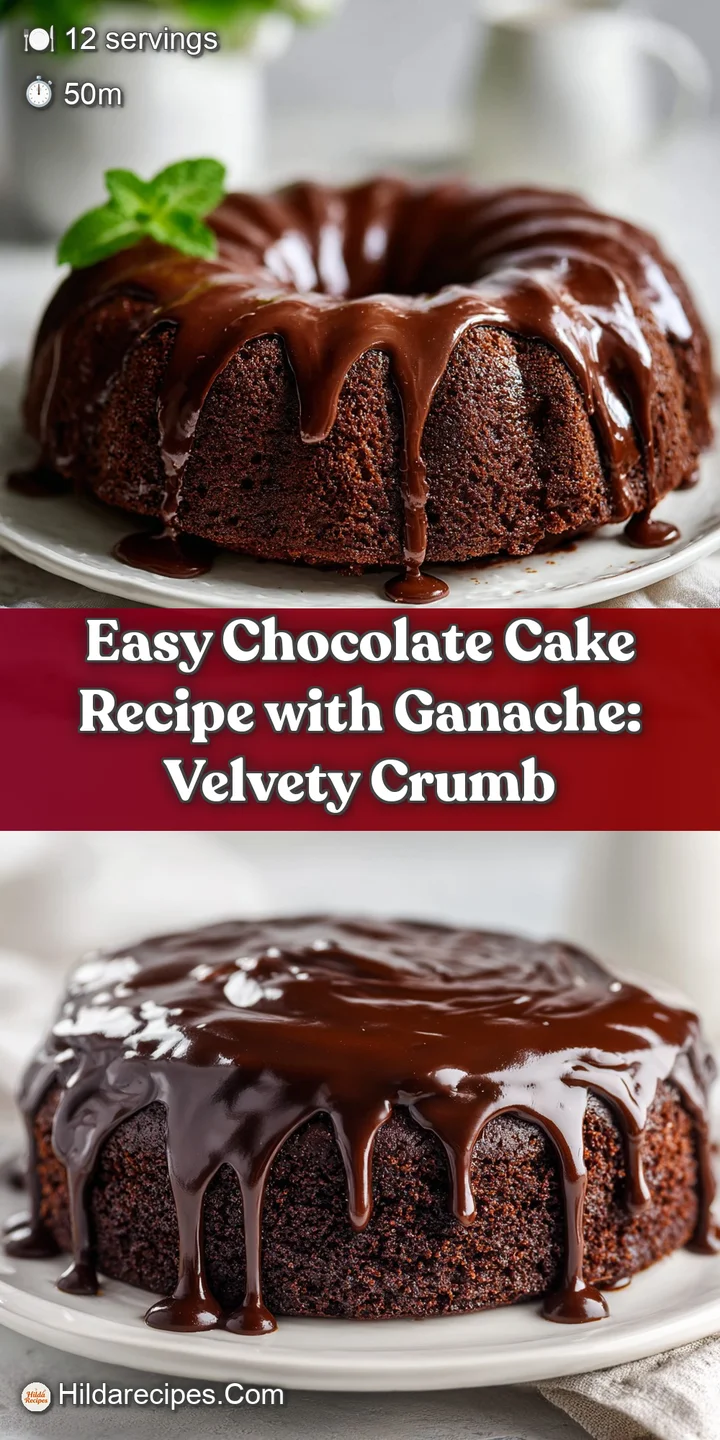
For a modern look, I like the "drip" method. Pour the ganache only on the top center of the cake and use a small offset spatula to gently push it toward the edges, letting it cascade down the sides in thick, uneven ribbons. It looks professional but takes almost zero effort.
Top it off with a few shavings of dark chocolate or a dusting of gold luster dust if you're feeling fancy for a holiday dinner.
The contrast of the dark, shiny glaze against a white ceramic plate is a classic look that never goes out of style. Whether you're serving this at a birthday or just sharing a slice with a friend over coffee, it’s a recipe that feels like home. Enjoy every fudgy bite!
Recipe FAQs
Can I substitute oil with melted butter in this recipe?
Yes, but the texture will change slightly. Oil ensures the cake stays exceptionally moist when cold because it remains liquid, whereas butter solidifies. Butter provides a richer flavor profile, though.
How do I ensure my ganache is perfectly smooth and shiny?
Pour hot cream over chopped chocolate and let it sit undisturbed for five minutes before stirring. Stir slowly starting from the center to encourage a stable emulsion, avoiding aggressive whisking which can introduce air bubbles.
How do I test if the cake is perfectly done baking?
Insert a wooden skewer into the center; it should come out with just a few moist crumbs attached. If it comes out completely clean, it is likely overbaked, so aim for that slight moisture indicator.
Why is the batter so thin after adding the boiling water?
This thin consistency is intentional; it's called "blooming the cocoa." The boiling water dissolves the cocoa solids completely, releasing deep flavor compounds and creating the velvety texture you want. If you are interested in controlling liquid ratios in other baking projects, see how we apply that balance in our Crispy Hash Browns recipe for texture control.
Is it necessary to use buttermilk for the best results?
No, you can substitute it, but buttermilk is highly recommended. Its acidity is crucial because it reacts with the baking soda to create a tender lift. You can mimic it by mixing one tablespoon of vinegar or lemon juice into regular milk and letting it sit for five minutes.
How do I prevent the cake from collapsing after I take it out of the oven?
Avoid opening the oven door until at least 30 minutes into the bake time. The rapid temperature drop causes the delicate internal structure, which is still setting, to deflate.
What can I use instead of semi sweet chocolate for the ganache?
You can use dark chocolate (70% cacao) for a more intense flavor. If you swap to white chocolate, you must significantly reduce the amount of heavy cream because white chocolate contains more cocoa butter and less cocoa solids. For a quick sauce using different ratios, check out the technique in the Lemon Caper Butter recipe to see how ingredient ratios drastically affect the final emulsion.
Easy Chocolate Cake Ganache
Ingredients:
Instructions:
Nutrition Facts:
| Calories | 482 kcal |
|---|---|
| Protein | 5.3 g |
| Fat | 23.5 g |
| Carbs | 60.6 g |
| Fiber | 3.9 g |
| Sugar | 43.2 g |
| Sodium | 295 mg |
