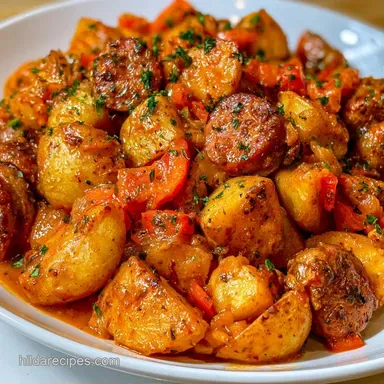
Creamy Italian Sausage Potato Skillet
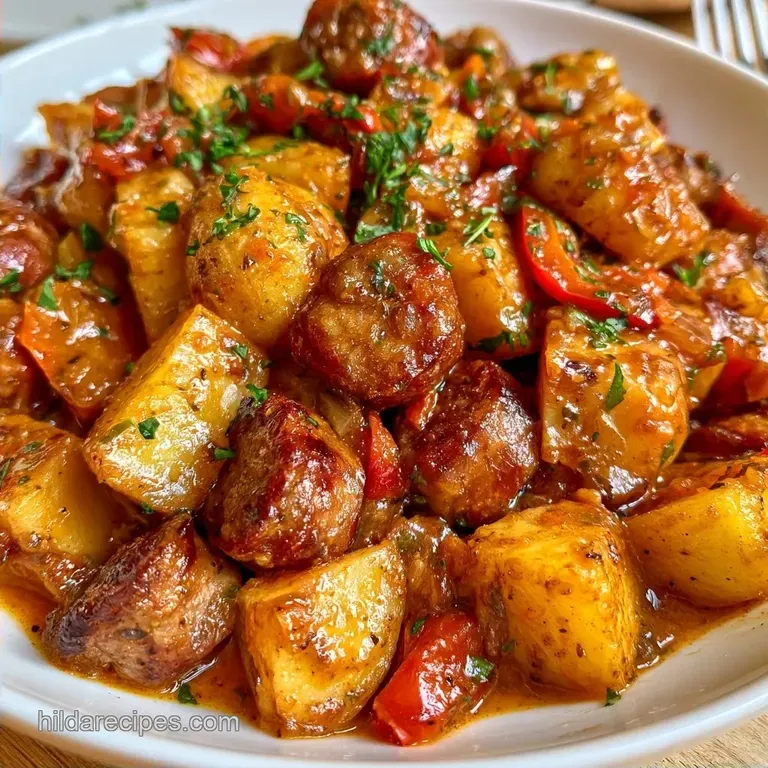
- Time: 10 min active + 35 min cook
- Flavor/Texture Hook: Mahogany colored crust with a rich, cheesy finish
- Perfect for: Busy weeknights or comforting family dinners
The smell of searing Italian sausage fills the kitchen, but for a long time, my results were disappointing. I would toss everything in a pan, and instead of a crisp, golden meal, I ended up with gray, steamed potatoes and meat that felt rubbery.
It felt like the potatoes were fighting the sauce, turning into a soft mash rather than holding their shape.
I realized the problem was crowding the pan and rushing the sear. When you move the potatoes too much, they release starch and steam each other. This creates that dreaded soggy texture.
By changing the order of operations and letting the ingredients sit undisturbed, the dish transforms into something entirely different.
This Sausage Potato Skillet is the fix for that frustration. It's a hearty, one pan meal that balances the snap of red bell peppers with the richness of a Parmesan cream sauce. You get a meal that feels like it took hours, but it actually comes together in under an hour.
Sausage Potato Skillet: The No Mush Method
The reason most skillet meals fail is a lack of heat management. Most people stir too often, which drops the pan temperature and prevents browning. To get a proper crust, you need a over high heat environment and a bit of patience.
The Fond Factor: Browning the sausage first creates a layer of browned bits on the bottom of the pan. This layer acts as a flavor base that gets stirred into the sauce at the end.
Uniform Sizing: Cutting baby golds into exactly half inch cubes ensures they all finish cooking at the same time. If some are huge and some are tiny, you'll have a mix of raw centers and burnt edges.
The Sear Window: Letting the potatoes sit for 5 minutes without moving them is the only way to get a golden exterior. This creates a barrier that keeps the inside fluffy while the outside stays crisp.
Right then, let's look at how the timing differs depending on how you approach the potatoes.
| Method | Time | Texture | Best For |
|---|---|---|---|
| Fast (Parboiled) | 20 mins | Softer, more uniform | Quick lunches |
| Classic (Searing) | 35 mins | Crispy edges, hearty | Family dinners |
This classic approach takes a bit longer, but the flavor payoff is worth every extra minute.
Quick Recipe Specs
Getting the timing right is the only way to ensure the Sausage Potato Skillet doesn't turn into a stew. This recipe focuses on over high heat searing followed by a low simmer finish.
The prep takes 10 minutes, mostly for dicing the vegetables. The actual cooking time is 35 minutes. This brings the total time to 45 minutes from the moment you pull the potatoes out of the bag to the moment you set the pan on the table.
Since we are using baby gold potatoes, we save time on peeling. Their thin skins hold up well to the high heat and add a bit of rustic character to the final plate.
Everything You'll Need
I prefer using a mix of spicy and sweet Italian sausage here, but you can stick to one. The key is using high fat sausage because that fat is what we use to fry the potatoes.
The Main Components 1 lb (450g) Italian sausage Why this? Provides the primary fat and savory base 1.5 lbs (680g) baby gold potatoes, diced into ½-inch cubes Why this? Holds shape better than Russets 2 tbsp (30ml) olive oil 1 medium
(150g) yellow onion, diced 1 medium (120g) red bell pepper, diced 3 cloves (15g) garlic, minced 1 tsp (5g) dried oregano ½ tsp (3g) red pepper flakes ¾ cup (180ml) heavy cream ½ cup (50g) freshly grated Parmesan cheese Why this? Melts smoother than pre shredded
½ tsp (3g) salt ½ tsp (3g) cracked black pepper 2 tbsp (8g) fresh parsley, chopped
Wait, before you start chopping, let's look at what these ingredients actually do for the flavor.
| Ingredient | Role | If You Don't Have It |
|---|---|---|
| Baby Gold Potatoes | Structure & Heartiness | Yukon Gold (peeled) |
| Heavy Cream | Richness & Binding | Full fat coconut milk (adds nuttiness) |
| Parmesan | Salty, Umami Finish | Pecorino Romano (saltier) |
| Red Bell Pepper | Sweetness & Color | Orange pepper or diced carrots |
If you're looking for a lighter start to your meal, you might pair this with some Sausage Balls as an appetizer.
The Right Tools
While a basic setup works, the type of pan you use is key for a Sausage Potato Skillet. Cast iron is ideal because it maintains a steady temperature. Using a lightweight non-stick pan may result in potatoes that don't brown as effectively.
A strong slotted spoon is also a must. You'll need it to lift out the sausage while keeping every bit of that flavorful rendered fat in the pan.
Lastly, a sharp chef's knife makes cutting half-inch cubes much simpler. Consistent sizing is essential to prevent some potatoes from remaining raw while others overcook.
Cooking the Meal
Right then, let's get into it. Make sure your pan is hot before anything hits the surface.
- Heat the skillet over medium high heat. Add the Italian sausage, breaking it apart with a spoon. Cook 7-10 mins until the meat is mahogany colored. Use a slotted spoon to remove the sausage, leaving the rendered fat in the pan.
- Add olive oil to the sausage fat if needed. Toss in the diced potatoes in a single layer. Let them sear undisturbed for 5 minutes until a golden crust forms. Note: Moving them too early prevents the crust from forming.
- Stir and cook for another 5-7 minutes until the edges are crisp and the centers are nearly tender.
- Stir in the diced onion and red bell pepper. Sauté 4-5 mins until the vegetables have softened.
- Add the minced garlic, oregano, and red pepper flakes. Stir for 60 seconds until the aroma is fragrant and nutty.
- Return the cooked sausage to the pan.
- Pour in the heavy cream and bring to a gentle simmer.
- Stir in the Parmesan cheese and simmer 2-3 mins until the sauce thickens and coats the potatoes.
- Season with salt and pepper, then garnish with fresh parsley.
The final result of this Sausage Potato Skillet should be a glossy, rich sauce that clings to the potatoes without pooling at the bottom of the pan.
Fixing Common Fails
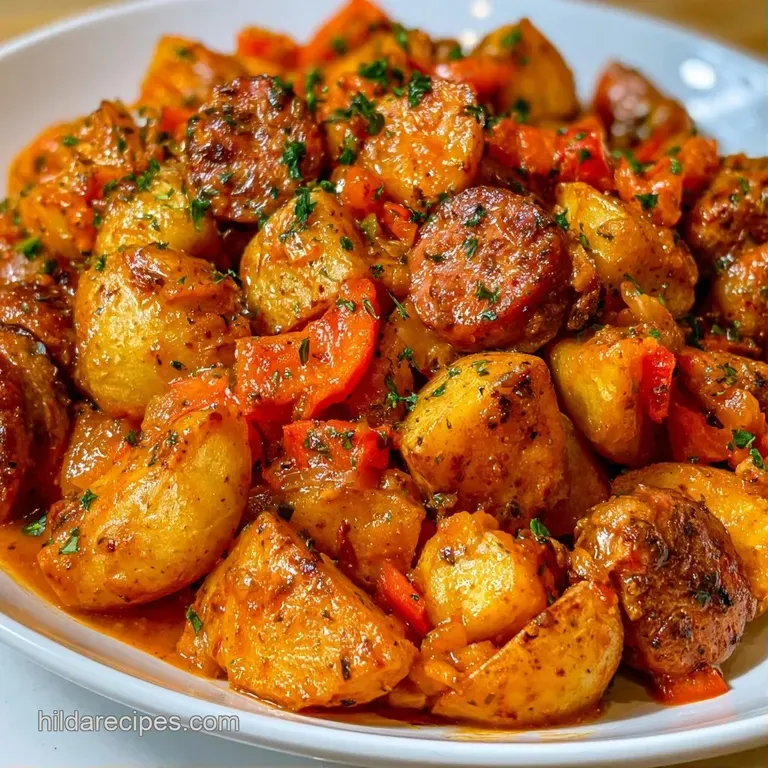
Most issues with a Sausage Potato Skillet come down to temperature. If the pan isn't hot enough, the potatoes will boil in their own moisture instead of frying.
Potatoes are steaming
This happens when the pan is overcrowded. If you put too many potatoes in at once, the temperature drops and they release steam. Use a larger pan or cook the potatoes in two batches to maintain that high heat.
Sauce is too thin
If your sauce looks watery, it usually means the cream didn't simmer long enough or the cheese didn't fully emulsify. Let it bubble for another 2 minutes on low heat, or stir in an extra tablespoon of Parmesan to thicken it up.
Garlic tastes bitter
Garlic burns in seconds. If you add it too early or the pan is screaming hot, it will turn black and bitter. Always add the garlic last, right before you add the liquid.
| Problem | Fix |
|---|---|
| Gray Potatoes | Don't stir for the first 5 minutes |
| Watery Sauce | Simmer 2 more minutes or add more cheese |
| Burnt Garlic | Add garlic only after onions are soft |
Trust me on this: the "undisturbed" phase for the potatoes is the most important part of the whole process.
Tasty Flavor Twists
While the Italian version is a classic, you can easily swap the flavor profile of this Sausage Potato Skillet by changing the sausage and herbs.
For a smokier vibe, use Kielbasa or Andouille sausage. Swap the oregano for smoked paprika and add a pinch of cayenne. This turns the dish into something more like a Cajun hash.
For a more earthy version, use bratwurst and swap the Parmesan for a dollop of sour cream and fresh chives. This pairing works beautifully if you're serving it as a brunch dish.
- For more heat
- add 1/2 tsp extra red pepper flakes during the garlic step.
- For a thinner sauce
- replace 1/4 cup of cream with chicken broth.
- For more greens
- stir in two handfuls of fresh spinach right before adding the cream.
If you enjoy this style of one pan cooking, you'll probably love a Veggie Breakfast Skillet for your weekend mornings.
Right before we move on, consider how different potato types change the budget.
| Original Ingredient | Substitute | Why It Works |
|---|---|---|
| Baby Gold Potatoes | Russet Potatoes | Cheaper. Note: Starchier texture; may absorb more sauce |
| Heavy Cream | Half and Half | Lower calorie. Note: Thinner sauce, less richness |
| Italian Sausage | Ground Pork + Fennel | Budget friendly. Note: You'll need to add more salt |
Storage and Leftovers
This Sausage Potato Skillet stores well, although the potatoes will naturally soak up some of the sauce as they sit. This helps the flavors meld together, even if the sauce becomes thicker.
Keep remaining portions in an airtight container and refrigerate for a maximum of 3 days. It is best to avoid the freezer, as the cream sauce can separate and the potatoes may turn grainy once thawed.
When reheating, try to avoid the microwave, which can make the potatoes rubbery. Instead, warm the dish in a small pan over medium heat, stirring in a bit of water or cream to loosen the sauce.
To reduce waste, any extra bell peppers or onions can be diced and frozen in a bag for your next batch of this recipe.
Plating Your Dish
Since this is a rustic meal, there's no need to overcomplicate the presentation. A wide, shallow bowl is ideal for serving this Sausage Potato Skillet, as it allows the sauce to pool slightly around the edges.
The visual contrast of the mahogany-colored potatoes against the white cream and green parsley gives it a professional touch. I like to add one final sprinkle of fresh Parmesan on top just before serving to provide a bit more texture.
If you're serving this for a crowd, keep the skillet on a wooden trivet in the middle of the table. This keeps the meal warm and enhances the "comfort food" atmosphere.
This dish is a wonderful reminder that simple ingredients, when paired with the right technique, create something truly satisfying. Once you stop stirring those potatoes and let the heat do the work, you'll never go back to the mushy version.
It's a timeless favorite and a staple in my home whenever we need a meal that feels like a warm hug.
High in Sodium
920 mg of sodium per serving (40% of daily value)
To support heart health, the American Heart Association suggests that most adults limit their daily sodium intake to 2,300 mg or less.
Tips to Reduce Sodium
-
Swap the Sausage-25%
Replace standard Italian sausage with low-sodium Italian sausage or lean ground turkey seasoned with fennel and garlic to significantly cut down on processed salt.
-
Eliminate Added Salt-25%
Skip the ½ tsp of salt entirely; the natural sodium in the sausage and Parmesan is sufficient to season the dish.
-
Reduce the Cheese-15%
Use half the amount of Parmesan cheese or substitute with a small amount of nutritional yeast for a similar savory, nutty flavor with less sodium.
-
Boost the Aromatics
Increase the amount of fresh parsley, garlic, and dried oregano to enhance the flavor profile without adding any extra sodium.
High in Sodium
920 mg 920 mg of sodium per serving (40% 40% of daily value)
The American Heart Association recommends a daily limit of 2,300mg of sodium for most adults to maintain heart health.
Tips to Reduce Sodium
-
Swap the Sausage-30%
Replace the Italian sausage with ground turkey or lean pork seasoned with dried oregano and red pepper flakes to avoid processed meat sodium.
-
Omit Added Salt-20%
Remove the ½ tsp of salt completely; the saltiness from the sausage and Parmesan is usually sufficient.
-
Reduce Parmesan-15%
Use half the amount of Parmesan cheese or substitute with a small amount of nutritional yeast for a savory, salty flavor.
-
Enhance with Fresh Flavors
Increase the fresh parsley or add a squeeze of fresh lemon juice before serving to brighten the dish without adding salt.
Recipe FAQs
How do I make creamy sausage and potatoes in a skillet?
Brown the Italian sausage, sear the potatoes, sauté vegetables, and then simmer everything with heavy cream and Parmesan. This sequence ensures the meat is fully cooked and the potatoes develop a golden crust before the sauce thickens.
What can I do with Italian sausage and potatoes?
Combine them in a single-pan skillet meal with onions, bell peppers, and a creamy sauce. If you enjoy these rich, savory flavors, try the same hearty approach with our cajun steak penne.
What's the best way to cook Italian sausage in a skillet?
Cook the meat over medium-high heat for 7–10 minutes until it reaches a mahogany color. Use a slotted spoon to remove the sausage so you can keep the rendered fat in the pan for the potatoes.
Which sauce works best for this sausage and potato combination?
A mixture of heavy cream and Parmesan cheese creates a rich, velvety coating. Simmering these for 2–3 minutes allows the sauce to thicken and cling perfectly to the vegetables.
Is it true that baby gold potatoes must be boiled before adding them to the skillet?
No, and here's why. Searing the diced potatoes undisturbed for 5 minutes creates a crisp golden crust that tastes much better than boiling them first.
Do I need to add extra oil if I use Italian sausage?
Actually, no. The sausage renders plenty of its own fat, though you can add a splash of olive oil if the pan seems too dry before adding the potatoes.
Can I freeze these leftovers for later use?
Avoid freezing this meal because the cream sauce often separates. The potatoes also tend to become grainy after thawing, so store leftovers in the refrigerator for 3 days.
Sausage Potato Skillet: Creamy and Rich