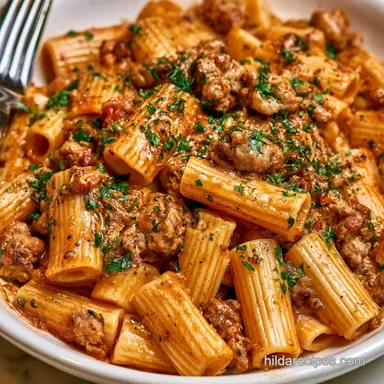
Creamy Italian Sausage Pasta with Rigatoni
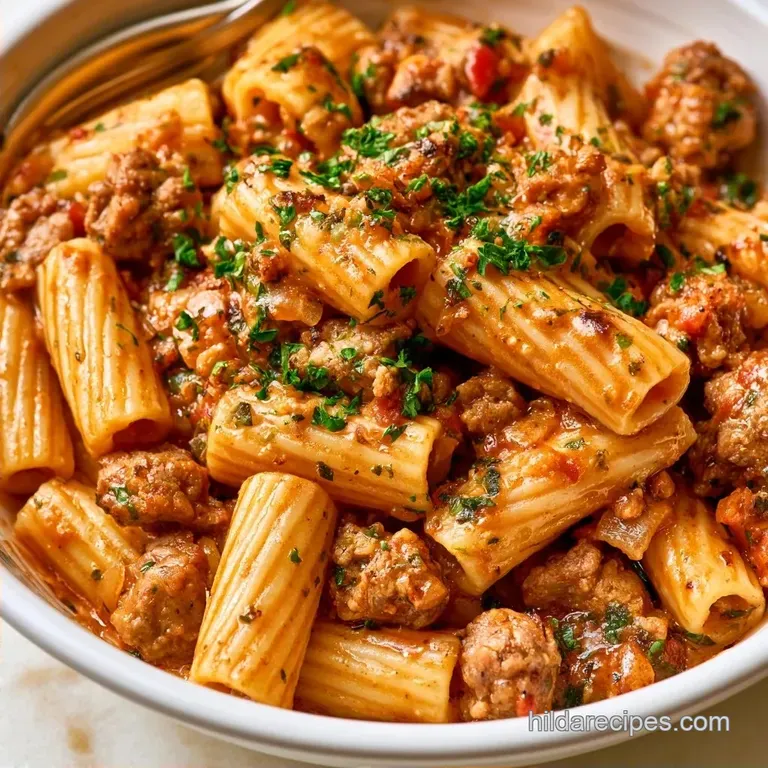
- Time: 10 min active + 20 min cooking
- Taste & Texture: Deeply browned, mahogany sausage with a silky, savory finish
- Ideal for: An indulgent yet easy weeknight meal
- How to Nail Creamy Italian Sausage Pasta
- Ingredient Deep Dive
- Ingredients and Substitutes
- Recipe Specs
- Equipment Needed
- The Cooking Process
- Troubleshooting Guide
- Adjusting the Portions
- Debunking Pasta Myths
- Keeping It Fresh
- How to Serve and Enjoy
- Dietary Adaptations
- High in Sodium
- High in Sodium
- Recipe FAQs
- 📝 Recipe Card
The sound of pork searing in a hot skillet brings back memories of my grandmother's kitchen. She always taught me that the most intense flavors are found in the browned bits at the bottom of the pot, and this recipe proves her right.
There is something about the way the savory sausage fat melds with a touch of cream that makes for a truly comforting meal.
Ever wonder why restaurant pasta has that shimmering glaze that adheres to the noodle, while home cooked sauces often separate? It isn't about having professional equipment; it's about how you manage the starch and the heat.
In my early attempts at this Creamy Italian Sausage Pasta, I frequently overcooked the noodles and reduced the sauce until it was too thick. Now, I treat the pasta and sauce as a single component. This recipe focuses on the contrast between the crisp, salty edges of the browned meat and the velvety richness of the cream.
How to Nail Creamy Italian Sausage Pasta
- Sausage Searing: Browning the meat deeply creates a concentrated flavor base. These browned bits, or fond, dissolve into the sauce and give it a deep, savory color.
- Starch Binding: Adding reserved pasta water creates a bridge between the fat in the cream and the water in the broth. This stops the sauce from breaking or separating.
- Under boiling Pasta: Cooking the rigatoni for 2 minutes less than the box suggests lets the pasta finish inside the sauce. It absorbs the flavor directly into the noodle.
| Approach | Time | Texture | Best For |
|---|---|---|---|
| Fresh Sausage | 30 mins | Coarser, juicier | Traditional taste |
| Pre cooked/Frozen | 20 mins | Uniform, softer | Maximum speed |
Ingredient Deep Dive
| Ingredient | What It Does | Best Swap |
|---|---|---|
| Rigatoni | Holds sauce inside the tubes | Penne or Ziti |
| Italian Pork Sausage | Provides the fat and salt base | Ground Turkey + fennel seeds |
| Heavy Cream | Adds richness and body | Full fat Coconut Milk |
| Parmesan | Thickens and adds a salty tang | Pecorino Romano |
Ingredients and Substitutes
Here is everything you'll need to get this on the table.
- 340g rigatoni pasta Why this? The large holes trap the sausage bits.
- 450g Italian pork sausage, casings removed Why this? High fat content carries the flavor.
- 1 small yellow onion, finely diced
- 3 cloves garlic, minced
- 240ml heavy cream Why this? Stable under heat; won't curdle easily.
- 50g parmesan cheese, freshly grated
- 120ml beef broth Why this? Adds a deeper savoriness than chicken broth.
- 1 tsp dried oregano
- 1/2 tsp red pepper flakes
- salt and black pepper to taste
- 2 cups baby spinach
- 30g unsalted butter
- 1/4 cup fresh parsley, chopped
For those who need to swap things out, I've put together this list.
| Original Ingredient | Substitute | Why It Works |
|---|---|---|
| Heavy Cream (240ml) | Half and Half (240ml) | Lighter feel. Note: Sauce will be thinner and less rich |
| Beef Broth (120ml) | Chicken Broth (120ml) | Similar salt profile. Note: Slightly milder flavor |
| Rigatoni (340g) | Fusilli (340g) | Spirals also catch sauce. Note: Changes the bite of the dish |
Recipe Specs
This is a straightforward meal, but timing is everything.
- Prep time: 10 minutes
- Cook time: 20 minutes
- Total time: 30 minutes
- Yield: 4 servings
Chef's Tip: If you want a deeper flavor, add a teaspoon of tomato paste when you sauté the garlic. It adds a subtle sweetness that cuts through the heavy cream.
Equipment Needed
Standard kitchen gear is all that's required. A few simple tools will get the job done.
- Large Pot: Used for boiling the pasta.
- Deep Skillet: A 12 inch pan is ideal to give the sausage enough room to brown without steaming.
- Tongs or a Slotted Spoon: To transfer the pasta straight from the water into the pan.
- Whisk: Necessary for blending the butter and Parmesan into a smooth consistency.
The Cooking Process
Now, let's start the cooking process. Watch the temperature closely, as cream can boil over quickly.
- Get a large pot of salted water boiling. Cook the rigatoni until it is just under al dente, about 2 minutes shorter than the package instructions. Note: This prevents the pasta from getting mushy in the final step.
- While the pasta is boiling, set a deep skillet over medium high heat. Stir in the Italian sausage, breaking it into small pieces with your spoon. Cook for 7-10 minutes until the meat is deeply browned and the edges are crisp.
- Add the diced onion to the skillet. Sauté for 3–5 minutes until the onion is translucent and soft.
- Turn the heat down to medium. Stir in the minced garlic, dried oregano, and red pepper flakes. Sauté for 60 seconds until the garlic smells fragrant but hasn't turned brown.
- Pour in the beef broth. Use your spoon to scrape up all the browned bits from the bottom of the pan. Note: This is where the most flavor is concentrated.
- Stir in the heavy cream. Bring the mixture to a gentle simmer over medium heat.
- Reduce the heat to low. Whisk in the Parmesan cheese and butter. Stir constantly until the sauce is smooth and velvety.
- Stir 1/2 cup of the starchy pasta water into the sauce. Note: This stabilizes the sauce and prevents it from separating.
- Fold the undercooked pasta and baby spinach into the skillet. Cook over medium heat for 2 minutes until the spinach is wilted and the pasta is finished.
- Garnish with chopped fresh parsley and serve immediately.
Troubleshooting Guide
Even simple recipes can occasionally run into trouble. Here is how to resolve common issues.
Fixing a Thin Sauce
If your sauce is too runny to coat the pasta, you may have used too much broth or didn't reduce the cream sufficiently. Simmer it for another 3 minutes before adding the noodles. If it remains too thin, stir in one more tablespoon of Parmesan, which acts as a natural thickener.
Preventing Curdled Cream
Cream can separate if the pan is too acidic or reaches a boil too quickly. Always reduce the heat before whisking in the butter and cheese. Should you notice small clumps, a vigorous whisk and a splash of starchy pasta water will usually smooth the texture.
Managing Over Salted Pasta
With the sausage, Parmesan, and salted water, sodium can build up fast. If the dish tastes too salty, stir in some additional spinach or a bit of lemon juice. The extra greens and acidity help balance the salt.
| Goal | What to change |
|---|---|
| Thicker sauce | Add 2 tbsp more Parmesan |
| More heat | Increase red pepper flakes to 1 tsp |
| Lighter feel | Double the baby spinach |
Adjusting the Portions
If you aren't feeding four people, you can easily adjust the quantities.
Halving the recipe Swap in an 8 inch skillet. Because the pan will heat up faster, decrease the sausage cooking time by roughly 20%. If a variation calls for an egg as a binder, whisk it first and then use half of the mixture.
Doubling the recipe Instead of doubling the salt and red pepper flakes, start with 1.5x and adjust to taste. Brown the sausage in batches; overloading the pan will lead to steaming instead of searing, costing you that rich brown color. Use an extra large pot for the pasta to prevent clumping.
Debunking Pasta Myths
There are a few things people always say about pasta that just aren't true.
First, rinsing your pasta after boiling is a huge mistake. It washes away the starch that helps the sauce stick. For this Creamy Italian Sausage Pasta, that starch is what makes the sauce cling to the rigatoni.
Second, some think you need to "sear in the juices" of the meat. Searing doesn't lock in moisture, but it does create a crust of flavor. The goal here is the flavor of the browned pork, not "locking" anything in.
Keeping It Fresh
This dish is best eaten immediately, but leftovers are great for lunch.
Refrigeration Store any remaining pasta in a glass container for up to 3 days. The sauce will thicken significantly in the fridge as the pasta absorbs the moisture.
Reheating for Silkiness Do not microwave it on high power, as this can break the cream sauce. Heat it on the stove over low heat and add a tablespoon of water or milk. This loosens the sauce and brings back that silky texture.
Zero Waste Tips If you have leftover sausage casings, don't toss them. You can actually use them to stuff other meats or just compost them. Save any leftover beef broth in a jar for a quick pan sauce for chicken or steak. For a different vibe, you might enjoy my Cajun steak penne cream sauce which uses a similar base.
How to Serve and Enjoy
Since this dish is quite rich and hearty, it pairs best with something zesty to provide balance.
I suggest serving it alongside a fresh arugula salad tossed in a tangy lemon dressing, as the peppery leaves and citrus notes perfectly offset the creamy sausage sauce. A slice of toasted garlic bread is also essential for mopping up every last drop of sauce.
For a more classic accompaniment, oven-roasted broccolini seasoned with red pepper flakes is an excellent choice. The charred vegetables provide a great counterpoint to the indulgence of the pasta. If you enjoy these bold tastes, you should also try my Authentic Italian Bolognese Sauce for a meal with a stronger tomato base.
Dietary Adaptations
You can tweak this recipe to fit different needs without losing the soul of the dish.
Making it Lighter Swap the heavy cream for a mixture of half and half and a tablespoon of Greek yogurt. You'll still get the creaminess, but less fat. Increase the spinach to 4 cups to add more volume and nutrients.
Changing the Protein While pork is traditional, ground turkey or chicken sausage works too. Since these are leaner, you may need to add an extra tablespoon of butter to the pan to get a good sear.
Vegetarian Option Use a plant based sausage alternative and swap the beef broth for vegetable broth. Use a nutritional yeast blend or a vegan parmesan substitute to keep the salty, cheesy profile.
Turning it into a Bake If you want a Creamy Italian Sausage Pasta Bake, transfer the finished pasta to a baking dish. Top with a layer of mozzarella and more Parmesan. Broil for 3-5 minutes until the cheese is bubbling and brown.
High in Sodium
1120 mg 1120 mg of sodium per serving (49% 49% of daily value)
The American Heart Association recommends a daily limit of 2,300 mg of sodium to maintain heart health and reduce the risk of hypertension.
Tips to Reduce Sodium
-
Swap the Broth-30%
Replace the beef broth with low-sodium or no-salt added beef broth to drastically lower the liquid salt content.
-
Choose Leaner Protein-25%
Substitute the Italian pork sausage for low-sodium sausage or use ground pork seasoned with extra oregano and pepper.
-
Eliminate Added Salt-25%
Remove the 'salt to taste' from the recipe entirely, as the cheese and sausage provide ample seasoning.
-
Moderate the Cheese-15%
Reduce the parmesan cheese by half or use a smaller amount of a high-quality aged parmesan for a punchier flavor with less volume.
-
Enhance with Aromatics
Increase the amount of fresh parsley, garlic, and oregano to boost the overall flavor profile without adding sodium.
High in Sodium
1120 mg 1120 mg of sodium per serving (49% 49% of daily value)
The American Heart Association recommends a daily sodium limit of no more than 2,300 mg for most adults to reduce the risk of cardiovascular disease.
Tips to Reduce Sodium
-
Swap Your Broth-30%
Replace the beef broth with low-sodium or no-sodium beef broth to significantly cut down on hidden salt.
-
Modify the Meat-25%
Substitute the Italian pork sausage with fresh ground pork seasoned yourself with fennel and herbs to avoid processed salts.
-
Omit Added Salt-25%
Skip the 'salt to taste' entirely; the parmesan and sausage already contribute significant sodium to the dish.
-
Limit the Cheese-15%
Reduce the parmesan cheese by half or use a small amount of a very sharp aged variety to maintain flavor with less volume.
-
Enhance with Aromatics
Increase the fresh parsley or add a squeeze of lemon juice at the end to brighten the flavor without using salt.
Recipe FAQs
How do I make the sauce creamy?
Stir in heavy cream and whisk in Parmesan cheese and butter over low heat.
Tip: Use reserved starchy pasta water to stabilize the emulsion and prevent splitting.
What ingredients are required for this creamy Italian pasta?
You need rigatoni, Italian pork sausage, onion, garlic, heavy cream, Parmesan, beef broth, oregano, red pepper flakes, spinach, butter, and parsley.
Tip: Grate your Parmesan fresh to ensure it melts smoothly into the sauce.
Can I swap rigatoni for another pasta shape?
Use penne or fusilli as they also capture the thick sauce well.
Tip: If you enjoy savory appetizers like sausage balls, you will love the bold profile of this dish.
Is it true that pasta should be fully cooked before adding it to the sauce?
No, this is a common misconception. Cook the pasta 2 minutes less than package directions so it finishes in the skillet.
Tip: This technique allows the rigatoni to absorb the cream and broth for better flavor.
Why is my sauce breaking or separating?
The heat is likely too high, causing the fats to split from the liquids.
Tip: Lower the temperature and whisk in a splash of pasta water to bring the emulsion back together.
Which method is best for browning the sausage?
Cook over medium high heat in a deep skillet, breaking the meat into small chunks until deeply browned.
Tip: Avoid crowding the pan to ensure the meat browns instead of steaming in its own juices.
Do I need to sauté the spinach separately?
Actually, no. Fold the fresh baby spinach directly into the pasta and sauce during the last 2 minutes of cooking.
Tip: The residual heat is sufficient to wilt the leaves without making them mushy.
Creamy Italian Sausage Pasta