Creamy Butternut Squash Pasta Bake
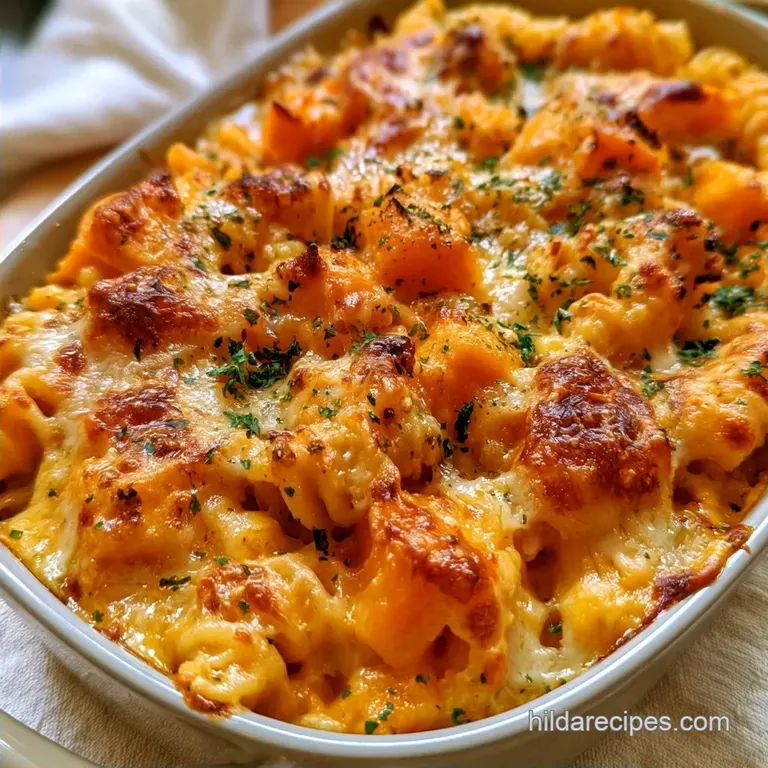
- Time: 15 min active + 30 min cook
- Flavor/Texture Hook: Savory, velvety sauce paired with a crisp panko topping
- Perfect for: Hectic weeknights or a cozy family gathering
The scent of roasting squash always brings back memories of Sunday evenings at my grandmother's. That sweet, grounded fragrance always signaled a sense of peace and warmth. I once believed achieving those depths of flavor required hours of slow cooking, but I've discovered a method to capture that richness much faster.
You get maximum flavor with minimal work. By cutting the squash into small pieces, we reduce the roasting time and get to the creamy goodness more quickly. The result is a perfect harmony between the squash's natural sweetness and the tang of salty cheeses.
The magic of this Butternut Squash Pasta Bake is the contrast. A velvety sauce coats every piece of pasta, crowned with a toasted crumb layer that crunches with every bite. It's a truly soothing dish that brings warmth to the table.
Quick Recipe Specs
This meal is designed to be fast. We use a high oven temp to caramelize the vegetables quickly, then finish everything in the oven to melt the cheese.
The yield is 8 hearty servings, making it great for meal prep. Since we use penne, the sauce gets trapped inside the tubes, ensuring every bite is flavorful.
Gathering Your Essentials
I've found that using fresh sage makes a massive difference. Dried works, but fresh leaves fried in butter are a game changer for autumn flavors.
- 1.5 lbs butternut squash, peeled and cubed small Why this? Small cubes roast faster and blend smoother
- 1 medium yellow onion, diced Why this? Adds a savory base to the sweetness
- 3 cloves garlic, minced Why this? Essential for a pungent, rich aroma
- 1 cup vegetable broth Why this? Thins the sauce while adding depth
- 1/2 cup unsweetened almond milk Why this? Adds creaminess without heavy fats
- 2 tbsp unsalted butter Why this? Gives the sauce a glossy finish
- 1 tsp salt
- 1/2 tsp black pepper
- 1 tsp dried sage Why this? Classic pairing for winter squash
- 1 lb penne pasta Why this? Ridges hold the thick sauce better
- 2 cups shredded mozzarella cheese Why this? Provides that iconic gooey stretch
- 1/2 cup grated Parmesan cheese Why this? Adds a sharp, salty punch
- 1/2 cup reserved pasta water Why this? Helps emulsify the sauce
- 1/2 cup panko breadcrumbs Why this? Lighter and crispier than standard crumbs
- 2 tbsp melted butter
- 1 tbsp fresh parsley, chopped
- 1/4 cup grated Parmesan cheese (for the topping)
Quick Ingredient Swaps
| Original Ingredient | Substitute | Why It Works |
|---|---|---|
| Butternut Squash | Pumpkin Puree (1.5 cups) | Similar flavor, though slightly sweeter. Note: Skip the roasting step |
| Penne Pasta | Rigatoni | Larger tubes hold even more sauce |
| Almond Milk | Whole Milk or Oat Milk | Similar consistency. Note: Oat milk is creamier |
| Mozzarella | Provolone | Similar melt, but a stronger, tangier bite |
Tools for the Job
You only need a few basics. A standard sheet pan is required for the first step, and while a blender is great for a smooth consistency, a food processor works just as well.
I typically use a 9x13 inch baking dish. Note that a deeper dish will keep the pasta softer, while a shallower one yields more crispy edges. Finally, use a large pot for the penne to ensure it has plenty of room to move and doesn't stick.
Bringing It Together
Right then, let's get into it. The key is not overcooking the pasta during the boil, since it finishes in the oven.
Phase 1: Rapid Roasting the Base
Preheat your oven to 425°F (220°C). Toss the small cubed butternut squash, diced onion, and minced garlic with a drizzle of oil on a sheet pan. Roast for 15-20 minutes until the edges are mahogany colored and tender.
Phase 2: Blending the Creamy Sauce
Transfer the roasted vegetables into a blender. Add the vegetable broth, milk, butter, salt, pepper, and sage. Blend on high until the mixture is completely smooth and velvety. If it feels too thick, stir in a tablespoon of the pasta water.
Phase 3: Combining the Pasta and Cheese
Boil the penne in salted water for 2 minutes less than the package directions. Drain the pasta, then toss it in a large bowl with the blended squash sauce and the mozzarella cheese. Stir until the cheese begins to melt and the noodles are coated.
Phase 4: Achieving the Shattering Crust
Transfer the pasta mixture into a greased 9x13 inch baking dish. In a small bowl, combine panko, melted butter, chopped parsley, and the 1/4 cup of Parmesan. Sprinkle this mixture evenly over the top.
Bake for 15-20 minutes at 425°F (220°C) until the topping is golden brown and the sauce is bubbling around the edges. Let it sit for 5 minutes before serving so the sauce sets.
Fixing Common Issues

Mistakes happen even when following a basic recipe. I’ve dealt with my fair share of soggy bakes, and the culprit is usually one of a few minor details.
Fixing a Thin Sauce
If your sauce is too runny rather than creamy, it's likely due to extra water in the squash. To thicken the consistency before baking, simply stir in an additional 1/4 cup of Parmesan cheese or a tablespoon of cornstarch slurry.
Preventing Mushy Pasta
The most common error is overcooking the pasta on the stove. Since the Butternut Squash Pasta Bake stays in the oven for another 20 minutes, the noodles will continue to soften. Drain them 2 minutes early to ensure they keep some firmness in the center.
Dealing with Clumping Cheese
If the mozzarella won't melt smoothly, the sauce has probably cooled too much. Try warming the blended sauce in a pan for a moment before combining it with the hot, freshly drained pasta.
Flavor Variations to Try
I love this base because it's so flexible. If you're feeding a crowd with different tastes, you can easily tweak a few things.
For those wanting a Vegan Butternut Squash Pasta Bake, swap the butter for olive oil and use a high-quality vegan mozzarella. I recommend a cashew based cheese for a richer taste.
If you want something meatier on the side, this pairs great with my Classic Meatloaf. For a spicy kick, stir a teaspoon of red pepper flakes into the blender with the squash.
You can also boost the protein by stirring in some cooked chickpeas or sautéed spinach before transferring the pasta to the baking dish. This turns the meal into a more complete nutritional package.
Adjusting the Portion Size
Adjusting the yield is straightforward, though the time in the oven changes slightly based on the volume.
When making a half batch, use an 8x8 inch pan and shave approximately 20% off the baking time, as the smaller mass heats through faster. If you are doubling the recipe for a larger group, distribute it across two 9x13 dishes rather than one deep pan. This ensures the center is done without the edges burning.
Quick Adjustment Guide
| Goal | What to change |
|---|---|
| More protein | Add cooked chicken or chickpeas |
| Lighter feel | Swap mozzarella for ricotta |
| Extra crunch | Double the panko topping |
Keeping Leftovers Fresh
This meal keeps remarkably well. Place any remaining Butternut Squash Pasta Bake in a sealed glass bowl in the refrigerator for as long as 4 days.
When reheating, I usually skip the microwave to prevent the pasta from turning rubbery. Instead, transfer a serving to a small oven safe dish, stir in a touch of water or milk to loosen the sauce, and bake at 350°F (175°C) for 10-15 minutes.
To keep things sustainable, put the squash peels in your compost bin. If you're feeling adventurous, you can dry the peels in a low oven and grind them into a powder to give other soups an earthy flavor boost.
Best Sides for This
Since the pasta is so rich and creamy, you need something bright to cut through that weight. A crisp arugula salad with a lemon vinaigrette is my go to. The peppery greens and acidity balance the sweetness of the squash perfectly.
If you're looking for another side, a simple roasted broccoli or a side of garlic sautéed kale works wonders. If you want something even more indulgent, this pairs well with a creamy tomato sauce served as a dip for some toasted sourdough.
What Makes This Work
I've spent a lot of time wondering why some pasta bakes get gummy while others stay creamy. It comes down to the natural starches.
Natural Thickeners: Blending the roasted squash creates a stable base. The pectins in the squash act as a thickener, giving you a rich feel without needing a heavy roux.
Salty Balance: The sweetness of the butternut squash is high. By adding sharp Parmesan and salt, we create a savory contrast that prevents the dish from tasting like a dessert.
Serious Eats' testing shows that roasting the vegetables first instead of boiling them concentrates the sugars, which is why the flavor in this Butternut Squash Pasta Bake is so much deeper than a standard stovetop version.
Trust me, once you try roasting your base like this, you'll never go back to just boiling your vegetables. It's the simplest way to get a professional tasting result at home. Enjoy your cozy meal!
Recipe FAQs
Should I boil the pasta before baking?
Yes, but undercook it. Boil the penne for 2 minutes less than the package directions so it finishes cooking in the oven without becoming mushy.
What sauce pairs best with butternut squash pasta?
A velvety blend of roasted squash and sage. Pureeing roasted butternut squash, onion, and garlic with vegetable broth and almond milk creates a rich, creamy base without needing heavy cream.
Is it true that butternut squash is just another type of pumpkin?
No, and here's why. While both are winter squashes, butternut squash has a denser, creamier texture and a more subtle sweetness than most pumpkins.
How to roast the squash for the best flavor?
Toss small cubes with oil and roast at 425°F. Bake for 15-20 minutes until the edges are mahogany colored to maximize the natural caramelization.
Why does the panko topping stay so crunchy?
The melted butter binds the crumbs. If you enjoyed the way the sauce clings to penne here, see how we handle similar pasta in our Cajun steak penne.
Does the pasta need to be fully cooked before adding it to the dish?
Surprisingly, no. Fully cooked pasta absorbs too much moisture and collapses during the final 15-20 minute bake at 425°F.
Can mozzarella be replaced with another cheese?
Yes, though mozzarella provides the best stretch. Any mild, melty white cheese works well as long as it complements the earthy sage and sweet squash.
Butternut Squash Pasta Bake