Traditional Israeli Salad Recipe with Sumac
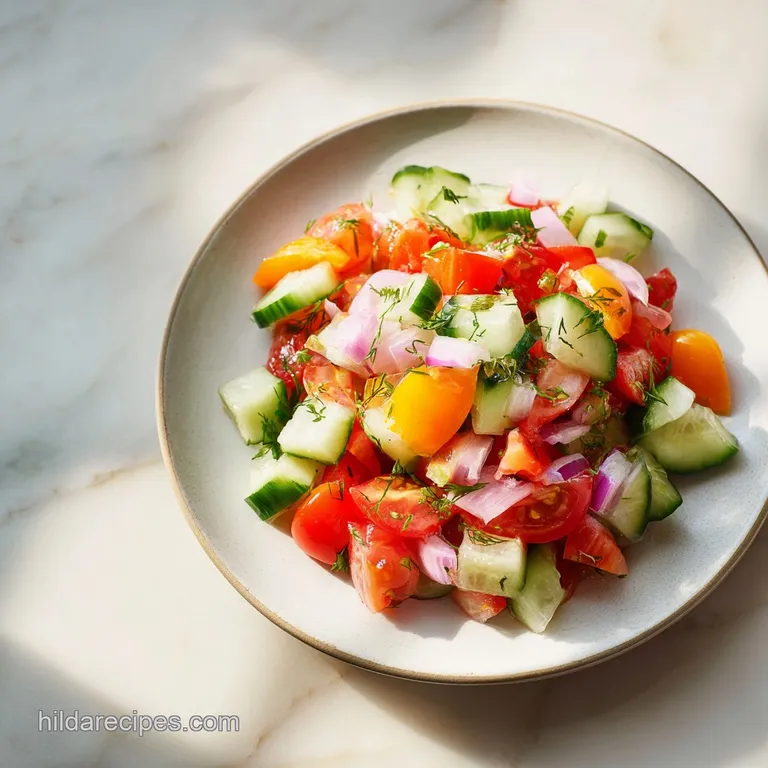
- Time: Active 15 minutes, Passive 0 minutes, Total 15 minutes
- Flavor/Texture Hook: Shatteringly crisp cucumbers paired with zesty, citrus forward dressing
- Perfect for: Traditional Israeli breakfasts, summer barbecues, or healthy meal prep
- The Secrets to an Authentic Israeli Salad Recipe
- Essential Specs for This Fresh Salad
- Fresh Ingredients and Smart Substitution Guide
- Two Essential Tools for Precision Dicing
- Building Flavors Step by Step
- Fixing Common Salad Texture Issues
- Easy Adaptations for Any Diet
- Storing and Preserving the Crunch
- Serving Ideas for Every Meal
- Recipe FAQs
- 📝 Recipe Card
The Secrets to an Authentic Israeli Salad Recipe
The rhythmic thwack thwack thwack of a sharp chef’s knife against a heavy wooden board is the soundtrack of my childhood mornings. I remember standing on a wooden stool in my grandmother’s kitchen, watching her hands move with a speed that seemed impossible.
She didn’t use a food processor or any fancy gadgets. To her, this israeli salad recipe was a daily meditation, a way to honor the harvest with nothing more than a blade and a bit of patience.
She always told me that the secret wasn't just in the vegetables, but in the size of the cut. If the dice was too large, it was just a regular salad. But if you could get those cucumbers and tomatoes down to the size of a chickpea, something magical happened.
The juices would mingle with the olive oil and lemon right on the spoon, creating a concentrated burst of flavor that felt like a celebration of the sun itself. It’s a dish that carries generations of memories in every bite.
We’ve all had those sad, soggy salads at buffets, but once you master the "micro dice" and the proper layering of salt, you’ll never go back. This isn't just about chopping; it’s about building layers of texture and acidity that wake up your palate.
Whether you're serving this alongside warm pita or as a cooling side to grilled meats, it brings a level of freshness that most recipes simply can't match. Trust me, your knife skills are about to become your favorite kitchen tool.
The Physics of the Micro Dice
Osmotic Surface Area: Increasing the surface area through a fine dice allows the salt and lemon juice to draw out just enough vegetable liquor to emulsify with the olive oil. This creates a natural, "built in" dressing that coats every tiny cube perfectly.
| Number of Servings | Cucumber Count | Tomato Count | Bowl Size | Total Volume |
|---|---|---|---|---|
| 2 People | 3 Persian | 2 Roma | Medium | 3 Cups |
| 4 People | 6 Persian | 4 Roma | Large | 6 Cups |
| 8 People | 12 Persian | 8 Roma | Extra Large | 12 Cups |
This serving size calculator helps you plan for everything from a quiet lunch to a big family gathering without guessing.
Essential Specs for This Fresh Salad
When we talk about a simple Israeli salad recipe, we are looking for a specific harmony between the crunch of the cucumber and the softness of the tomato. I’ve found that using Persian cucumbers is non negotiable because their thin skins and lack of seeds provide a consistent snap without the bitterness you find in larger varieties.
This dish is all about the "shatter" factor.
- 1. Dice Size
- Aim for 1/4 inch (approx. 6mm) cubes for the most authentic mouthfeel.
- 2. Oil Temperature
- Use room temperature oil to ensure it emulsifies instantly with the cold lemon juice.
- 3. Resting Time
- Maximum 10 minutes before serving to prevent the vegetables from turning "velvety" or mushy.
Component Deep Dive
| Ingredient | Science Role | Pro Secret |
|---|---|---|
| Persian Cucumbers | Structural Base | Keep the skin on for a vibrant green color and extra fiber. |
| Roma Tomatoes | Umami/Moisture | Use firm ones so they hold their shape during the dicing process. |
| Ground Sumac | Acid Catalyst | This adds a "dry" sourness that lemon juice alone cannot achieve. |
The interaction between the sumac and the lemon juice is what really sets this apart. While lemon provides a bright, wet acidity, sumac offers a deep, fruity tang that lingers on the tongue. It’s similar to how we balance flavors in a Mediterranean White Bean recipe, where the bean's creaminess needs a sharp hit of vinegar to sing.
Fresh Ingredients and Smart Substitution Guide
For the best results, your Israeli salad ingredients must be as fresh as possible. Since there is no cooking involved, the quality of every item is on full display. I always head to the farmer's market for the heaviest tomatoes and the firmest peppers.
- 6 Persian Cucumbers (approx. 500g): Why this? They have the highest "crunch to water" ratio and zero bitter seeds.
- 4 firm Roma or Vine Ripened Tomatoes (approx. 400g): Why this? Firmness is key to maintaining the micro dice structure without collapsing.
- 1 Red Bell Pepper (approx. 150g): Why this? Adds a necessary sweetness and a third color to the palette.
- 3 Green Onions: Why this? Provides a mild, grassy bite that doesn't overpower the herbs.
- 1/2 cup fresh flat leaf parsley: Why this? Flat leaf has more essential oils and a better texture than curly.
- 3 tbsp extra virgin olive oil: Why this? Use the "good stuff" here; the peppery finish is essential.
- 2 tbsp freshly squeezed lemon juice: Why this? Bottled juice lacks the bright enzymes needed to "wake up" the veg.
- 1 tsp ground sumac: Why this? This is the secret to the traditional Israeli salad recipe flavor profile.
- 1/4 cup fresh mint leaves: Why this? Adds a cooling finish that balances the pepper and onion.
- 1/2 tsp sea salt and 1/4 tsp cracked black pepper.
| Original Ingredient | Substitute | Why It Works |
|---|---|---|
| Persian Cucumbers | English Cucumber | Similar thin skin, but you must scoop out the watery seeds first. |
| Sumac | Lemon Zest | Adds citrus aroma. Note: Lacks the specific earthy tartness of sumac. |
| Flat Leaf Parsley | Fresh Cilantro | Changes the profile to a more Southwest/Latin flavor. |
If you enjoy the refreshing nature of this herb heavy mix, you might also love my Cucumber Edamame Salad recipe, which uses a similar focus on crisp textures but with a nutty twist.
Two Essential Tools for Precision Dicing
You don't need a kitchen full of gadgets for this israeli salad recipe with mint, but the tools you do use should be high-quality. I once tried making this with a dull steak knife at a rental cabin, and it was a disaster I ended up with mashed tomatoes and bruised parsley.
- A Sharp Chef's Knife: A 6 or 8 inch blade allows for the long, smooth strokes needed to dice without crushing the cell walls of the vegetables.
- Large Wooden Cutting Board: Wood provides a natural "grip" for the round vegetables, making it safer to perform the micro dice technique.
Chef's Tip: To keep your mint from turning black, use a very sharp knife and only cut it once (chiffonade). Repeatedly chopping through herbs bruises the leaves and ruins the flavor.
Building Flavors step-by-step
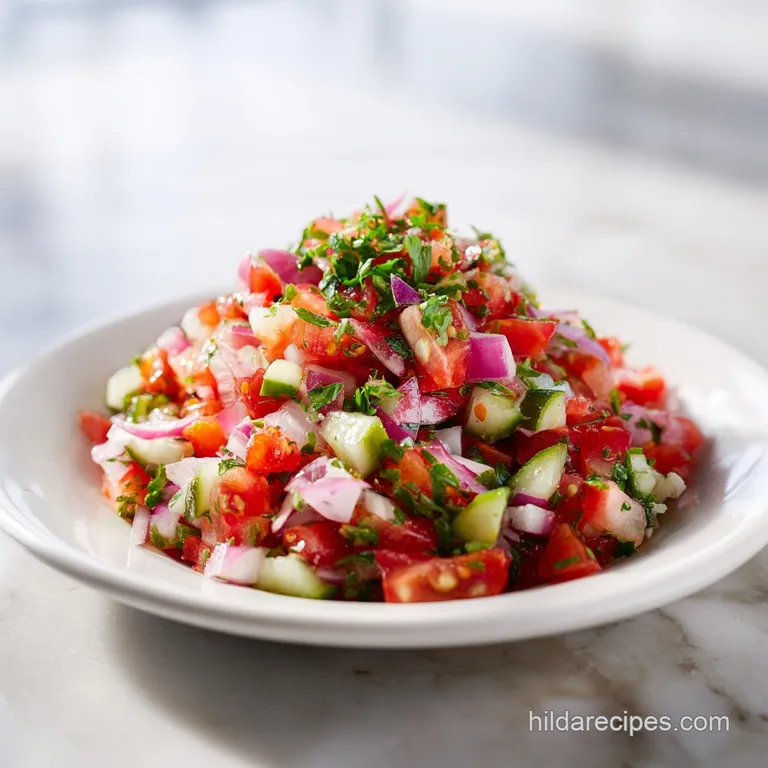
Let's get into the process. We are going to build this in stages to ensure the herbs stay bright and the vegetables stay crisp. This is the quick Israeli salad recipe you'll memorize and make for years.
- Prepare the cucumbers. Slice the Persian cucumbers into 1/4 inch planks, then into sticks, and finally into tiny cubes. Note: Consistency in size ensures every bite has the same texture.
- Dice the tomatoes. Cut the Roma tomatoes into similar 1/4 inch pieces. Bake 20 mins until golden and crackling wait, that's for roasted veg! Since we are raw, just ensure you see a clean, sharp edge on every tomato cube.
- Core and dice the pepper. Remove the seeds and white ribs from the red bell pepper, dicing it to match the cucumbers.
- Slice the aromatics. Thinly slice the green onions, using both the white and light green parts.
- Chop the herbs. Finely chop the flat leaf parsley and chiffonade the mint leaves.
- Combine the base. Place all the diced vegetables and herbs into a large glass or ceramic bowl.
- Whisk the dressing. In a small jar, combine the olive oil, lemon juice, sumac, salt, and pepper. Note: Whisk until the oil and juice look slightly cloudy and combined.
- Dress the salad. Pour the israeli salad dressing recipe over the vegetables just before you are ready to eat.
- Toss gently. Use two large spoons to fold the dressing into the vegetables until everything is glistening.
- Final Seasoning Check. Taste a spoonful and add a pinch more salt if the flavors don't "pop" immediately.
| Method | Time | Texture | Best For |
|---|---|---|---|
| Raw Traditional | 15 mins | Shatteringly Crisp | Daily sides, breakfast, pita stuffing |
| Roasted Variation | 35 mins | Velvety and Sweet | Winter salads, warm grain bowls |
Fixing Common Salad Texture Issues
Even with a simple Israeli salad recipe, things can go sideways. The most common heartbreak is a watery bowl.
Why Your Salad Is Watery
If you salt the vegetables too early, the salt pulls the water out of the cell walls via osmosis. This turns your crisp salad into a vegetable soup in about 20 minutes. Always salt at the very last second.
My Salad Lacks "Zing"
If the salad feels "flat," it’s usually an acid problem. You might need another squeeze of lemon or a heavier hand with the sumac. Sumac provides a unique astringency that helps cut through the richness of the olive oil.
| Problem | Root Cause | Solution |
|---|---|---|
| Soggy texture | Salted too early | Only add salt and dressing immediately before serving. |
| Bitter aftertaste | Old parsley or cucumber seeds | Use flat leaf parsley and seedless Persian cucumbers. |
| Dull appearance | Bruised herbs | Use a sharper knife and avoid "over chopping" the greens. |
Common Mistakes Checklist: ✓ Pat the cucumbers dry after washing to ensure the dressing sticks. ✓ Use a serrated knife for the tomatoes if your chef's knife isn't razor sharp. ✓ Don't skip the mint it provides the "cooling" layer that makes this salad famous.
✓ Ensure the red pepper is fully deseeded to avoid bitter surprises. ✓ Let the dressed salad sit for no more than 5 minutes to allow flavors to meld without losing crunch.
Easy Adaptations for Any Diet
One of the reasons I love this israeli salad recipe with sumac is how naturally inclusive it is. It’s a vegan, gluten-free, and keto friendly powerhouse. But if you want to shake things up, here are two ways to adapt it.
- Protein Boost: Add 1 cup of rinsed chickpeas or some crumbled feta cheese. This turns the side dish into a full meal.
- The Grain Mix: Fold in 1 cup of cooked, cooled quinoa or bulgur wheat. This is a great way to use up leftovers and adds a satisfying chew.
Scaling the Recipe
- Scaling DOWN (1/2 recipe): It’s easy to halve! Just use 1 tablespoon of lemon juice and a small pinch of sumac. Use a smaller bowl to keep the dressing from getting lost on the sides.
- Scaling UP (Double recipe): When doubling for a party, dice all your vegetables but keep the tomatoes in a separate bowl. Combine and dress them at the very last moment to manage the extra moisture.
Storing and Preserving the Crunch
Honestly, don't even bother with leftovers if they've been sitting in dressing for more than 4 hours. The texture just won't be the same. However, you can meal prep the components!
- Storage
- Store the dry, diced vegetables in an airtight container for up to 2 days. Keep the dressing in a separate jar. Mix them only when you are ready to plate.
- Fridge
- 2 days (undressed).
- Freezer
- Do not freeze. The cell walls will collapse, and you'll have mush.
Zero Waste Tip: If you do end up with "salad soup" at the bottom of the bowl, don't throw it out! That liquid is liquid gold. It's essentially a vegetable infused vinaigrette. Use it to dip crusty bread, or pour it over a bowl of plain rice for an instant flavor upgrade.
Serving Ideas for Every Meal
While many people think of this as a lunch item, a traditional Israeli salad recipe is actually the star of a classic breakfast. Imagine a spread of labneh, soft boiled eggs, warm pita, and this bright, crunchy salad. It's the ultimate way to start the day without feeling weighed down.
Flavor Myths
One myth I hear a lot is that you need to peel the cucumbers. Please don't! The skin contains most of the nutrients and provides that beautiful dark green contrast against the red tomatoes. Another misconception is that sumac is spicy. It isn't.
It’s purely tangy and floral, making it safe for kids and those who avoid heat.
- For a creamier texture
- Add a diced avocado just before serving.
- For more heat
- Toss in a finely minced serrano or jalapeño pepper.
- For a smokier finish
- Add a pinch of smoked paprika to the dressing.
Right then, you're ready to master this. Grab your sharpest knife, find the best tomatoes you can, and start dicing. Your kitchen is about to smell like a Mediterranean garden, and your friends will be begging for your "secret" technique. Trust me on this one the micro dice is worth every second of effort!
Recipe FAQs
What ingredients are in an Israeli salad?
Finely diced cucumber, tomato, red bell pepper, parsley, and mint. The dressing is a simple emulsion of olive oil, fresh lemon juice, salt, pepper, and the critical seasoning, sumac.
Is there a difference between Arab salad and Israeli salad?
Yes, the key difference is often the herb profile and texture emphasis. While both feature diced vegetables, Israeli salad traditionally mandates a finer, near uniform micro dice and a heavier use of mint alongside parsley, whereas many Arab salads lean toward larger chunks or include ingredients like
tahini or cucumber yogurt.
What's in a Jerusalem salad?
It is essentially the same as Israeli salad, often with greater emphasis on the herbs. Jerusalem salad is generally defined by its extremely fine dice (micro dice) and heavy seasoning with sumac and fresh mint, ensuring high acidity.
What is the difference between Israeli salad and Shirazi salad?
Shirazi salad uses dried lime powder (limu omani) instead of lemon and often features different herbs. Both salads rely on a precise, fine dice of cucumber, tomato, and onion; however, Shirazi typically uses dried lime for a deeper, earthier sourness compared to the bright, fresh acidity of Israeli
salad.
How do I prevent my finely diced tomatoes from making the salad watery?
Use firm Roma tomatoes and salt the mixture only seconds before serving. Salt draws water out of the vegetables through osmosis, so delaying salting preserves the crisp texture. If you enjoyed controlling the texture balance here, see how the same acid principle applies to balancing richness in a Tomato Peach and recipe.
Can I prepare the vegetables ahead of time for this recipe?
No, you should only dice the vegetables in advance and store them dry. Keep the dry diced vegetables sealed in the refrigerator and prepare the lemon oil dressing separately. Combine and dress everything no more than 10 minutes before eating to maintain the signature "shatter" texture.
What is the role of sumac in the dressing?
Sumac acts as an earthy, dry acid catalyst that deepens the overall tang. While lemon juice provides bright, wet acidity, sumac imparts a subtle, fruity tartness that brightens the flavor profile without adding extra liquid.
Best Israeli Salad Recipe
Ingredients:
Instructions:
Nutrition Facts:
| Calories | 146 kcal |
|---|---|
| Protein | 1.8 g |
| Fat | 10.4 g |
| Carbs | 12.1 g |
| Fiber | 2.4 g |
| Sugar | 4.2 g |
| Sodium | 313 mg |
