Best Greek Salad: Authentic with Feta and Olives
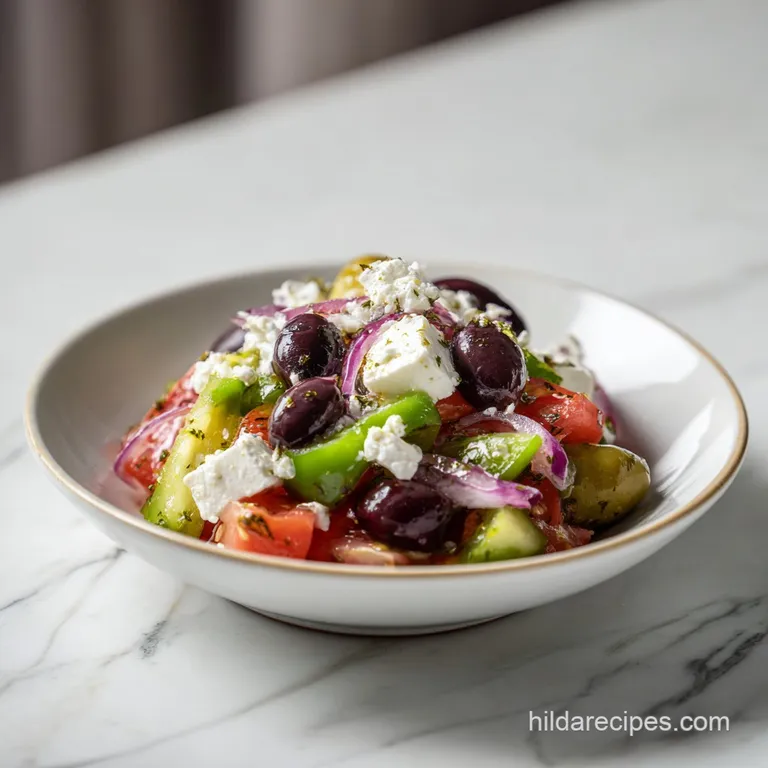
- Time: Active 15 minutes, Passive 0 minutes, Total 15 minutes
- Flavor/Texture Hook: Briny, crisp, and velvety
- Perfect for: Summer lunch or traditional dinner side
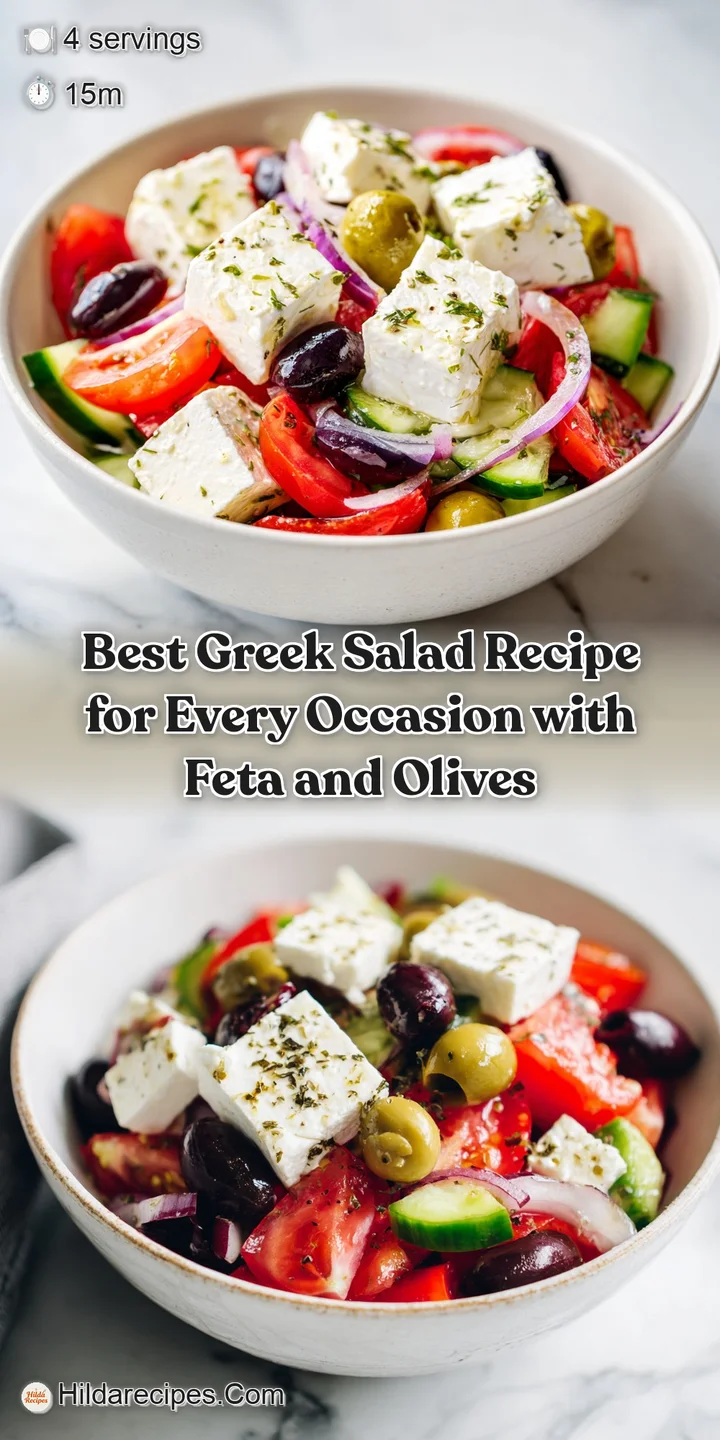
- Best Greek Salad Recipe for Every Occasion with Feta and Olives
- Why This Simple Method Works
- Understanding Your Salad Components
- Gathering Your Fresh Ingredient Essentials
- Essential Tools for Slicing
- Easy Step-by-Step Instructions
- Troubleshooting Common Salad Issues
- Making Adjustments for Crowds
- Modern Variations to Try
- Debunking Traditional Kitchen Myths
- Storage Guidelines and Zero Waste
- Serving Suggestions for the Best Experience
- Very High in Sodium
- Recipe FAQs
- 📝 Recipe Card
Best Greek Salad Recipe for Every Occasion with Feta and Olives
Whenever I close my eyes and think of my grandmother’s kitchen in the heat of July, I don't smell heavy roasts or complex stews. I smell the sharp, electric zing of red wine vinegar hitting a wooden bowl and the earthy, dusty scent of dried oregano being crushed between her palms.
There was always a block of sheep’s milk feta sitting in a brine jar on the counter, waiting to be the crown jewel of our midday meal. This isn't just a side dish in our family; it's a memory of sun drenched afternoons where the only thing that mattered was having enough crusty bread to soak up the "llado" (the oil and tomato juice) at the bottom of the bowl.
The real magic of a traditional Horiatiki the "village salad" is its stubborn simplicity. In Greece, you won't find a leaf of romaine or a stray piece of iceberg lettuce anywhere near this dish. It is a rugged, chunky celebration of the garden.
I remember watching my aunt slice tomatoes not into neat cubes, but into irregular, heavy wedges that felt substantial on the fork. She taught me that the salad shouldn't look like it came out of a machine; it should look like it was prepared by someone who loves the ingredients too much to fuss over them.
We call this the village salad because it represents the heart of Greek rural life: using what you have, when it’s at its peak. You take the tomatoes that are practically bursting their skins, the cucumbers still cool from the shade, and the olives you cured last autumn.
When you put them together, they create something far greater than the sum of their parts. It’s a dish that demands you slow down, pour a glass of cold water, and enjoy the crunch of a green pepper ring against the creamy tang of real feta.
Why This Simple Method Works
- Osmotic Drawing: Adding salt to the tomatoes early pulls out their internal moisture, creating a flavorful "tomato water" that acts as the base for the dressing.
- Oil Vinegar Fusion: Using a 4:1.5 ratio of oil to vinegar ensures the dressing is rich enough to coat the vegetables without masking their natural sweetness.
- Aromatic Release: Crushing the dried oregano directly over the salad breaks the leaf cells, immediately releasing volatile oils that smell like the Mediterranean hills.
- Texture Contrast: Keeping the feta in a whole block prevents it from dissolving into the dressing, maintaining a velvety mouthfeel that contrasts with the crispy peppers.
| Servings | Tomato/Cucumber Amount | Prep Time | Best For |
|---|---|---|---|
| 2 People | 2 Tomatoes / 0.5 Cucumber | 10 minutes | Quick solo lunch |
| 4 People | 4 Tomatoes / 1 Cucumber | 15 minutes | Family dinner side |
| 8 People | 8 Tomatoes / 2 Cucumbers | 25 minutes | Summer garden party |
Right then, before we get our hands messy with those vine ripened beauties, we need to understand the structural integrity of our components. A salad with no lettuce relies entirely on the crunch of the cucumber and the snap of the pepper to stay interesting. If you slice everything too thin, you end up with a puddle.
If you slice too thick, it’s a chore to eat. We are aiming for "rustic hewn" pieces that are roughly the size of a large thumb.
Understanding Your Salad Components
| Ingredient | Science Role | Pro Secret |
|---|---|---|
| Vine Ripened Tomatoes | Primary Acid/Sugar | Never refrigerate them; cold destroys the flavor producing enzymes. |
| Sheep’s Milk Feta | Fat & Emulsification | Buy it in blocks of brine to keep the texture creamy and prevent "chalkiness." |
| Extra Virgin Olive Oil | Texture & Palate Coating | Use a "finishing" oil with peppery notes to balance the tomato sweetness. |
Choosing the right olive oil is perhaps the most important decision you'll make for this recipe. Because we aren't cooking the oil, every single flavor note will be front and center. I always look for oils that are cold pressed and have a slightly green hue.
If your oil tastes like nothing, your salad will taste like nothing. It needs to have that characteristic "back of the throat" tickle that tells you it's full of polyphenols and fresh flavor.
Gathering Your Fresh Ingredient Essentials
- 4 large vine ripened tomatoes (600g): Look for ones that feel heavy for their size and smell like the vine at the stem end.
- 1 large English cucumber (300g): I prefer these because the skin is thinner and the seeds are almost non existent. Why this? Prevents the salad from becoming overly seedy or bitter.
- 1/2 medium red onion (60g): You want that sharp purple bite, but slice them into paper thin rings.
- 1 medium green bell pepper (150g): The bitterness of the green pepper is traditional and essential.
- 1/2 cup Kalamata olives (75g): Keep them whole; the pit actually helps keep the olive firm and flavorful.
- 200g block Greek sheep’s milk feta cheese: Avoid the pre crumbled stuff at all costs.
- 4 tbsp extra virgin olive oil (60ml): The gold of the Mediterranean.
- 1.5 tbsp red wine vinegar (22ml): Provides the necessary sharp tang to cut through the fat.
- 1 tsp dried oregano: Wild Greek oregano is best if you can find it.
- 0.25 tsp sea salt: Use a coarse flake for better texture.
- 0.25 tsp black pepper: Freshly cracked makes a huge difference.
| Original Ingredient | Substitute | Why It Works |
|---|---|---|
| Red Wine Vinegar | Lemon Juice | Provides a bright, citrusy acidity. Note: Changes the profile to be more "Zesty." |
| Red Onion | Shallots | Offers a much milder, sweeter onion flavor without the bite. |
| Kalamata Olives | Castelvetrano Olives | Much more buttery and mild. Note: Lacks the traditional vinegary punch. |
If you find yourself missing the heartiness of a grain, this salad is actually a wonderful base for exploration. Sometimes I'll toss in a handful of cooked grains for a Cilantro Lime Quinoa Salad twist, though for a traditional Greek meal, we usually stick to the basics. The goal is to keep the vegetables as the stars of the show.
Essential Tools for Slicing
You don't need a kitchen full of gadgets for this, but a very sharp chef's knife is non negotiable. Tomatoes are notorious for resisting dull blades, and you don't want to squish the juices out before they even hit the bowl. A large wooden or glass mixing bowl is also helpful.
Wood is traditional because it absorbs a bit of the oil and vinegar over the years, seasoning itself like a cast iron skillet, though glass allows you to see the beautiful layers of color.
Chef's Tip: If your red onions are particularly "angry" (too sharp/pungent), soak the sliced rings in a bowl of ice water for 10 minutes before adding them to the salad. This leaches out the sulfurous compounds that cause "onion breath" while keeping the crunch.
Another trick I learned from a chef in Crete is to partially peel the cucumber. Use a vegetable peeler to take off alternating strips of skin. This creates a "striped" look that is visually stunning but also provides a nice balance between the tough skin and the watery interior.
It's these tiny details that separate a soggy bowl of vegetables from a professional grade salad.
Easy step-by-step Instructions
- Slice your vine ripened tomatoes into chunky, irregular wedges. Don't worry about them being identical.
- Slice your cucumber into thick half moons. Keep them about 1cm thick so they stay crunchy.
- Place tomatoes and cucumbers in a large bowl and sprinkle with 0.25 tsp sea salt. Let them sit for 2–3 minutes until you see a small pool of juice forming. Note: This is the "soul" of your dressing.
- Add the thinly sliced red onion rings and the green bell pepper rings. I like to toss the pepper rings in whole for a beautiful architectural look.
- Add the 75g of whole Kalamata olives to the mix.
- Drizzle the 60ml of extra virgin olive oil and 22ml of red wine vinegar over the vegetables.
- Toss everything gently with your hands or two large spoons. You want to see the oil and tomato juice emulsifying into a cloudy, orange tinted liquid.
- Place the 200g block of feta cheese directly on top. Do not crumble it; let the diner break off pieces as they eat.
- Rub the 1 tsp of dried oregano between your palms directly over the cheese until the herbal aroma fills the air.
- Finish with a few turns of freshly cracked black pepper and serve immediately while the vegetables are still cold.
Troubleshooting Common Salad Issues
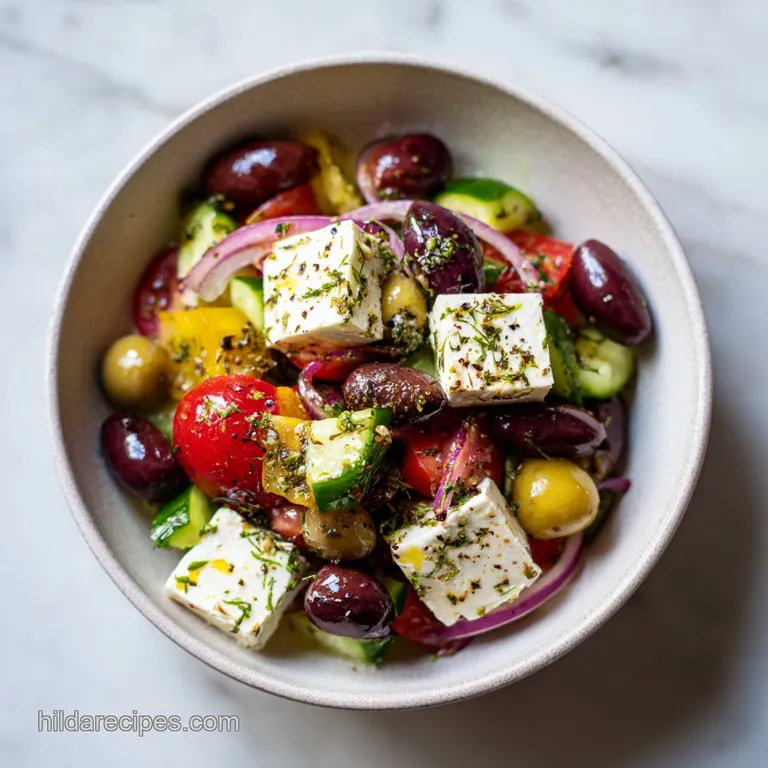
Why Your Greek Salad is Watery
The most common complaint is a puddle at the bottom of the bowl. While we want some juice, we don't want a soup. This usually happens if the tomatoes are overripe or if the salad sits too long after being salted. The salt draws moisture out through a process called osmosis.
To prevent a mess, only salt the vegetables about 3 minutes before you plan to eat.
Balancing the Intense Salt
If your salad tastes like a salt lick, it’s likely the combination of the feta, the olives, and the added sea salt. Different brands of feta have vastly different salt levels. Always taste a small corner of your feta block first.
If it's incredibly salty, skip the sea salt on the tomatoes and let the cheese do the heavy lifting.
| Problem | Root Cause | Solution |
|---|---|---|
| Soft Cucumbers | Sliced too thin or too early | Cut into 1cm thick half moons just before serving. |
| Bland Dressing | Not enough vinegar | Add an extra teaspoon of vinegar to brighten the fats. |
| Chalky Feta | Cow's milk or "low-fat" feta | Always use full fat sheep’s milk feta for a velvety texture. |
Common Mistakes Checklist:
- ✓ Using "salad" or "slicing" tomatoes instead of vine ripened (they lack the necessary juice and sugar).
- ✓ Peeling the cucumber entirely (the skin provides the structural integrity needed to hold the dressing).
- ✓ Adding lettuce (this is the quickest way to make a Greek person cry).
- ✓ Over mixing once the feta is added (this turns the dressing gray and muddy).
- ✓ Serving at room temperature (the crispness of the peppers depends on them being cold).
Making Adjustments for Crowds
Scaling this recipe is fairly straightforward, but there are a few traps to avoid. If you are doubling the recipe for 8 people, don't feel the need to double the salt. Start with 1.5 times the salt and adjust at the end.
Large amounts of raw onion can also become overwhelming when scaled up, so keep the rings paper thin.
When making a massive batch for a party, I suggest keeping the feta and the dressing separate until the very last second. You can prep the tomatoes, cucumbers, and peppers and keep them in a chilled bowl. If you're looking for another crowd pleaser to sit alongside this, a Mediterranean White Bean Salad is a fantastic companion that can be made further in advance without losing its texture.
Modern Variations to Try
The Mediterranean Grain Boost
If you want to turn this into a full meal that sticks to your ribs, adding a handful of cooked farro or chickpeas works wonders. The grains soak up the dressing even better than bread does.
It’s not "traditional" in the village sense, but it’s a smart way to use up pantry staples while keeping the flavor profile intact.
The Vegan Swap
For those avoiding dairy, you can replace the feta with firm cubes of tofu that have been marinated in lemon juice, olive oil, and plenty of oregano for 24 hours. Alternatively, a handful of capers provides that salty, briny punch that you miss when the cheese is removed.
It's a different experience, but still captures the spirit of the dish.
| Method | Preparation Time | Texture | Best For |
|---|---|---|---|
| Traditional Chunky | 15 minutes | Crisp & Substantial | Authentic family dinner |
| Chopped (Finely) | 20 minutes | Uniform & Juicy | Spooning over grilled fish |
| Skewered | 25 minutes | Individual bites | Party appetizers / Mezze |
Debunking Traditional Kitchen Myths
One common myth is that you must remove the seeds from the tomatoes to prevent sogginess. In a Greek salad, the seeds and the "jelly" surrounding them are actually the most flavorful part! That jelly contains high levels of glutamates, which give the salad its savory, umami depth.
Removing them is like throwing away the best part of the sauce.
Another misconception is that dried oregano is a "poor substitute" for fresh. In reality, most Greek cooks prefer dried oregano for this salad because the drying process concentrates the oils and gives it a savory, hay like quality that fresh oregano lacks.
Fresh oregano can often be too "soapy" or floral for such a rugged dish. Trust the dried stuff just make sure it’s high-quality.
Storage Guidelines and Zero Waste
Storage: This salad is best enjoyed within 30 minutes of assembly. However, if you have leftovers, they will keep in the fridge for up to 24 hours. Note that the vegetables will lose their "shatter" and become soft as they sit in the acid.
I actually love day old Greek salad leftovers because the onions pick up a "pickled" quality.
Zero Waste: Never, ever throw away the liquid at the bottom of the bowl! This "nectar" is a combination of high grade olive oil, red wine vinegar, and the concentrated juices of the tomatoes and cucumbers.
In Greece, we call the act of dipping bread into this juice "papara." If you have liquid left but no salad, use it as a marinade for chicken or fish the next day. It is liquid gold.
Serving Suggestions for the Best Experience
To serve this like a pro, I always bring the bowl to the table with the block of feta still whole on top. It makes for a beautiful presentation, and there's something communal about everyone breaking into the cheese at once.
If you're serving this as part of a larger spread, it pairs beautifully with grilled lamb chops or a simple piece of roasted chicken.
The acidity of the salad acts as a palate cleanser for richer meats. I also love serving it with a side of warm pita or a thick slice of sourdough. If you're looking for another textured salad to round out a buffet, Salad in 25 Minutes recipe offers a nice contrast in shape and mouthfeel while staying within the same flavor family. Just remember: the bread is not optional it's the tool you use to make sure not a single drop of that dressing goes to waste.
Very High in Sodium
845 mg of sodium (37% of daily value)
The American Heart Association recommends limiting sodium intake to no more than 2,300mg per day, with an ideal limit of 1,500mg for most adults.
Tips to Reduce Sodium
-
Choose Lower Sodium Feta-15%
Feta cheese is a significant source of sodium. Look for 'low-sodium' or 'reduced sodium' feta options. You can also soak regular feta in water for 10-15 minutes, then drain and pat dry to reduce its saltiness.
-
Rinse Olives-10%
Kalamata olives are brined and contain a considerable amount of sodium. Rinsing them under cold water before adding them to the salad can significantly reduce their sodium content.
-
Reduce Added Salt-8%
The recipe calls for 0.25 tsp of sea salt. Try reducing this by half or eliminating it entirely. The other ingredients, like olives and feta, provide natural saltiness.
-
Boost Flavor with Herbs
While this recipe already includes oregano, consider adding more fresh herbs like parsley, mint, or dill, and a pinch of red pepper flakes for extra flavor without adding sodium.
Recipe FAQs
Is it true I must toss the salad right before serving to maintain texture?
Yes, this is essential for optimal results. Because the salt draws moisture out of the vegetables, assembling the salad within 30 minutes of serving ensures the ingredients remain crisp rather than soggy.
How to keep the vegetables from becoming mushy during storage?
Store components separately if you plan to eat the salad later than 24 hours. While the vegetables naturally soften as they sit in the acid, you can enjoy the flavor melding process by keeping the dressing and vegetables apart until just before you serve.
Is it true that adding the liquid at the bottom of the bowl is bad for flavor?
No, this is a common misconception. The liquid at the bottom is a concentrated "nectar" of olive oil, red wine vinegar, and vegetable juices that contains the best flavor of the entire dish.
How to achieve the perfect balance of flavors in the dressing?
Use the sea salt to draw out the tomato juices first. By letting the salted tomatoes and cucumbers sit for 2 3 minutes, you create a natural base for the oil and vinegar. If you enjoyed mastering this flavor balancing technique, see how we apply the same logic to our Burrata Salad for 4 recipe.
Can I use pre-crumbled feta instead of a block?
No, stick with a whole block for the best texture and taste. Pre-crumbled cheese often contains anti caking agents that prevent it from absorbing the oregano oils and vinegar as effectively as a fresh block.
Is it true I should peel the entire cucumber before slicing?
No, this is unnecessary. Partially peeling the cucumber leaves behind some of the dark green skin, which provides a much needed structural crunch and improved color contrast against the red onions and tomatoes.
How to ensure the oregano flavor is prominent?
Rub the dried oregano between your palms directly over the salad. This friction releases the essential oils from the dried herb, significantly increasing the aromatic intensity compared to just sprinkling it on straight from the jar.
Best Greek Salad Recipe
Ingredients:
Instructions:
Nutrition Facts:
| Calories | 347 calories |
|---|---|
| Protein | 9.5 g |
| Fat | 28.8 g |
| Carbs | 13.2 g |
| Fiber | 3.1 g |
| Sugar | 6.4 g |
| Sodium | 845 mg |
