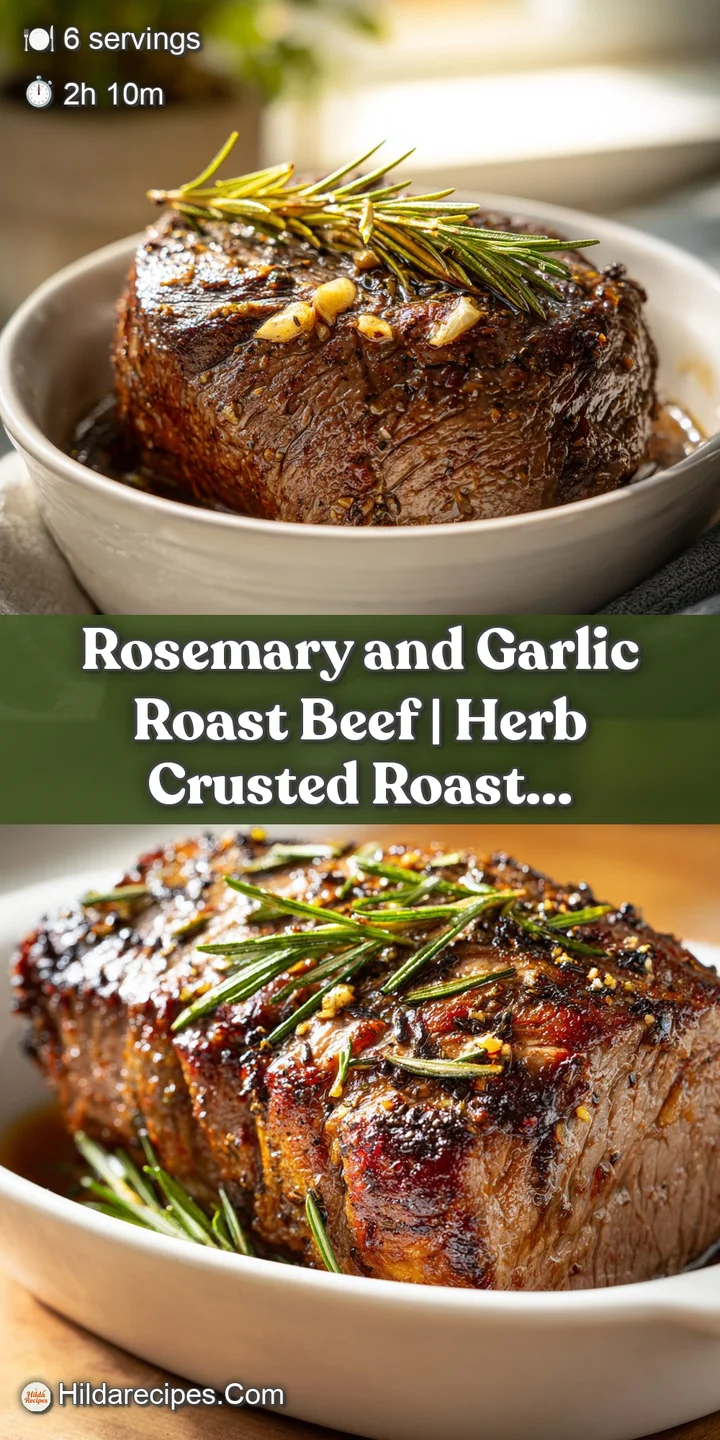
Rosemary and Garlic Roast Beef: Herb Crusted
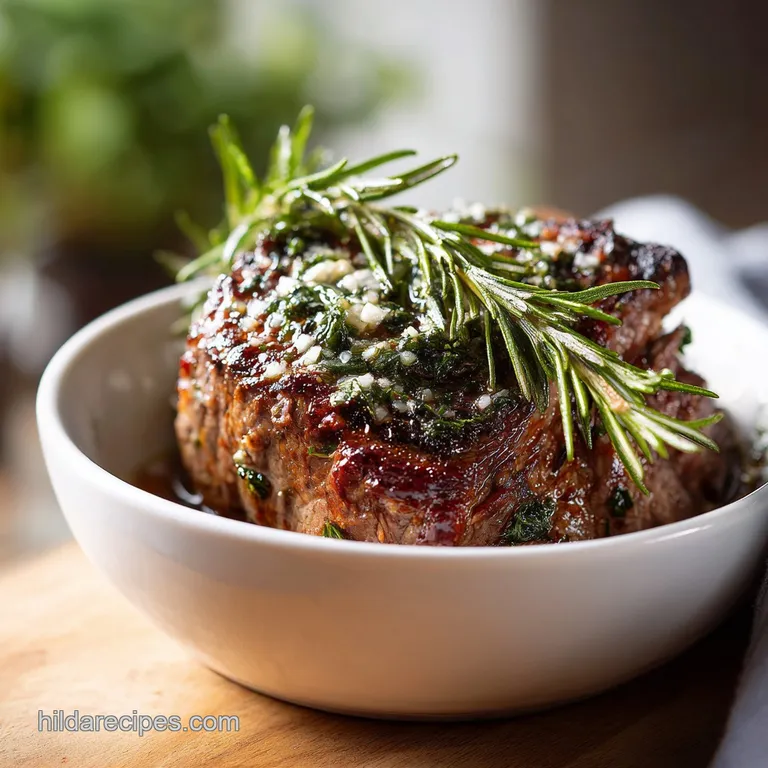
- Time:20 minutes active + 90 minutes roasting + 20 minutes resting = 130 minutes total
- Flavor/Texture Hook: Savory garlic infused interior with a crackling, herb heavy mahogany crust
- Perfect for: Weekend family gatherings, holiday centerpieces, or impressive meal prep
- Making Perfect Rosemary and Garlic Roast Beef
- Why the Garlic Plugs Work
- Crucial Timing and Temperature Specs
- Selecting the Best Beef Components
- Essential Tools for Beef Roasting
- Roasting Your Beef Step by Step
- Fixing Common Roast Beef Issues
- Scaling Your Roast for Guests
- Debunking Old Roast Beef Myths
- Storage Tips and Zero Waste
- Perfect Sides for Beef Dinner
- Very High in Sodium
- Recipe FAQs
- 📝 Recipe Card
Making Perfect Rosemary and Garlic Roast Beef
The moment that heavy roasting pan hits the oven rack, your kitchen transforms. There is a specific, heady aroma that only comes from fresh rosemary sprigs meeting rendered beef fat it is woody, peppery, and deeply nostalgic.
I remember my grandmother standing over a mortar and pestle, mashing garlic cloves into a green flecked paste, insisting that the only way to truly flavor a roast was to "hide" the garlic inside the meat. She was right, of course.
This recipe is all about the payoff of a few smart techniques. You aren't just slathering flavor on the outside; you are essentially marinating the roast from the inside out while it cooks.
The result is a rosemary and garlic roast beef that doesn't just look impressive on a platter but tastes like it spent days in a professional kitchen. We are going for that specific contrast: a crust that shatters under the knife and a center that is velvety and pink from edge to edge.
You don’t need a culinary degree to nail this, just a bit of patience and a reliable thermometer. We are moving away from the gray, overcooked roasts of the past. Instead, we are leaning into the comfort of a meal that has been perfected over generations in my family.
It’s the kind of dish that brings everyone to the table before you even announce it’s ready, simply because the smell is impossible to ignore. Let's get into the details of how we build those layers of flavor.
Why the Garlic Plugs Work
The Plugging Technique: Inserting raw garlic slivers into the muscle allows the oils to emulsify with the internal fat as the beef warms, flavoring the meat from the inside.
Surface Area Contact: Crushing the herbs into a wet paste with olive oil increases the surface area contact, ensuring the salt penetrates the fibers for better seasoning.
Ambient Airflow: Using a wire rack ensures hot air circulates under the beef, preventing the bottom from steaming in its own juices and keeping it crispy.
Carryover Energy: Resting the meat allows the protein fibers to relax and reabsorb liquid, which is how we get that silky, velvety texture rather than a dry plate.
| Method | Total Time | Crust Texture | Inside Results |
|---|---|---|---|
| Oven Roast | 130 minutes | Shatter crisp and dark | Uniformly pink and juicy |
| Stovetop Pot Roast | 180+ minutes | Soft and braised | Fall apart tender/shredded |
| Air Fryer | 45 minutes | Very crispy | High risk of uneven center |
Choosing between methods usually comes down to what you crave. While a stovetop braise is wonderful for tough cuts, this oven method is the gold standard for a rosemary and garlic roast beef when you want clean, elegant slices that hold their shape.
The dry heat of the oven is what allows those herbs to toast and form that signature mahogany seal that locks everything in.
| Component | Science Role | Pro Secret |
|---|---|---|
| Coarse Sea Salt | Protein Denaturation | Use coarse grains to create "craters" in the crust that trap rendered fat |
| Fresh Rosemary | Volatile Oil Release | Finely mince to break the pine like needles, releasing more aromatic cineole |
| Fresh Garlic | Allicin Development | Mashing into a paste creates a smoother flavor profile than sliced garlic |
| Olive Oil | Heat Conductor | Acts as a bridge to carry the herb flavors deep into the crust's nooks |
Selecting the right cut is the first step in your flavor journey. If you're looking for a similar texture in a different format, you might notice how the fat rendering here is similar to what happens in an authentic beef bolognese, where slow cooking transforms the protein into something incredibly silky.
Crucial Timing and Temperature Specs
To get the most out of your 1.6 kg (3.5 lb) roast, you need to be precise. Roasting is a game of heat transfer, and small adjustments in your oven setup can lead to big differences in the final slice.
According to USDA data, the safety of the meat is paramount, but for the best eating experience, we aim for specific internal benchmarks.
| Roast Thickness | Internal Temp | Rest Time | Visual Cue |
|---|---|---|---|
| Thin (3-4 inches) | 52°C (125°F) | 15 mins | Bright red, warm center |
| Medium (5-6 inches) | 57°C (135°F) | 20 mins | Soft pink, juicy center |
| Thick (7+ inches) | 63°C (145°F) | 25 mins | Pale pink, firm center |
Note that the "Rest Time" isn't just a suggestion; it is a mandatory part of the process. If you slice into your garlic roast beef the second it comes out of the heat, you'll see all that beautiful juice run across the board instead of staying in the meat.
That 20 minute window allows the temperature to stabilize and the fibers to lock in that moisture.
Selecting the Best Beef Components
You don't need a massive list of ingredients to make this work. In fact, the beauty of a rosemary and garlic roast beef lies in the quality of the few things we do use. We are looking for high impact aromatics and a solid piece of beef.
- 1.6 kg (3.5 lb) Beef Roast: Prime Rib, Top Round, or Sirloin Tip all work beautifully. Why this? These cuts have enough structure to stand up to a long roast without drying out.
- Substitute: Brisket (though it requires a much longer, slower cook time).
- 2 tbsp Olive Oil: high-quality extra virgin is best. Why this? It helps the herb paste adhere and aids in browning.
- Substitute: Avocado oil for a higher smoke point.
- 6 cloves Fresh Garlic: Use the largest cloves you can find. Why this? Fresh garlic has a sharp bite that mellows into sweetness during roasting.
- Substitute: 1 tbsp garlic confit for a milder, buttery finish.
- 3 tbsp Fresh Rosemary: Finely chopped. Why this? Fresh herbs provide a piney, earthy aroma that dried herbs can't match.
- Substitute: 1 tbsp dried rosemary (soaked in the oil first).
- 1 tbsp Coarse Sea Salt: Essential for the crust. Why this? Coarse grains provide a crunch and seasoned bite.
- Substitute: Kosher salt (use 1.5 tbsp if using Diamond Crystal).
- 1 tsp Cracked Black Pepper: Freshly ground for heat. Why this? Larger cracks of pepper provide "pops" of flavor.
- Substitute: White pepper for a more subtle, floral heat.
- 1 tsp Fresh Thyme: Stripped from the stem. Why this? Adds a bright, lemony undertone to the heavy beef flavors.
- Substitute: Dried thyme (use half the amount).
Chef's Tip: Freeze your garlic cloves for 10 minutes before slicing. It makes them much easier to cut into thin, sturdy "plugs" that won't mush when you try to stuff them into the meat incisions.
Essential Tools for Beef Roasting
Before you start, gather your gear. Having everything ready means you won't be scrambling while your meat is tempering on the counter. You don't need a professional kitchen, but a few specific items make the process seamless.
- Heavy Roasting Pan: A cast iron skillet or a stainless steel roasting pan.
- Wire Rack: This is non negotiable for an even crust.
- Digital Meat Thermometer: The only way to guarantee doneness.
- Mortar and Pestle: For emulsifying the herbs and garlic.
- Sharp Paring Knife: For creating the "plug" incisions.
If you're intrigued by the art of roasting beef, you're in for a treat because the process is simpler than you might think, especially once you have your tools in order. For more tips on cast iron care, check out this helpful article on cast iron maintenance. Happy cooking!
Roasting Your Beef step-by-step
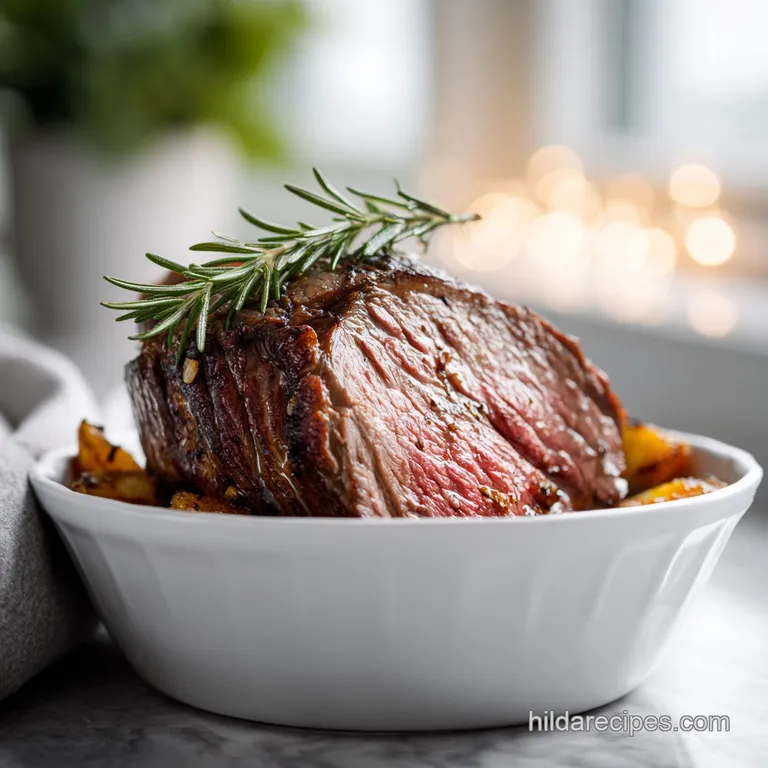
1. Tempering and Plugging
Remove the beef from the refrigerator 60 minutes before cooking. Note: This ensures the center isn't ice cold when the outside starts browning. Use a sharp paring knife to create 1 inch deep incisions across the surface of the roast.
Slice 2 cloves of garlic into thin slivers and stuff them deep into the incisions until they disappear into the meat.
2. Creating the Herb Seal
Mince the remaining 4 cloves of garlic as finely as possible. In a mortar and pestle or a small bowl, combine the minced garlic, finely chopped rosemary, sea salt, cracked black pepper, fresh thyme, and olive oil. Mash the mixture vigorously until a thick, emulsified wet rub forms.
3. Applying the Crust
Pat the beef completely dry with paper towels on all sides. Note: Moisture is the enemy of a good crust. Slather the rosemary and garlic paste over the entire surface of the roast, pressing firmly with your palms so the herbs stick and form a solid layer.
4. The Gentle Roast
Preheat your oven to 160°C (325°F). Place the beef on a wire rack set inside your roasting pan. Roast for approximately 90 minutes until a digital thermometer hits your target temp (52°C/125°F for rare).
The outside should look dark, craggy, and mahogany colored.
5. The Essential Rest
Remove the roast from the oven and transfer it to a wooden cutting board. Tent it loosely with a piece of aluminum foil. Allow the meat to rest for a mandatory 20 minutes until the juices have fully redistributed. This prevents the "puddle" effect when you finally slice into it.
Fixing Common Roast Beef Issues
Even with the best intentions, roasting large cuts of meat can be tricky. Usually, problems arise from temperature fluctuations or moisture levels. If you find your roast isn't looking quite right, don't panic most issues are fixable or avoidable.
Why Your Roast is Tough
If the meat feels like a workout for your jaw, it likely didn't spend enough time in the "rest" phase, or the oven temperature was too high, causing the proteins to contract too tightly. When meat cooks, the fibers squeeze out liquid; resting allows them to suck that moisture back in like a sponge.
If Garlic Paste Burns
Garlic is sensitive to high heat. If you notice the herb crust turning black too quickly, your oven might have hot spots. A quick fix is to tent the roast with foil halfway through the cooking time. This allows the internal temperature to continue rising without further browning the exterior.
| Problem | Root Cause | Solution |
|---|---|---|
| Soggy Bottom | No wire rack used | Always elevate meat to allow air circulation underneath |
| Gray Meat Ring | Cold meat in hot oven | Temper meat for 60 mins; lower oven temp for more even heat |
| Puddle on Board | Sliced too early | Wait 20 full mins; the temperature will actually rise 5 degrees |
Common Mistakes Checklist
- ✓ Never skip the "pat dry" step with paper towels (prevents steaming).
- ✓ Use a thermometer, not a "finger poke" test, for accuracy.
- ✓ Don't add liquid to the roasting pan (this creates steam, not a crust).
- ✓ Ensure the rosemary is finely chopped so it doesn't feel like pine needles in the mouth.
- ✓ Check your oven calibration if the roast takes significantly longer than 90 minutes.
Scaling Your Roast for Guests
Adjusting this recipe for a bigger crowd is fairly straightforward, but you have to be careful with the seasonings. If you are doubling the roast to a 3.2 kg (7 lb) piece, do not simply double the salt and pepper. Instead, increase the spices to about 1.5x the original amount.
This prevents the exterior from becoming overwhelmingly salty while still providing enough flavor for the larger surface area.
For smaller gatherings, you can easily use a 0.8 kg (1.7 lb) roast. Reduce the cooking time by about 25% and start checking the internal temperature at the 45 minute mark. If you find yourself with a specific cut like a sirloin tip roast, you can follow these same principles but keep an extra eye on the thermometer as leaner cuts move through the temperature zones faster.
When scaling up, you might need to use two roasting pans or work in batches if you're searing first. Just make sure there is at least two inches of space around the meat in the oven.
If you crowd the oven rack with too many pans, the air can't circulate, and your roast beef will lose that beautiful, even color we worked so hard to achieve.
| Target Servings | Roast Weight | Herb Paste Ratio | Recommended Pan |
|---|---|---|---|
| 2-3 People | 0.8 kg (1.7 lb) | 0.5x Batch | 10 inch Cast Iron |
| 6 People | 1.6 kg (3.5 lb) | 1.0x Batch | Standard Roasting Pan |
| 10-12 People | 3.2 kg (7 lb) | 1.5x Batch | Large Turkey Roaster |
Debunking Old Roast Beef Myths
Many of us grew up hearing that you must sear meat to "seal in the juices." This is actually a myth. Searing is fantastic for developing flavor through browning, but it doesn't create a moisture proof barrier. In fact, moisture loss happens regardless of whether you sear or not.
The real secret to juicy beef is low, steady heat and a proper rest period.
Another common misconception is that salting the meat before roasting will draw out all the moisture and make it dry. While salt does draw moisture to the surface initially, if you leave it for at least 40-60 minutes (during the tempering phase), the salt dissolves into a brine and is reabsorbed into the meat.
This actually seasons the interior and helps the proteins hold onto water during the cook.
Finally, some people think you should cook beef until the juices "run clear." For a beef roast, if the juices are completely clear, you have likely overcooked it into the well done territory. For a perfect medium rare, the juices should still have a slightly rosy tint.
Trust your digital thermometer over visual "juice tests" every single time.
Storage Tips and Zero Waste
Your rosemary and garlic roast beef is just as good the next day, provided you store it correctly. Wrap the leftovers tightly in plastic wrap or store them in an airtight container in the fridge for up to 4 days.
When reheating, do it gently in a low oven (120°C/250°F) with a splash of beef broth to keep it from drying out. You can also freeze sliced beef for up to 3 months just make sure to squeeze all the air out of the freezer bag to prevent freezer burn.
To embrace a zero waste kitchen, don't you dare throw away those scraps! The beef trimmings and any accumulated juices (the "jus") are liquid gold. I like to toss the leftover bones or fatty ends into a pot with some carrots and onions to make a rich, rosemary scented beef stock.
Even the leftover herb paste that didn't stick to the meat can be whisked into a quick vinaigrette or stirred into mashed potatoes for an instant flavor boost.
Perfect Sides for Beef Dinner
When it comes to serving this masterpiece, you want sides that can stand up to the bold garlic and rosemary notes. A classic choice is buttery mashed potatoes or crispy roasted root vegetables. The earthiness of carrots and parsnips plays beautifully with the piney rosemary.
If you want something a bit lighter, a crisp green salad with a sharp lemon vinaigrette helps cut through the richness of the beef fat.
I personally love serving this with a side of Yorkshire puddings to soak up any extra juices on the plate. If you have any leftovers, they make the world's best roast beef sandwiches with a bit of horseradish cream and arugula.
No matter how you serve it, the star will always be that perfectly seasoned, garlic plugged beef that tastes like home.
Very High in Sodium
890 mg 890 mg (39% 39% of daily value)
The American Heart Association recommends no more than 2,300mg of sodium per day, with an ideal limit of about 1,500mg for most adults.
Tips to Reduce Sodium
-
Reduce Coarse Sea Salt-25%
Significantly reduce or eliminate the coarse sea salt used in seasoning the beef roast. Salt is the primary sodium source in this recipe.
-
Boost Fresh Herbs and Spices
Instead of relying on salt, amp up the fresh garlic, rosemary, and thyme. These aromatics add significant flavor without adding sodium.
-
Use Unsalted Alternatives-15%
If any other seasoning or marinade component (not explicitly listed but commonly used with roasts) is added, ensure it's low-sodium or no-salt added.
-
Measure and Control Salt-20%
If you choose to use any salt, measure it precisely and consider using a salt substitute that uses potassium chloride instead of sodium chloride.
Recipe FAQs
When to add rosemary to roast beef?
Add it during the crust preparation phase. Combine the finely chopped rosemary with your garlic, oil, and seasonings into a paste before slathering it onto the meat to ensure the flavors penetrate the surface as it roasts.
Does rosemary pair well with beef?
Yes, it is the classic pairing for red meat. The piney, woody notes of fresh rosemary cut through the richness of the beef fat, creating a balanced and aromatic crust.
Can you roast rosemary with garlic?
Yes, they are best when used together. The garlic mellows and sweetens in the heat, while the rosemary oils infuse the beef, mirroring the savory complexity found in our creamy garlic butter steak bites technique.
What herbs are good in roast beef?
Use fresh rosemary and fresh thyme. These hardy herbs withstand the long 90-minute roasting time without losing their essential oils or burning too quickly.
Is it true I must wash the beef before seasoning it?
No, this is a common misconception. You should never wash the meat; instead, pat the beef completely dry with paper towels to ensure the herb paste adheres properly and the crust develops correctly.
How to ensure the roast is evenly cooked?
Remove the beef from the refrigerator 60 minutes before cooking. Tempering the meat allows the center to come closer to room temperature, preventing the outer layers from overcooking while the middle stays raw.
How to keep the roast juicy after cooking?
Rest the meat for a mandatory 20 minutes after removing it from the oven. Tent it loosely with foil on a cutting board to let the muscle fibers relax and the juices redistribute, which keeps every slice moist.
Rosemary Garlic Roast Beef
Ingredients:
Instructions:
Nutrition Facts:
| Calories | 322 kcal |
|---|---|
| Protein | 42 g |
| Fat | 16 g |
| Carbs | 1 g |
| Fiber | 0.4 g |
| Sugar | 0.1 g |
| Sodium | 890 mg |
