Authentic Tres Leches Cake: Silky and Traditional
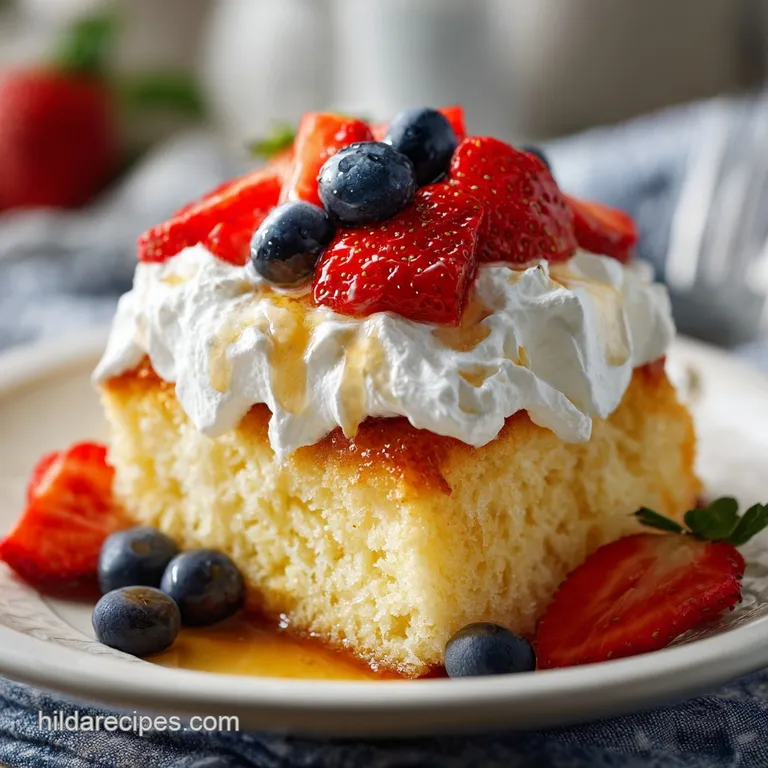
- Time: Active 25 minutes, Passive 4 hours 30 mins, Total 55 minutes
- Flavor/Texture Hook: A cloud like, moist sponge with a silky, milky finish
- Perfect for: High precision celebrations or festive dinner parties
- Master the Ultimate Structural Tres Leches Cake
- Precision Metrics for the Perfect Soak
- Essential Elements for a Velvety Crumb
- Technical Tools for Baking Success
- Executing the Multi Stage Hydration Process
- Analyzing Structural Failures and Solutions
- Dynamic Adaptations for Flavor Variation
- Preservation and Waste Reduction Guidelines
- Synergistic Pairings for Enhanced Flavor
- Troubleshooting Common Issues
- Recipe FAQs
- 📝 Recipe Card
Master the Ultimate Structural Tres Leches Cake
We have all been there, standing over a cake that has essentially turned into a puddle of sweet soup. You followed a recipe, you poured the milk, and instead of a dignified slice of Tres Leches Cake, you ended up with a soggy, structural failure that looks more like oatmeal than dessert.
The problem is usually technical. Most people treat the sponge like a standard birthday cake, but this specific dish requires a very different approach to gluten and aeration. If the sponge is too dense, the milk sits on top like a stagnant pond.
If it is too weak, it collapses into a mushy mess the second the liquid hits the crumb.
To fix this, we need to focus on the mechanical leavening of the eggs. This is not just about mixing ingredients, it is about creating a stable foam that can withstand the weight of condensed and evaporated milks. I remember my first attempt where I didn't beat the yolks long enough.
The result was a rubbery, flat disc that refused to absorb even a tablespoon of the soak. It was a frustrating waste of high-quality dairy, and it taught me that precision in the "ribbon stage" is the difference between a professional result and a kitchen disaster.
This version of the classic Mexican dessert is designed for those who want a repeatable, mathematically sound result. We are going to build a sponge that acts like a high performance sponge, pulling the milk into its center through capillary action while maintaining enough tension to be sliced cleanly.
You are looking for a specific texture that is neither dry nor dripping, a balance that is only achieved through proper protein denaturation and careful temperature management.
Precision Metrics for the Perfect Soak
Protein Matrix Stability: By separating the eggs and whipping the whites to stiff peaks, we create a network of air bubbles trapped in protein. This structure provides the "holes" necessary for the milk to occupy later without the cake dissolving.
Hygroscopic Balance: The sugar in the batter does more than sweeten. It interferes with gluten development, ensuring the crumb remains tender enough to absorb moisture while also helping the egg whites stay glossy and stable.
Viscosity Manipulation: Using three different types of milk provides a specific range of fat and sugar concentrations. The evaporated milk offers a caramelized depth, the condensed milk provides the necessary viscosity for a custard like mouthfeel, and the heavy cream adds the lipid content required for a velvety finish.
Thermal Absorption: Poking holes while the cake is cool but still porous allows the chilled milk mixture to seep into the center slowly. This prevents the surface from becoming overly saturated before the core has had a chance to hydrate.
When we talk about the hydration of this sponge, we have to consider the rate of liquid movement. If you pour the milks too quickly, you risk bypass, where the liquid runs down the sides of the pan rather than entering the crumb. A slow, methodical pour ensures every square centimeter of the sponge is reached. This is especially true when working with rich ingredients like those in a Pecan Pie Dump Cake, where the balance of sugar and moisture determines the final set of the dessert.
Essential Elements for a Velvety Crumb
For the Airy Sponge Base
The foundation of our Tres Leches Cake is the sponge, which relies on 190g of all purpose flour. We use all purpose because it provides just enough gluten to hold the structure without becoming tough.
This is paired with 1 tsp of baking powder for a secondary chemical lift and 0.5 tsp of fine sea salt to sharpen the flavor profile. The real work, however, is done by the 5 large eggs. These must be at room temperature to ensure the proteins can expand to their maximum volume during the whipping process.
For the Three Milk Soak
The soak is a technical blend of 354ml of evaporated milk, 280ml of sweetened condensed milk, and 60ml of heavy cream. This specific ratio creates a liquid with a high solids content.
We also incorporate 1 tsp of ground cinnamon directly into the soak to ensure the spice is distributed throughout the cake, rather than just sitting on top. This internal seasoning is a small but vital detail for an authentic flavor experience.
The final layer is the whipped topping, requiring 480ml of cold heavy whipping cream. It is crucial that this cream is kept at 4°C (40°F) until the very moment of whipping to ensure the fat globules can trap air effectively.
We sweeten this with 30g of powdered sugar and 1 tsp of vanilla bean paste. I prefer the paste over extract here because the visible vanilla specks provide a visual cue of quality and a deeper, more complex aroma that cuts through the richness of the milk.
Technical Tools for Baking Success
You cannot achieve the necessary aeration for a Tres Leches Cake with a hand whisk alone, unless you have the arm strength of a professional athlete. A stand mixer is almost mandatory for the egg yolk "ribbon stage." This process requires about 4 minutes of high speed whisking to incorporate enough air to triple the volume of the yolks.
You will also need two separate, perfectly clean bowls. Any trace of fat in the bowl used for the egg whites will prevent them from reaching stiff peaks, which would be a catastrophic failure for the cake's structure.
A 9x13 inch baking pan is the standard for this recipe, preferably light colored metal or glass. Dark pans can cause the edges of the sponge to overbake and become crusty, which creates a barrier that resists the milk soak.
You will also need a fine mesh sifter for the flour and a silicone spatula for the folding process. Folding is the most delicate part of the entire operation. You aren't just stirring; you are lifting and rotating the batter to preserve the microscopic air bubbles you spent ten minutes creating.
Executing the Multi Stage Hydration Process
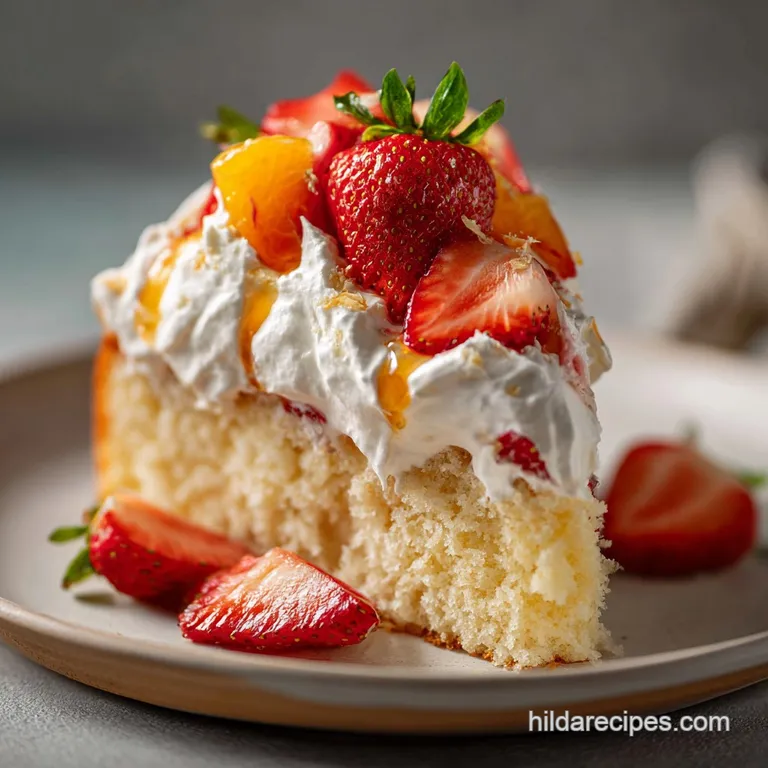
Phase 1: Creating the Batter
- Preheat your oven to 350°F (180°C) and grease your 9x13 inch pan thoroughly. Note: Proper preheating ensures the cake gets an immediate lift from the baking powder.
- Sift the 190g of all purpose flour, 1 tsp baking powder, and 0.5 tsp salt into a medium bowl and set aside.
- In your stand mixer, beat 5 egg yolks with 100g (1/2 cup) of the granulated sugar on high speed. Cook 4 minutes until the mixture is pale and forms a thick ribbon when the whisk is lifted.
- Reduce speed and stir in the 80ml of whole milk and 1.5 tsp of vanilla extract until just combined.
- In a clean bowl, whisk the 5 egg whites until soft peaks form, then gradually add the remaining 50g (1/4 cup) of sugar. Beat until peaks are stiff and glossy.
Phase 2: Baking and Soaking
- Using a spatula, gently fold the egg whites into the yolk mixture in three separate additions.
- Sift the dry ingredients over the eggs and fold gently until no flour streaks remain.
- Pour into the pan and bake for 30 minutes. Bake until a toothpick is clean and the top is golden.
- Whisk 354ml evaporated milk, 280ml condensed milk, and 60ml heavy cream with 1 tsp cinnamon.
- Poke holes every half inch in the cooled cake and pour the soak slowly. Refrigerate 4 hours until the liquid is fully absorbed.
- Whip 480ml cold heavy cream with 30g powdered sugar and vanilla paste. Beat until stiff peaks form and spread over the cake.
Analyzing Structural Failures and Solutions
Why the sponge collapsed
A flat, dense sponge is usually the result of "over folding" or greasy equipment. When you fold the whites into the yolks, every unnecessary stroke of the spatula pops air bubbles. If the batter looks liquid and runny before it goes into the oven, you have lost your aeration.
Always stop the second the flour is incorporated. Plus,, ensure your egg white bowl is scrubbed with a bit of lemon juice or vinegar beforehand to remove any invisible fat film that might hinder the protein structure.
Why the milk pools
If you find that the milk is sitting on the surface of your Tres Leches Cake and refuses to sink in, your sponge might be too dense or you didn't poke enough holes. The holes need to go all the way to the bottom of the pan.
Think of them as vertical shafts that allow gravity to pull the liquid into the lower layers of the crumb. Also, make sure the cake has cooled completely. A hot cake can sometimes "seize" and become less porous when hit with cold liquid, preventing the capillary action we are looking for.
Common Mistakes Checklist
- ✓ Use a metal skewer or fork to poke holes every 1/2 inch for even distribution.
- ✓ Never skip sifting the flour; lumps will require more mixing, which kills the air.
- ✓ Allow the cake to cool to room temperature before adding the milk soak.
- ✓ Ensure the egg yolks reach the "ribbon stage" (pale and thick) before proceeding.
- ✓ Do not use "low-fat" or "skim" condensed milk; the fat is needed for the set.
Dynamic Adaptations for Flavor Variation
If you need to adjust the yield of this Tres Leches Cake, the math is relatively straightforward because it relies on the ratio of eggs to flour. For a half size batch in an 8x8 inch square pan, you can simply halve all ingredients.
However, because eggs are the primary leavener, I recommend using 3 large eggs instead of 2.5 to ensure the lift remains sufficient. Reduce the bake time by about 5 minutes, but keep the oven temperature the same at 350°F (180°C).
When scaling up for a large event, do not simply double the cinnamon or vanilla extract. Spices can become overwhelming when concentrated in larger volumes. Increase them by a factor of 1.5 instead of 2. For a chocolate version, you can check out my Easy Chocolate Cake with Ganache for inspiration, or simply replace 30g of the flour in this recipe with high-quality Dutch processed cocoa powder. This provides a rich, dark base that pairs beautifully with the sweet milk soak.
Preservation and Waste Reduction Guidelines
Storing a Tres Leches Cake requires constant refrigeration because of the high dairy content. It will stay fresh and structurally sound for up to 4 days in the fridge. In fact, many people find the flavor improves after the first 24 hours as the cinnamon and vanilla have more time to meld with the fats in the milk.
Always keep the cake tightly covered with plastic wrap or a lid to prevent it from absorbing "fridge smells," which dairy heavy desserts are notorious for doing.
For zero waste enthusiasts, do not throw away the egg shells or any leftover milk mixture. Egg shells can be crushed and added to garden soil for calcium. If you have leftover milk soak that didn't fit into the pan, it makes an incredible creamer for your morning coffee or a base for a quick bread pudding.
If you find yourself with cake scraps after leveling the top, toast them in a low oven to make "sweet croutons" for yogurt parfaits. This recipe is quite rich, so even small leftover portions can be repurposed effectively.
Synergistic Pairings for Enhanced Flavor
Troubleshooting Common Issues
| Issue | Solution |
|---|---|
| How does the sponge stay structural | The sponge remains intact because we utilize the mechanical strength of egg proteins rather than relying solely on chemical leaveners. By whipping the yolks and whites separately, we create a cross li |
| Why do we use three specific milks | Each milk serves a functional purpose. Sweetened condensed milk provides the sugar and viscosity for the "sauce," evaporated milk adds a concentrated dairy flavor without the volume of fresh milk, and |
| What is the science behind the "Cold Soak" | The cold soak is vital for fat stability. If the milks were hot, they might melt the delicate protein structure of the sponge or cause the cake to turn gummy. Cooling the cake first ensures the starch |
| Add an "Adult" twist | For a more sophisticated version, you can add 2 tablespoons of aged rum or brandy to the milk mixture before pouring it over the cake. This adds a complex, woody note that cuts through the intense swe |
| Make this dairy-free | While the classic Tres Leches Cake relies on bovine dairy, you can substitute the milks with coconut based alternatives. Use full fat coconut milk in place of the heavy cream, coconut condensed milk, |
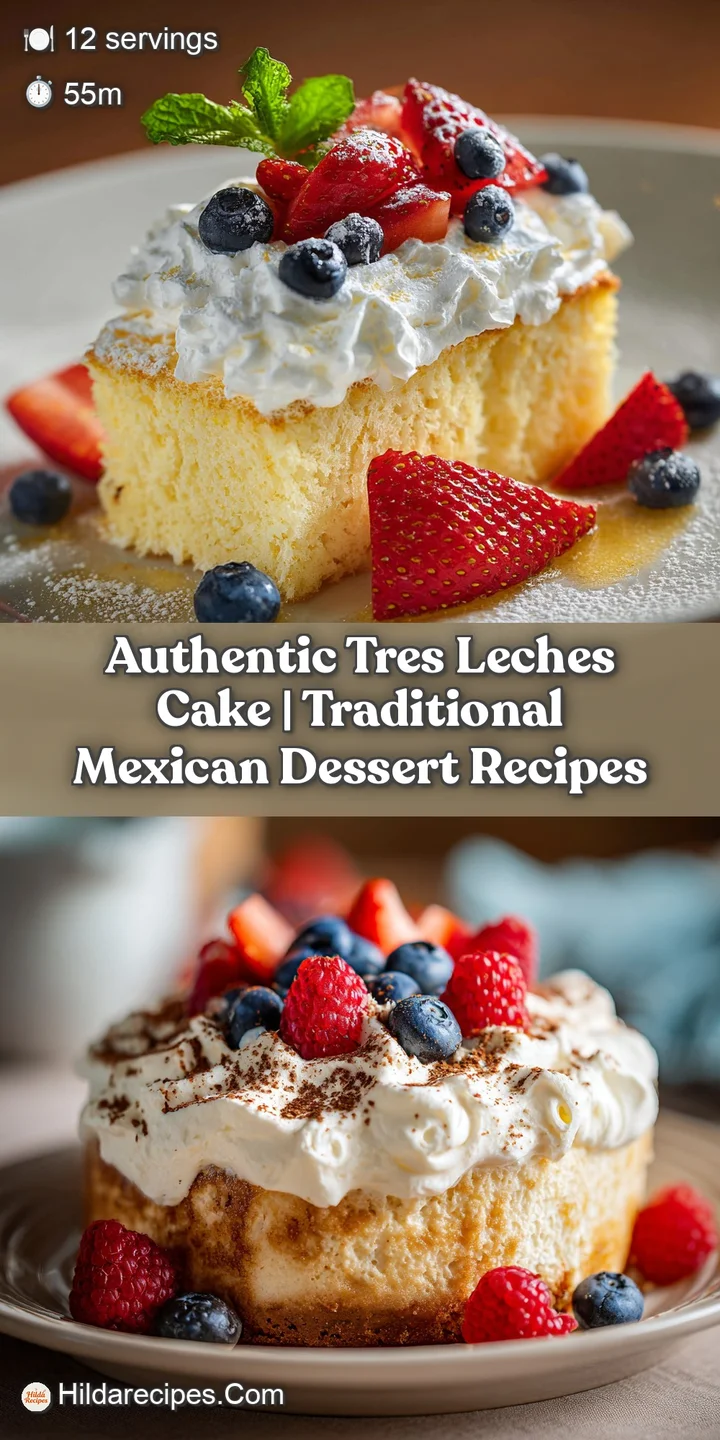
Recipe FAQs
Is Tres Leches Cake soggy?
No, it is intended to be moist. When prepared correctly, the cake absorbs the three milk mixture into a decadent, custard like texture rather than becoming unpleasantly mushy.
Why is it called tres leches?
The name translates to "three milks" in Spanish. It refers to the specific combination of evaporated milk, sweetened condensed milk, and heavy cream used to soak the baked sponge.
How long should Tres Leches Cake soak in the fridge?
Refrigerate for a minimum of 4 hours. Allowing the cake to rest overnight is preferred, as this ensures the milk mixture fully penetrates the crumb and achieves the proper set.
What are the ingredients in tres leches?
The cake consists of flour, baking powder, sea salt, eggs, sugar, milk, and vanilla. The soaking liquid requires evaporated milk, sweetened condensed milk, and heavy cream, while the topping uses cold heavy whipping cream, powdered sugar, and vanilla bean paste.
How to achieve the signature light sponge texture?
Beat the egg yolks and sugar until they reach a thick, pale ribbon stage. This process incorporates the air necessary for a light structure, a technique similar to the aeration required for fluffy pancakes to ensure a tender final crumb.
Is it true I must use a hot oven to get a good rise?
No, this is a common misconception. You must bake the cake at 350°F (175°C) for 30 minutes; using a higher temperature will cause the edges to set before the center rises properly.
How to ensure even milk absorption?
Poke holes all over the cooled cake using a metal skewer every 1/2 inch. This consistent spacing allows the milk mixture to distribute evenly throughout the sponge instead of pooling in one spot.
Authentic Tres Leches Cake
Ingredients:
Instructions:
Nutrition Facts:
| Calories | 438 kcal |
|---|---|
| Protein | 9.8 g |
| Fat | 23.5 g |
| Carbs | 48.2 g |
| Fiber | 0.5 g |
| Sugar | 34.8 g |
| Sodium | 185 mg |
